
Beyond the Hype: Quantifying Value Co-Creation in Social Network Marketing
Co-Creation of Value through Social Network Marketing: A Field Experiment Using a Facebook Campaign to Increase Conversion Rate
This paper explores the efficacy of Social Network Marketing (SNM) through a field experiment at the Norwegian School of Information Technology (NITH). By establishing Facebook groups for bachelor programs and facilitating student-led interactions, the researchers achieved a massive conversion rate increase from 43.3% for non-participants to 88.8% for group members.
TL;DR
Social network marketing is often dismissed as a "soft" metric, yet this study provides hard evidence of its financial impact. By shifting from top-down broadcasting to a Co-Creation of Value model on Facebook, a Norwegian university college doubled its conversion rate from 43.3% to a staggering 88.8%, proving that peer-to-peer dialogue is the ultimate conversion engine.
The "Hype" Problem vs. Business Reality
Most companies treat Facebook or LinkedIn as just another channel for advertisements—a digital billboard. However, the modern consumer is no longer a passive vessel for corporate messaging. The authors argue that the industry has struggled to link social media presence to actual business value.
The core friction lies in information asymmetry. In high-stakes decisions (like choosing a degree), applicants face high perceived risk. Traditional brochures can't mitigate this because they lack the transparency and authenticity that only a community can provide.
Methodology: The Co-Creation Arena
The researchers didn't just create a "Fan Page." They built a Personality-based social network experiment.
The DART Framework
To move from a company-centric view to a co-creation view, the experiment leveraged four building blocks identified by Prahalad and Ramaswamy:
- Dialogue: Not just talking to customers, but engaging with them as equal partners.
- Access: Providing direct routes to information without the corporate filter.
- Risk-Benefit: Allowing applicants to assess the "real" experience through peer feedback.
- Transparency: Making all interactions visible to the entire group to build trust.
The Secret Ingredient: Peer-to-Peer Equality
Crucially, the school’s administration and marketing departments were banned from the groups. Instead, current bachelor students acted as moderators. This removed the "unequal partner" barrier, allowing applicants to ask "dumb" questions and get honest, emotional, and technical answers from someone they viewed as a peer.
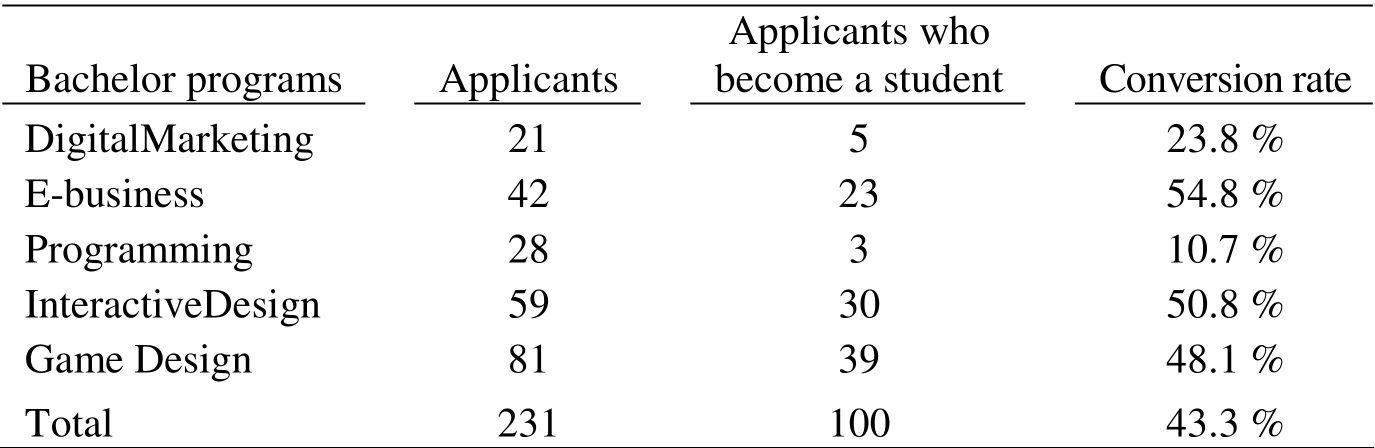 Table 1: The baseline conversion rate (Control Group) hovered around 43.3%.
Experimental Results: A 100% Increase in Success
The disparity between the two groups was massive. While the general applicant pool maintained the historical conversion rate of ~43%, the Facebook group participants converted at 88.8%.
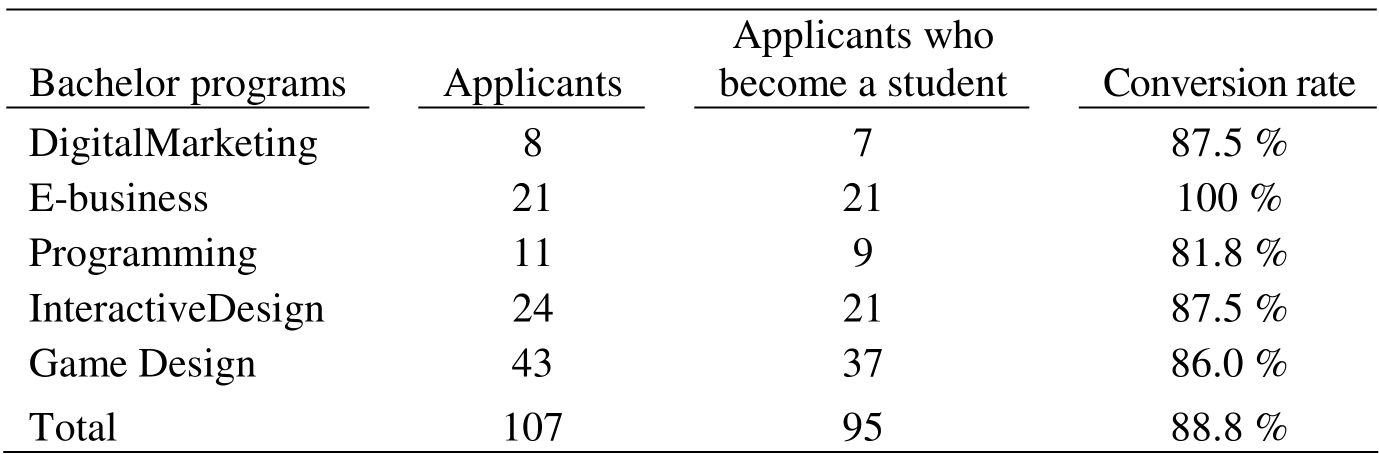 Table 2: Group members achieved nearly double the conversion rate across almost every degree program.
The Economics of Engagement
- Additional Revenue: ~US$ 1.26 Million over three years.
- Investment Cost: ~US$ 1,046 (primarily student salaries).
- ROI: This represents an astronomical return on investment, suggesting that manpower—not ad spend—is the critical variable in social marketing success.
Critical Insight: Why it Works
The study demonstrates that value is not "delivered" by the product, but "co-created" during the interaction. When applicants interacted with current students, they were not just consuming information; they were co-creating their own future student experience. This participation significantly lowers the psychological barrier to "hitting the buy button" (or in this case, the enrollment button).
Limitations & Future Outlook
While the results are compelling, the study notes that the "Game Design" and "Interactive Design" groups were more active than others. This suggests that community density matters; a social group requires a critical mass of members to sustain the "transparent dialogue" that drives value.
The takeaway for 2026 and beyond? Stop treating social platforms as distribution channels. Treat them as laboratories for collaboration. If you can facilitate a space where your current fans and your prospective leads can talk as equals, your conversion problems may solve themselves.