
Co-designing for Co-listening: Moving from Connectivity to Togetherness
Co-designing for Co-listening: Conceptualizing Young People’s Social and Music-Listening Practices
This paper explores "co-listening"—synchronous, shared music consumption—as a means of fostering social togetherness among semi-rural youth. Through interviews and a design charrette with 26 participants (ages 9-15), the authors developed and tested Colisten, a functional prototype leveraging the Spotify API to enable real-time shared audio experiences for geographically isolated teens.
TL;DR
While modern social media promises to "connect" us, it often leads to a paradox of isolation. This paper tackles this by reimagining music—usually a private, "bubble-like" activity—into a shared, synchronous social space for semi-rural youth. By co-designing with 9–15-year-olds, the authors identify how to bridge the geographical gap through a prototype called Colisten, focusing on "togetherness" rather than just messaging.
The Problem: The "Cocooning" Effect of Personal Audio
Modern media consumption has shifted from public performance to private, personalized libraries. For teenagers, headphones often act as a "cocoon," allowing them to escape their environment but at the cost of shared experiences.
The researchers identified a specific pain point for semi-rural youth: these teens are too young to drive and lack public transit, making them "immobile." While they use ICTs (Information and Communication Technologies) to keep in touch, current apps prioritize explicit, focused communication (like texting), which can feel like a chore. There is a distinct lack of support for the "subtle sociality" of simply being in someone's presence without the pressure to talk.
Methodology: Designing with, not for, Youth
The study utilized a three-pronged approach:
- Semi-structured Interviews: Mapping out current habits (e.g., FM radio and YouTube remain surprisingly dominant).
- Design Charrettes: Asking kids to draw their dream co-listening tools.
- Prototype Testing (Colisten): A functional iOS app that syncs Spotify streams between friends.
The Five Dimensions of Co-listening
Through the design charrette, five critical design dimensions emerged that define the co-listening space:
- Initiation: Should you "request" to listen, or just "tune in" silently?
- Group Composition: Is it a private duo (dyad) or a broadcast to many?
- Control: Who gets to be the "DJ" or "song picker"?
- Hardware: From "surgetically implanted earbuds" to shared boomboxes.
- Activity Prioritization: Is this a music app with social features, or a social app that plays music?
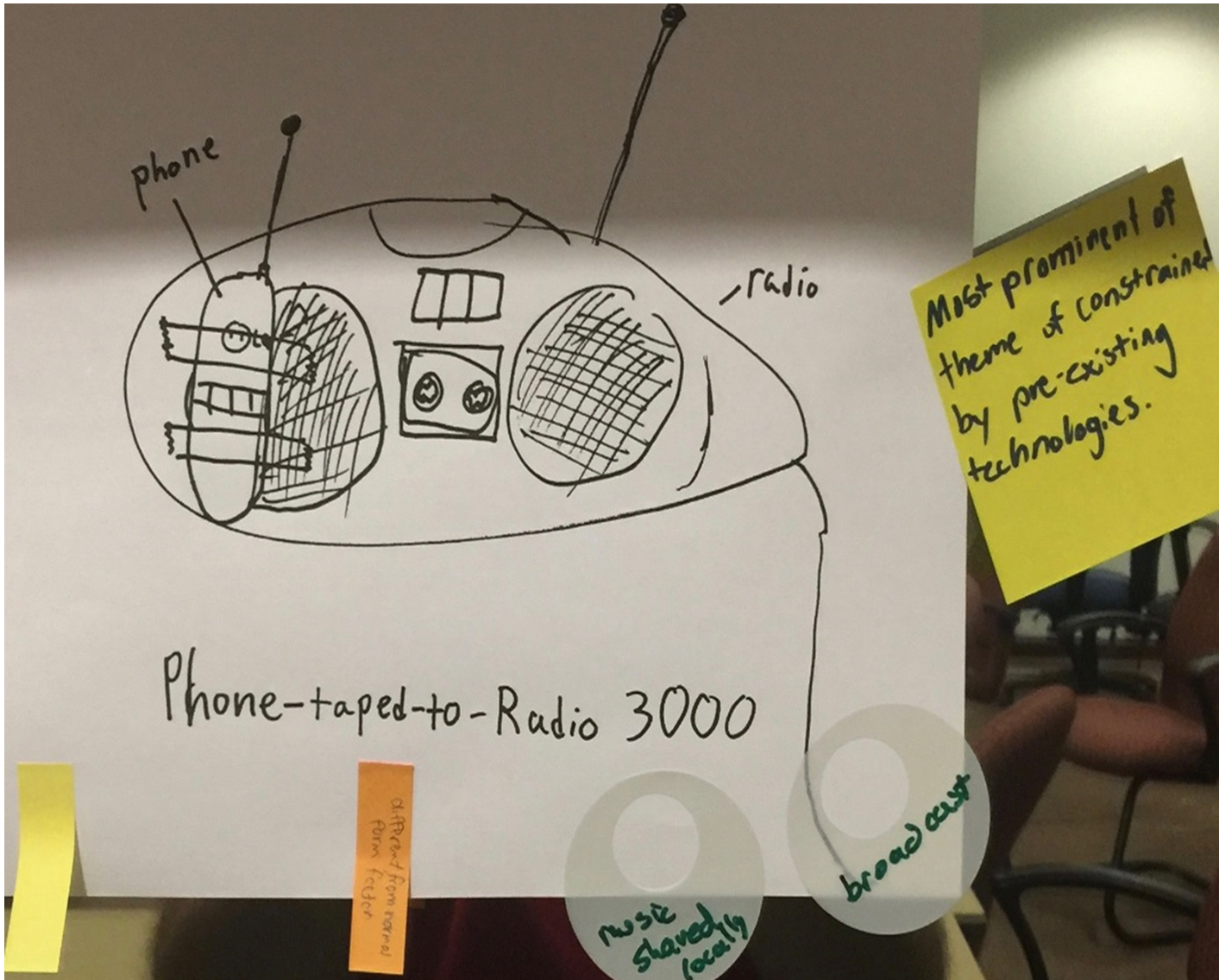 Figure 1: A spectrum of initiation methods, ranging from "Listener Joins" to "Broadcaster Invites."
The Colisten Prototype
The authors built Colisten to test the "light-weight" interaction model. Unlike a Discord call or a Zoom party, Colisten doesn't require an invitation. If a "friend" is listening to music, you simply see their status in a "Friends' Drawer" and click a button to join their stream—synchronously.
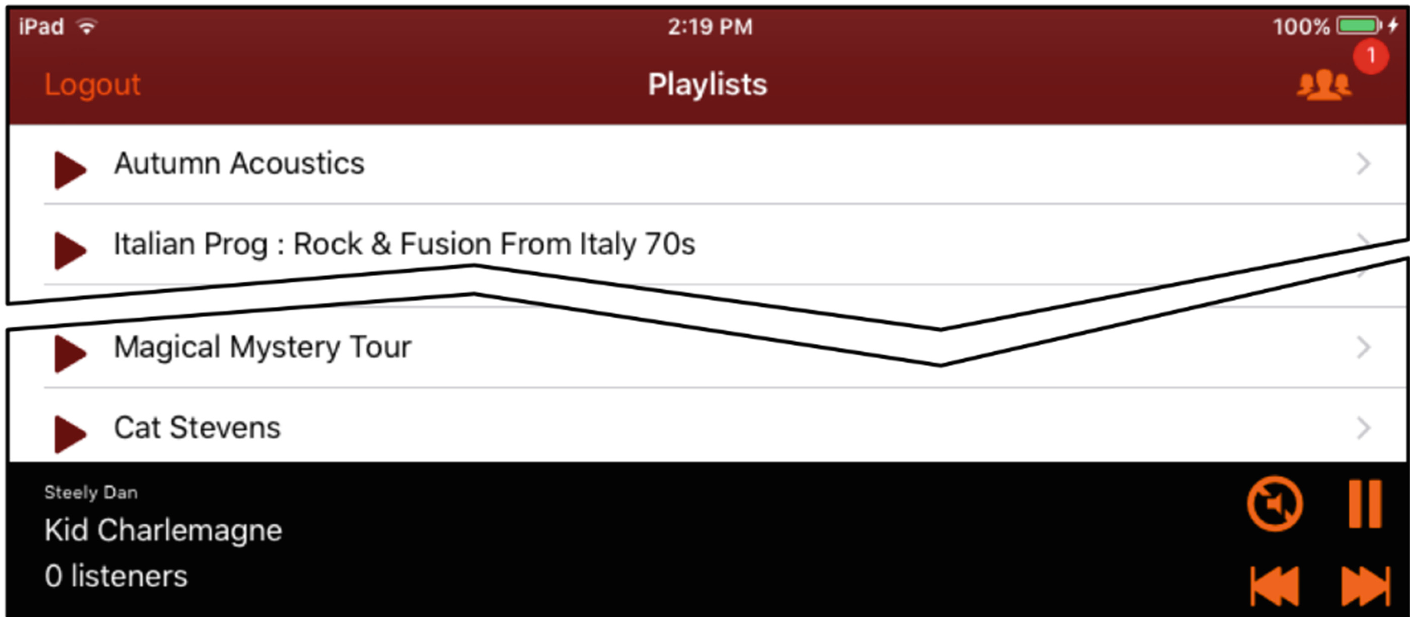 Figure 2: The Colisten prototype UI showing the playlist view and the synchronous play mechanism.
Results & Insights
The experiment yielded several "aha!" moments:
- Ambient Sociality: One participant noted that co-listening lets you "see what mood your friend is in." It’s an emotional signal, not just a data transfer.
- The Economics of Access: Semi-rural youth are acutely aware of data costs. Many preferred YouTube because it's free, or insisted on offline caching features.
- Privacy vs. Sharing: While many were happy to let friends "tune in," others wanted a "request/permission" gate, highlighting the delicate balance between openness and privacy in teenage social circles.
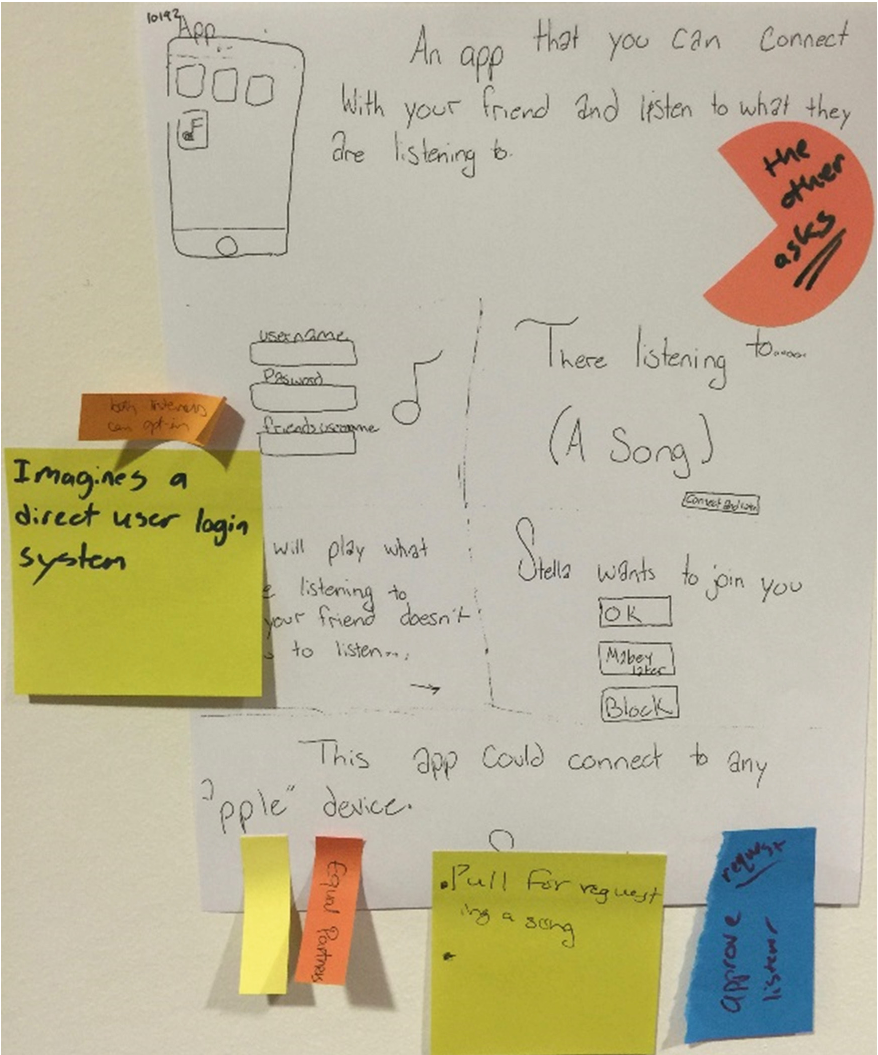 Figure 3: Participants testing the Colisten prototype in pairs.
Conclusion: Designing for "Slow" Interaction
This research moves the needle from Connectivity (can we talk?) to Togetherness (can we exist in the same digital "room"?). It highlights that for the next generation of social apps, the most valuable feature might not be a faster chat or a better algorithm, but the ability to share a quiet, synchronous moment through the universal language of music.
Limitations: The study was small (26 participants) and focused on a specific semi-rural US demographic. Future work should explore how these "dyadic" listening habits scale to larger, more diverse social groups.