
Optimization through Connectivity: Strategic Coalition Formation in Adaptation-Based Social Networks
Methods for Coalition Formation in Adaptation-Based Social Networks
The paper investigates coalition formation in Agent-Organized Networks (AON) where teams must form connected components. It introduces novel agent strategies—Strategic task selection, task Impatience, and Diversity adaptation—demonstrating significant performance gains over prior structural and performance-based rewiring methods in dynamic environments.
Executive Summary
TL;DR: This research addresses the complex problem of how autonomous agents in a social network can form effective teams to solve multi-skill tasks. By introducing Strategic Task Selection and Task Impatience, the authors demonstrate that agents who are more "selective" and "less patient" actually improve the overall system's success rate.
Context: This work occupies a critical niche in Multi-Agent Systems (MAS). It moves away from the computationally expensive "optimal coalition" search (which is NP-Hard) toward satisficing behaviors in Agent-Organized Networks (AONs), emphasizing that the network structure itself is a dynamic tool for coordination.
The Problem & Motivation: The Connectivity Constraint
Most coalition formation literature treats agents as a "pool" where any A can work with any B. However, in real-world social or communication networks, agents can only collaborate if they are connected.
The authors identify three major flaws in existing decentralized approaches:
- Fixed Information: Prior work often assumes agents know everything about everyone.
- Lack of Selectivity: Basic agents often pick tasks based on age (FIFO) rather than probability of completion.
- The "Sunk Cost" Fallacy: Agents often stay committed to failing teams for too long, wasting valuable time that could be spent on viable tasks.
Methodology: The Core Strategies
The paper breaks down agent behavior into three dimensions:
1. Task Selection (The "Why")
Instead of Basic selection (picking the oldest task), Strategic agents evaluate the "Committed Ratio"—how close a team is to being finished. They prefer to "jump on a moving train" that is likely to reach the station.
2. Task Patience (The "When to Quit")
This is perhaps the most counter-intuitive insight. Impatient agents monitor their local neighborhood. If they don't see enough uncommitted neighbors with the required skills to finish a task, they abandon it early. This prevents "deadlock" where agents are stuck waiting for teammates who will never arrive.
3. Adaptation & Rewiring (The "How to Connect")
The agent-organized network evolves. The authors compare three styles:
- Structural: Reaching out to a "friend of a friend" (FOAF) based on degree. This naturally creates hubs.
- Performance: Connecting to agents who have successfully finished many tasks.
- Diversity: Intentionally seeking partners with different skills.
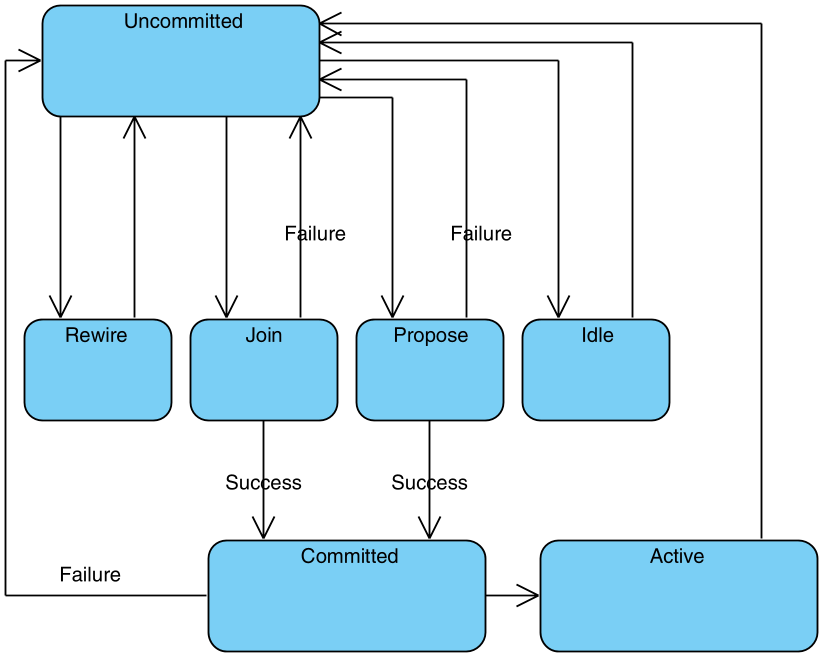 Figure 1: The lifecycle of an agent from uncommitted to active.
Experiments & Key Results
The researchers conducted extensive simulations (2000 cycles, 100 nodes, 50 variations) to test these strategies.
The Power of Hubs
Structural adaptation proved superior because it creates a Scale-Free like network with high-degree hubs. These hubs act as "central marketplaces" where multiple sub-tasks can be filled quickly.
The Interaction of Strategy and Patience
As shown in the results, Strategic Task Selection and Task Impatience are complementary.
- Strategic selection increases the quality of the "input" (which tasks we try).
- Impatience minimizes the cost of "failure" (how long we waste on bad tasks).
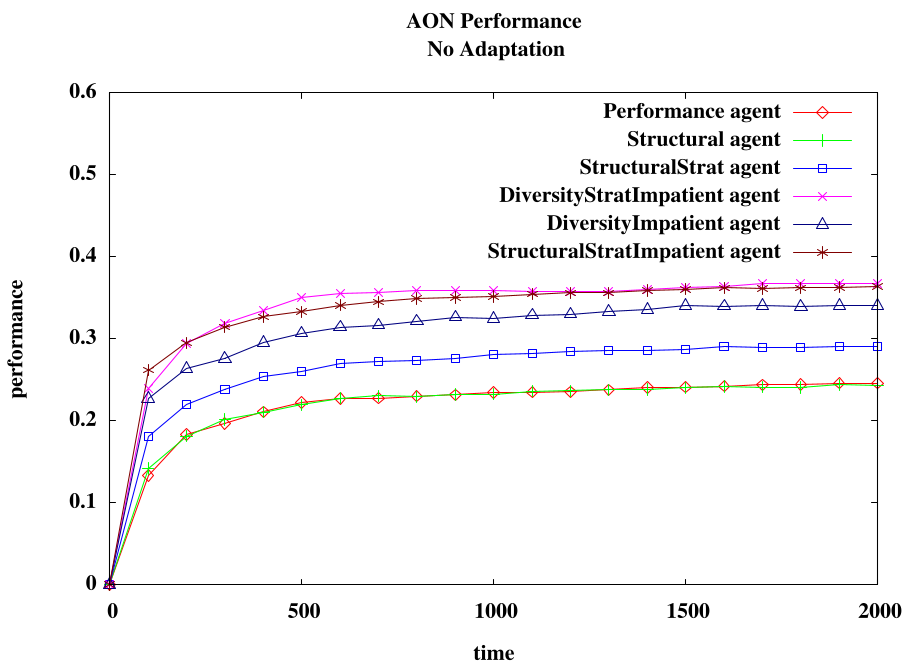 Figure 2: Performance comparison before and after adaptation.
The Degree Limit Constraint
The authors also found a "sweet spot" for connectivity. When the maximum number of neighbors (degree limit) was too low (e.g., 5), teams couldn't form. Increasing the limit to 20 significantly boosted performance, but beyond 30, the gains diminished as communication overhead and agent "exhaustion" (hubs being too busy) took over.
Critical Analysis & Conclusion
Takeaway
The research confirms that local intelligence matters. By simply changing the decision-making logic of a single agent (how it chooses a task and when it leaves), we can see massive emergent improvements in the network's total throughput.
Limitations
- Uniform Skill Distribution: The model assumes skills are distributed uniformly. In real worlds, "rare skills" create bottlenecks that rewiring alone might not solve.
- Communication Cost: While they mentioned degree limits, the actual computational/energy cost of maintaining a degree-20 link set wasn't fully modeled.
Future Outlook
This work paves the way for "Smart Social Networks" where the topology isn't just a byproduct of friendship, but a calculated engineering effort to optimize for complex, multi-stage collaboration.