
Deep Learning for Brain Decoding: Overcoming the Small Data Barrier in Cocaine Addiction Research
Classification of Cocaine Dependents from fMRI Data Using Cluster-Based Stratification and Deep Learning
This study presents a Deep Learning framework focused on identifying cocaine dependence from functional Magnetic Resonance Imaging (fMRI) data. By utilizing Deep Belief Networks (DBN) and Deep Neural Networks (DNN) on circuit-based functional connectivity features, the researchers achieved superior classification performance compared to traditional machine learning baselines like SVM and Random Forest.
TL;DR
Researchers have successfully applied Deep Learning to classify cocaine-dependent individuals from healthy controls using fMRI data. By moving from raw voxel data to circuit-based functional connectivity and introducing a novel GNG-based stratification method, they achieved an accuracy of up to 85.5%, proving that "Deep Learning" isn't just for "Big Data."
The "Small Data" Challenge in Neuroscience
While Deep Learning (DL) has revolutionized Computer Vision and NLP, its application in clinical neuroscience is often bottlenecked. Clinical fMRI datasets (like the 163 subjects in this study) are considered "small" in the DL world. The challenge is twofold:
- High Dimensionality: fMRI data contains thousands of voxels but very few subject samples.
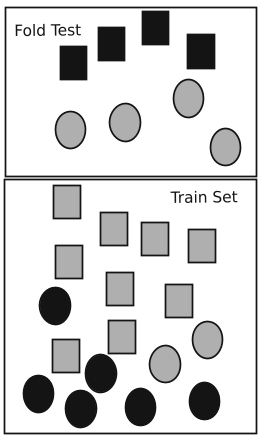
- Stratification Bias: In small datasets, standard 10-fold cross-validation can lead to "unrepresentative" folds where the training set doesn't look like the test set, causing the model to fail to generalize.
Methodology: Circuit-Based Insight
Instead of using high-dimensional activation maps, the authors focused on Functional Connectivity. They targeted a specific frontoparietal circuit involving six Regions of Interest (ROIs), including the insula and inferior frontal gyrus, known to be involved in inhibitory control.
They compared several feature sets, including:
- Granger Causality (F-Value, Geweke, DOI): Measuring directed influence.
- Pearson’s Coefficients: Measuring standard linear correlation.
Architecture
The study compared two deep architectures:
- Deep Belief Networks (DBN): Utilizing unsupervised pre-training via Restricted Boltzmann Machines (RBM) to capture data distribution before classification.
- Deep Neural Networks (DNN): Using Rectified Linear Units (ReLU) to avoid the vanishing gradient problem in deeper layers.
The Secret Sauce: GNG-Based Stratification
The core innovation is the use of Growing Neural Gas (GNG) for data splitting. Traditional stratification only looks at the "Label" (Cocaine vs. Control). The authors argued that this ignores "Feature Similarity."
If a specific "type" of brain connectivity pattern only appears in the test set but not the training set, the model cannot learn it. The GNG-based method:
- Clusters the subjects based on feature similarity (Unsupervised).
- Applies community detection to group these clusters.
- Ensures every fold contains representatives from every cluster.
Results and SOTA Comparison
The results confirm that deep models, when properly stratified, outperform traditional baselines:
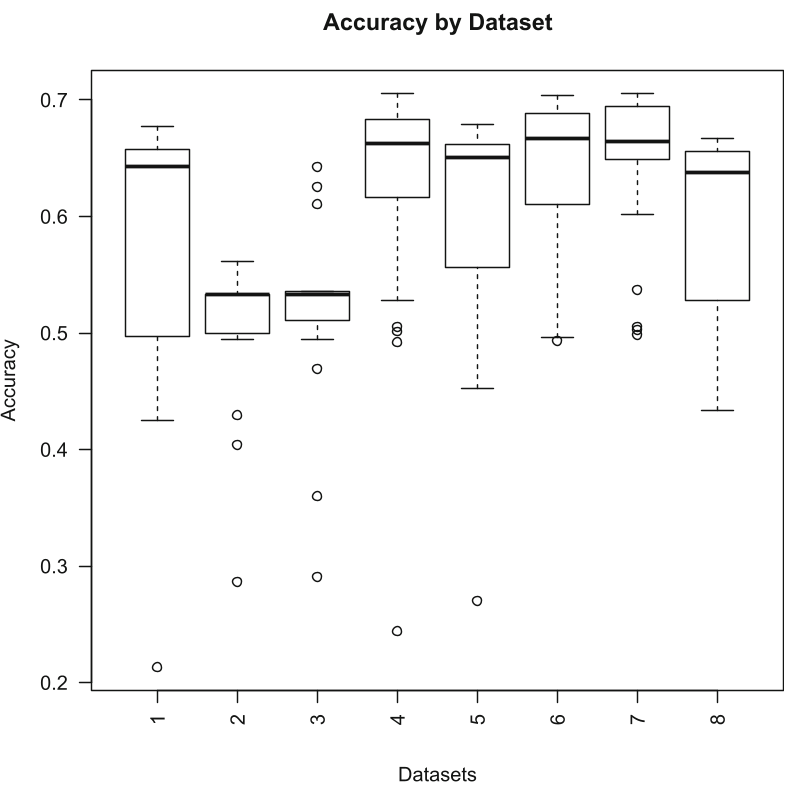
- Pearson Coefficients emerged as the superior feature set (Dataset 4).
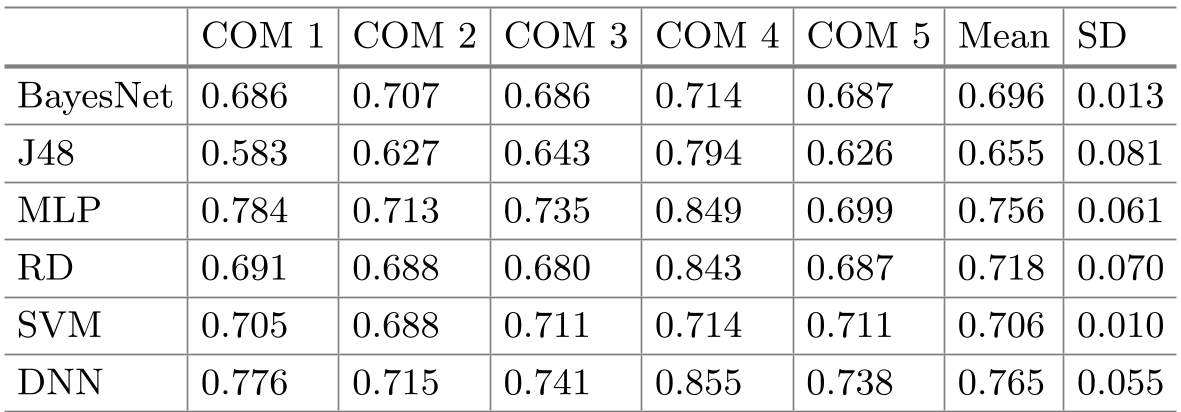
- DNN + GNG/COM Stratification reached 76.5% mean accuracy, surpassing SVM (70%) and MLP (68%).
- Crucially, the GNG method significantly reduced the standard deviation between folds, leading to a much more robust and reliable model.
Critical Insight
The success of this work lies in Inductive Bias. By selecting specific brain circuits (Domain Knowledge) and ensuring the training set is topologically representative of the population (GNG Stratification), the authors bypassed the need for the millions of samples usually required by Deep Learning.
Limitations & Future Work
While successful, the study relied on empirical parameter tuning. The researchers suggest that automated hyperparameter optimization (like Bayesian Optimization) could push these accuracy figures even higher. Furthermore, extending this "topological stratification" to other pathologies like Schizophrenia or Alzheimer’s could prove the method's versatility across the medical imaging field.
Conclusion
This paper serves as a blueprint for biological researchers: Deep Learning is viable for small clinical datasets, provided we innovate on how we partition and represent our data.