
Cognitive RPA: Harmonizing Deep Learning and Multiobjective Optimization for Edge Manufacturing
Cognitive Analytics of Social Media Services for Edge Resource Pre-Allocation in Industrial Manufacturing
2021-01-29
Summary
Problem
Method
Results
Takeaways
Abstract
This paper introduces RPA (Resource Pre-Allocation), a proactive edge computing management framework for social media services in industrial manufacturing. It combines spatiotemporal prediction using ST-ResNet with multiobjective optimization via SPEA2 to achieve SOTA performance in load balancing and latency reduction.
## TL;DR
To tackle the volatility of social media service requests in industrial smart cities, this paper presents **RPA (Resource Pre-Allocation)**. By leveraging **ST-ResNet** for demand forecasting and **SPEA2** for strategic distribution, the system shifts edge computing from a reactive "fix-it-after-overload" model to a proactive "pre-allocate" paradigm, significantly slashing latency and balancing server loads.
## The Latency Paradox in Industrial Intelligence
In the era of Industrial IoT (IIoT), social media services—encompassing video, audio, and control data—are no longer just consumer tools; they are vital for collaborative manufacturing. However, these services are notoriously "bursty."
Current Edge Computing (EC) platforms often struggle with the **Mapping Challenge**:
- **Reactive Lag**: By the time a server detects an overload and migrates a task, the user has already experienced high latency.
- **Load Imbalance**: Migrating to the "nearest" server often leads to neighborhood congestion, creating new bottlenecks.
The authors' insight is simple yet profound: **If we can predict the "where" and "when" of service spikes, we can move resources before the bottleneck forms.**
## Methodology: The Two Pillars of RPA
### 1. Cognitive Analytics via ST-ResNet
The paper treats regional resource requests as "images" in a video stream. The map is divided into an $N imes M$ grid.
- **Spatiotemporal Features**: It uses a Residual Network architecture to capture "Near" (recent), "Middle" (daily), and "Far" (weekly) patterns.
- **External Factors**: Unlike standard CNNs, this model fuses external metadata (holidays, weather, news) into the latent space to account for anomalies.
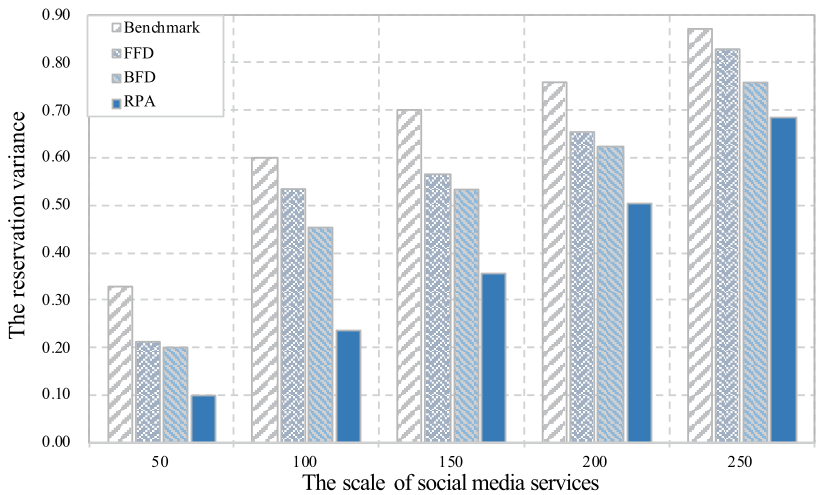
*Figure 1: The holistic workflow of the RPA system, from data meshing to final allocation.*
### 2. Strategic Allocation via SPEA2 & TOPSIS
Once the cognitive engine predicts a surge, the **Optimal Resource Allocation (ORA)** engine takes over. It faces a multiobjective conflict:
- **Objective A**: Minimize Migration Delay ($MD$).
- **Objective B**: Maximize Load Balance ($TL$).
The researchers employ **SPEA2** to find a set of non-dominated (Pareto-optimal) solutions. Since a system can only execute one strategy, they use **TOPSIS** (Technique for Order of Preference by Similarity to Ideal Solution) to pick the specific "sweet spot" on the Pareto front that satisfies industrial constraints.
## Experimental Validation
The authors tested their framework using 1 million data points from Shanghai's social media records.
### Accuracy in Prediction
ST-ResNet outperformed traditional Hidden Markov Models (HA) and standard CNNs. Interestingly, the ablation study showed that **Network Depth = 6** and a **3x3 kernel** provided the optimal balance between feature extraction and error rates.
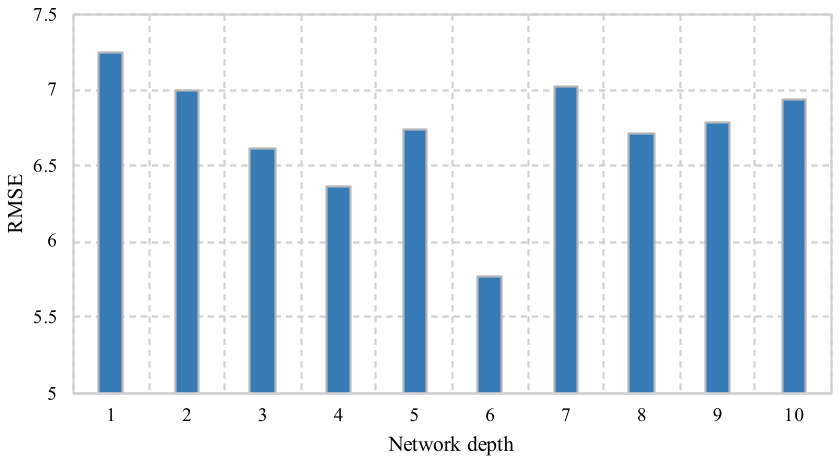
*Figure 2: RMSE comparison across different deep learning architectures and kernels.*
### Superior Pareto Dominance
In the allocation phase, the RPA method was compared against BFD (Best Fit Decreasing) and FFD (First Fit Decreasing). The results showed that the RPA solution set consistently "dominated" the others, meaning it achieved better load balancing without sacrificing latency.
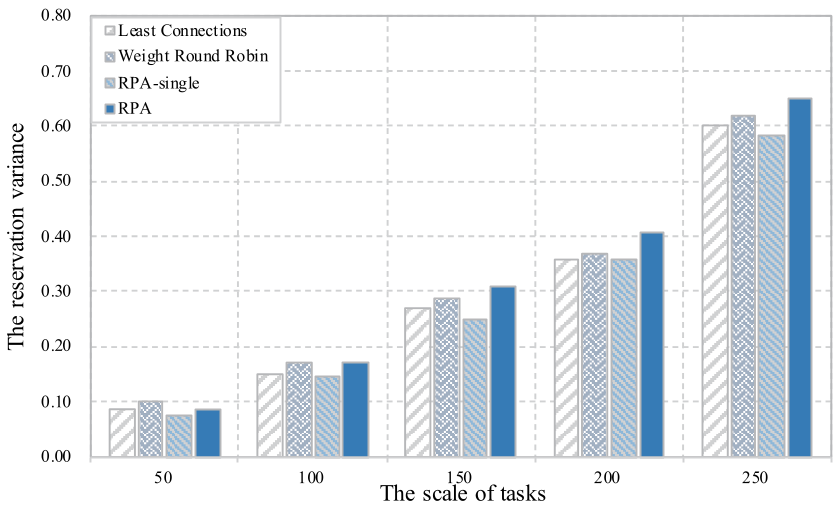
*Figure 3: Distribution of the Pareto optimal solution set showing RPA's dominance over BFD/FFD.*
## Critical Analysis & Conclusion
**Takeaway**: This work proves that "Cognitive Analytics" is not just a buzzword but a necessary component for the deterministic latency required in smart manufacturing. By predicting demand, the system effectively expands the "perceived" capacity of the edge layer.
**Limitations**: The training of ST-ResNet is computationally heavy. While the *inference* is fast, the *re-training* cycle needs to be optimized to handle real-time shifts in industrial topology.
**Future Work**: The authors suggest moving toward even shorter prediction intervals (sub-minute) and exploring how deep reinforcement learning (DRL) might further automate the decision-making process in dynamic environments.