
Healthcare Cognitive Assistants: Bridging the Gap Between AI and Patient Care
A Review of Cognitive Assistants for Healthcare: Trends, Prospects, and Future Directions
This paper provides a comprehensive review of Healthcare Cognitive Assistants (HCAs), defined as interactive, context-aware, and adaptive systems designed to augment human intelligence or compensate for cognitive impairments. It establishes a novel taxonomy for HCAs based on user roles and application goals, spanning from patient-facing self-care to surgical assistance.
TL;DR
Healthcare Cognitive Assistants (HCAs) are transitioning from simple "smart reminders" to sophisticated agents that augment human cognition. This paper provides a landmark review of the field, defining the architecture required for the next generation of assistants—systems that are not just "smart," but truly interactive, context-aware, and adaptive.
Background & Motivation: Why Today's Assistants Aren't "Cognitive" Enough
While smart assistants like Alexa or Siri are ubiquitous, the high-stakes world of healthcare demands a higher level of "Cognitive Power." Most existing assistive technologies suffer from being too narrow; they solve one problem (like navigation) but fail to understand the user's broader medical context or psychological state. The authors argue that a true HCA must serve as a cognitive supplement, helping a surgeon avoid "tunnel vision" during intubation or helping a dementia patient navigate a complex kitchen safely.
Methodology: The Anatomy of a Cognitive Assistant
The paper decomposes HCAs into a trio of defining features and a quad of physical components.
The Three Pillars of Cognition:
- Interactivity: Moving beyond text to multimodal feedback (haptic, audio, and AR).
- Context-awareness: Understanding not just location (spatial) but also the user's medical history (medical) and current emotion (psychological).
- Adaptiveness: The ability to modify behavior based on a user's changing needs, such as a patient's voice changing as a disease progresses.
CPS Architecture:
The "brains" of these systems rely on a hybrid model. While data-driven (ML) models handle perception (e.g., recognizing a face), knowledge-driven models (e.g., Behavior Trees) ensure the assistant follows strict medical protocols.
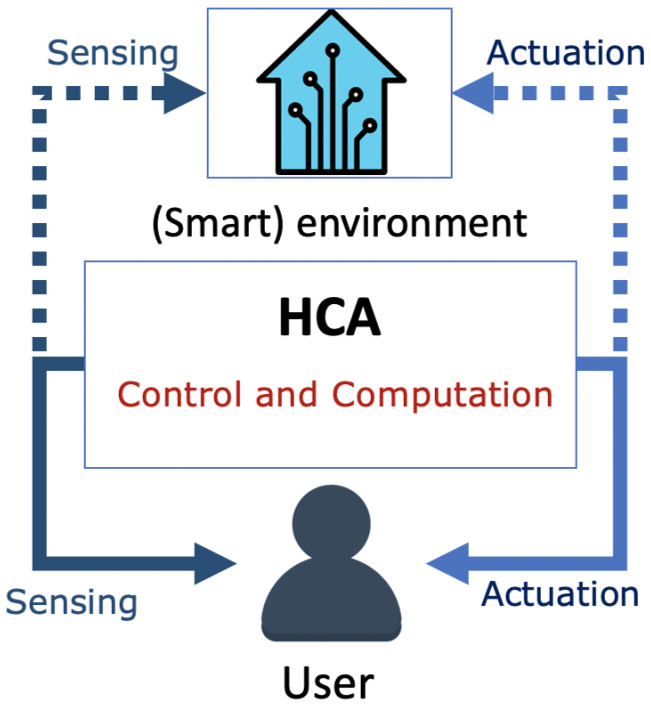 Figure: The interaction loop between sensing, computation, and actuation in an HCA environment.
Key Application Areas & Experimental Insight
The survey maps out a vast landscape of HCAs, notably:
- Surgical Robotics: Systems like STAR and da Vinci that provide real-time guidance and autonomous suturing.
- Emergency Response: The "CognitiveEMS" system, which transcribes noisy speech at an accident scene to suggest life-saving protocols.
- Therapeutic VR/AR: Systems like Kognit that use mixed reality to help dementia patients "remember" through spatial cues.
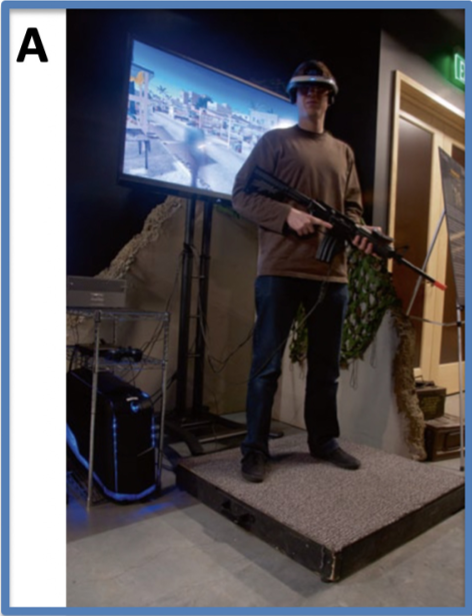 Figure: Various embodiments of HCAs, from VR psychotherapy to robotic nursing assistants.
Critical Analysis: The Road Ahead
Despite the progress, the authors identify a "Realism Gap."
- Uncertainty: Most assistants assume perfect data. In reality, patients forget symptoms, and sensors fail in noisy environments.
- Conflict Resolution: As users start using multiple assistants (e.g., one for diet, one for exercise), these systems might give conflicting advice (e.g., "Eat more salt" vs. "Lower your blood pressure").
- Privacy vs. Utility: Cognitive awareness requires deep personal data (gaze, emotion, vitals), creating a massive cybersecurity surface area.
Future Outlook
The paper concludes that the next frontier is Life-long and Life-wide Assistants. These won't just be apps we open; they will be persistent companions that understand the nuances of our health progression over decades. For developers and researchers, the challenge lies in Domain Adaptation—taking generic AI (like GPT-4) and grounding it in the strict, safe, and specialized knowledge of medical practice.
Takeaway
HCAs are the essential bridge for the future of "scalable" medicine. By augmenting the cognitive abilities of overworked clinicians and providing "orthotics" for the elderly, these systems turn digital health from a passive record-keeping tool into an active participant in human well-being.