
Healthcare Robots at the Edge: Balancing Local Reflexes with Global Intelligence
Cognitive computing and wireless communications on the edge for healthcare service robots
This paper presents a comprehensive framework for mobile healthcare robots leveraging edge computing and AI. It proposes a functional partitioning strategy that offloads latency-sensitive tasks like user interaction and navigation to the "Edge," while delegating core intelligence and resource management to "Centralized" data centers, achieving a SOTA balance between local responsiveness and global optimization.
TL;DR
As the global population ages, the demand for mobile healthcare robots is surging. However, these robots face a "computation-communication" bottleneck. This paper proposes a dual-layer architecture: Edge Computing for immediate, latency-sensitive tasks (like falling detection and navigation) and Centralized AI for complex cognitive tasks (like psychological analysis and social-aware planning).
Background: The Healthcare Imperative
Healthcare robots offer superiorities over human caregivers in persistence, error reduction, and objective data collection. Yet, the Achilles' heel has always been the network. If a robot needs to wait for a cloud round-trip to decide how to catch a falling patient, the delay could be catastrophic.
Problem: The Latency & Data Deluge
Prior works often struggled with:
- Response Latency: Centralized data centers cannot guarantee the real-time feedback needed for physical interaction.
- Bandwidth Strain: Uploading raw video and high-frequency sensor data from IoT devices is inefficient.
- Sensor Uncertainty: Real-world environments are "noisy"—batteries die, and sensors provide incomplete data.
Methodology: The Functional Partition
The authors introduce a logic-driven split in robotic "labor."
1. Edge-Computing-Friendly Functionalities
These are tasks that require a "reflex" action.
- Perception: Using CNNs to recognize facial expressions and GANs to learn from unlabeled tactile data.
- Navigation: Implementing improved Potential Field Methods (PFM) locally to avoid obstacles in real-time.
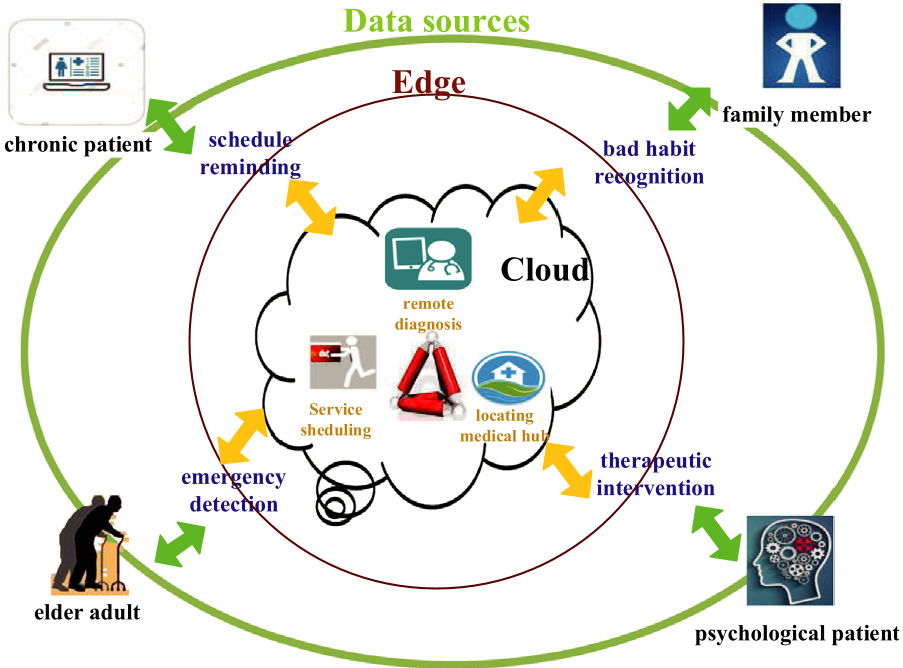 Fig 1: Typical needs and application scenarios for mobile healthcare robots.
2. Data-Center-Orientated Communications
These are the "brains" that require heavy lifting:
- Uncertainty Handling: Fusing data-driven (Machine Learning) and knowledge-based (Ontology) models to infer patient status from ambiguous sensor inputs.
- Social-aware Path Planning: Learning social norms (e.g., how to pass a human in a hallway) which requires massive datasets and complex modeling.
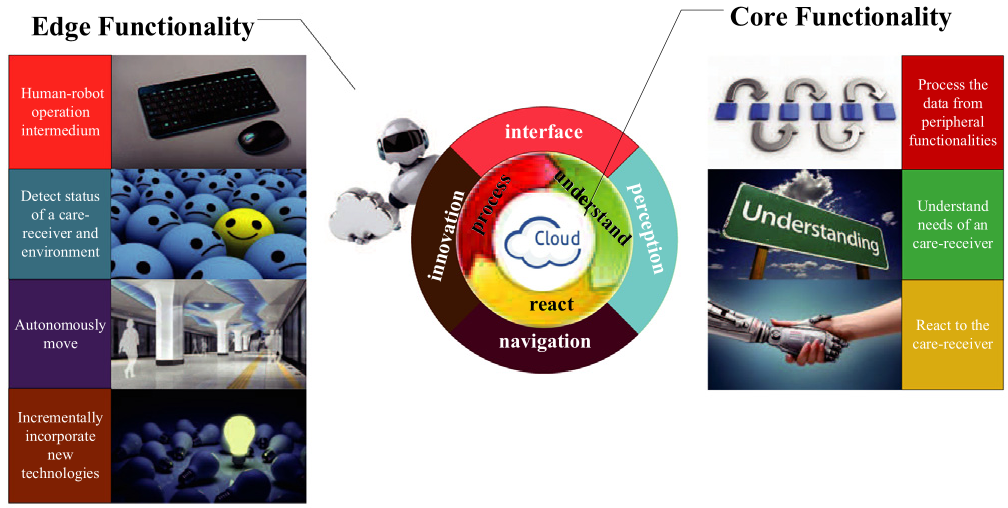 Fig 2: Key technologies categorized by Edge vs. Centralized computing requirements.
Experiments & Core Insights
The paper highlights several key technical breakthroughs:
- Anti-collision Success: By using an improved PFM validated on the Turtlebot 2 platform, the robot captures 3D images via Kinect and navigates narrow passages where traditional methods fail due to local minima.
- Psychotherapy engagement: Tabletop robots connected to smartphones use the SARSA algorithm to learn customized mental health intervention strategies, outperforming purely virtual agents by leveraging physical presence.
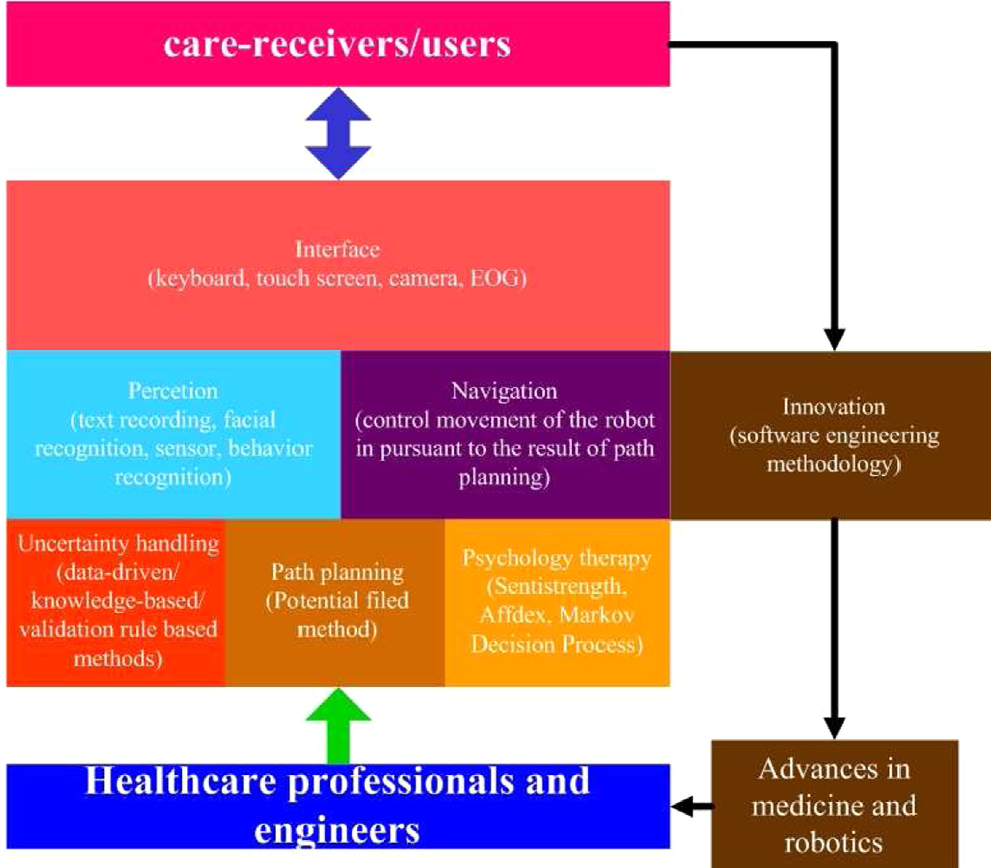 Fig 3: The State-of-the-Art supporting technologies integrated into the system.
Critical Analysis & Conclusion
Takeaway: The "Cognitive-Edge" framework is a pragmatic blueprint for future robotics. It recognizes that while AI is moving fast, physics (latency) is a constant.
Limitations:
- The paper notes that while deep learning improves perception, it still requires massive labeled datasets which are hard to acquire in private healthcare settings.
- Security and privacy of the "Edge-to-Cloud" data stream remain a significant challenge not fully addressed in the current scope.
Future Outlook: The next frontier involves Swarm Robotics—fusing collision avoidance models from multiple robots into a single global model, allowing a fleet of healthcare assistants to operate seamlessly in crowded hospitals.