
Cognitive Partnerships: Why Efficiency is Killing Innovation in Lab Design
Cognitive partnerships on the bench top: designing to support scientific researchers
This paper presents a three-year ethnographic study of a Biomedical Engineering (BME) laboratory, introducing the concept of "cognitive partnerships" between researchers and technology. It critiques the over-reliance on efficiency in laboratory system design, instead advocating for instruments that support appropriation, creativity, and the evolution of scientific knowledge.
TL;DR
In a world obsessed with productivity, we often design tools to make tasks faster. However, a deep three-year study of a Biomedical Engineering (BME) lab proves that for researchers, efficiency is not the goal—evolution is. Successful lab technology acts not as a simple tool, but as a "Cognitive Partner" that grows, breaks, and changes alongside the scientist’s understanding of the world.
The "Efficiency" Trap
Traditional HCI often views a laboratory as a place of routine: follow a protocol, record data, move to the next step. Systems like LabScape were designed to optimize this flow. But the authors of this study found a surprising reality: researchers don't want to be "efficient" in the way computer scientists think.
When you automate the Recording of a value, you might remove the "serendipitous check"—the moment a researcher pauses, does math on the fly, and realizes their experiment is failing. In creative environments, "wasted" time is often where the actual cognition happens.
Case Study: The "Better" Machine That Failed
The paper highlights a fascinating conflict between a custom-built, "hacked together" Mechanical Tester and a $100,000+ commercial Instron machine.
- The Mechanical Tester (MT): A jumble of wires, custom macros, and video cameras. It’s hard to use, takes 40 hours per experiment, and requires hand-calculators. Yet, it is used daily.
- The Instron: Sleek, efficient, accurate, and automated. It sat on a shelf gathering dust.
Why? The Instron was a "black box." It couldn't be easily modified to handle the specific, fragile tissue samples the lab was currently inventing. The MT, while ugly, was appropriable. It allowed researchers to "put a thought into the bench-top."
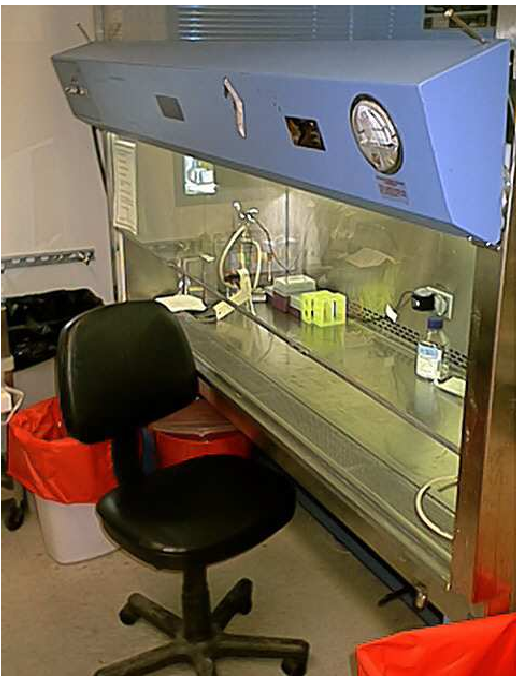 Figure 1: Researchers classify their tools into Devices, Instruments, and Equipment. The "Devices" are the most critical, serving as sites of simulation.
Methodology: High-Level Cognition in the Wild
The authors used Cognitive-Historical Ethnography. They didn't just look at what scientists did today; they looked at the history of how their tools evolved. They viewed the lab as a Distributed Cognitive System.
In this view, the "mind" of the researcher isn't just in their head—it’s "stretched over" the researcher, the pipette, the software, and the physical bioreactor.
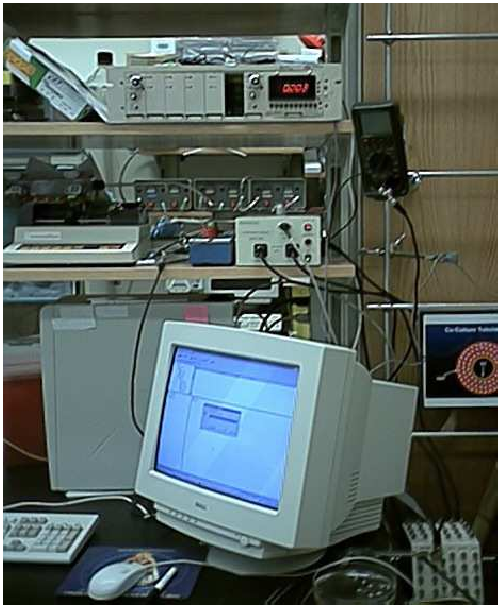 Figure 2: The Mechanical Tester—a "cognitive partner" that supports evolving practice through its open, modifiable architecture.
The Concept of "Cognitive Partnering"
The paper’s most profound insight is that building a tool is an experiment in itself. When a researcher builds a Bioreactor, they are taking a vague hypothesis about how cells react to pressure and turning it into a physical object.
The bioreactor "talks back." When it squishes a gel too flat, it teaches the researcher about the limits of their materials. This reciprocity is what the authors call Cognitive Partnering. The technology serves to:
- Embody Knowledge: House the lab’s current understanding of physics and biology.
- Scaffold Exploration: Allow researchers to test "what-if" scenarios in the physical world.
- Co-Evolve: Change its shape as the researcher's knowledge matures.
Critical Analysis & Conclusion
This paper serves as a warning to tech designers: Stop designing for the "average user" and start designing for the "appropriator."
Limitations
The study focuses on a highly specialized BME lab. The findings might not apply to clinical labs where high-throughput, standardized protocols are the priority over discovery.
Takeaway for the Future
We need "Annotation Spaces" (like Wikis for physical objects) and "Phidget-like" systems that allow scientists to build complex electronic/mechanical tools without needing a PhD in Engineering. The goal of future lab tech should not be to make the scientist faster, but to make their "conversation" with their experiments deeper.
Final Thought: If a tool is too "perfect" to be changed, it is useless for discovery.