
CC-LR: Bridging the Social Gap in Virtual Engineering Education through SNA
Providing Cognitive and Social Networking Assessment to Virtualized Collaborative Learning in Engineering Courses
This paper introduces an enhanced Collaborative Complex Learning Resource (CC-LR) framework that virtualizes live collaborative sessions into interactive storyboards for engineering education. The core innovation is the integration of a multi-fold assessment approach combining cognitive indicators with Social Network Analysis (SNA) to provide personalized feedback and social awareness.
TL;DR
Researchers have developed a "Collaborative Complex Learning Resource" (CC-LR) that turns past collaborative discussions into interactive, "virtualized" learning materials. By integrating Social Network Analysis (SNA), the system provides visual cues (like traffic lights) that tell students which participants are central to the knowledge exchange, social interaction, and content quality.
Background: The Problem of "Silent" Online Learning
In online engineering education, collaborative learning is often hindered by social isolation. Students reading a forum thread or a transcript often miss the "pulse" of the group—who is leading, who is bridging gaps between ideas, and who is just a peripheral participant. This lack of social identity and awareness reduces engagement and makes the learning process feel passive.
Methodology: Mapping Social Intelligence
The authors propose a model that captures the "live" interaction data and processes it through two main lenses:
1. Cognitive Assessment
The system tracks "exchanges" (giving info, eliciting info, raising issues) to determine if a student is proactive or reactive.
2. Social Network Analysis (SNA)
This is the paper's key contribution. The researchers apply classic graph theory metrics to the student interaction network:
- Degree Centrality: Who is talking the most?
- Closeness Centrality: Who can reach others most efficiently?
- Betweenness Centrality: Who acts as a "bridge" between different sub-groups?
- Eigenvector Centrality: Who is connected to other influential students?
The "Traffic Light" Visualization
To make this data digestible for a student, the CC-LR transforms these complex metrics into simple visual indicators on avatars:
- Centrality: Integration level into the group.
- Communication: Effectiveness of information transfer.
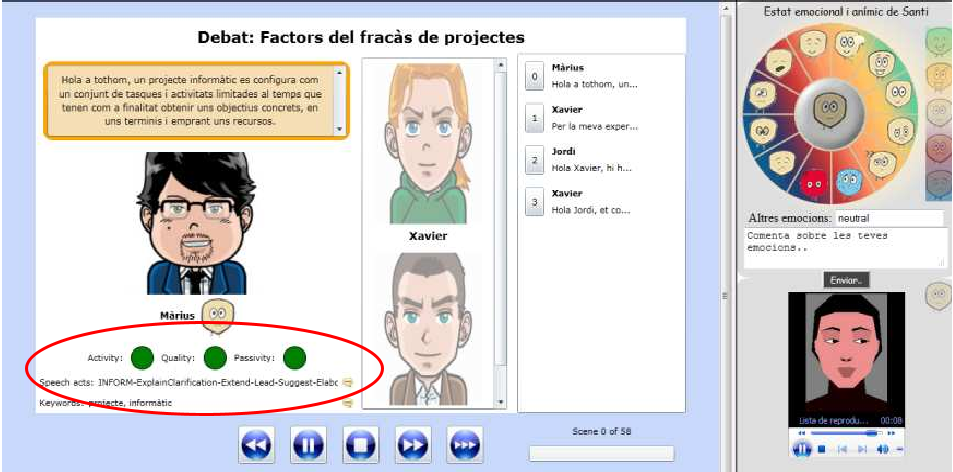 Figure 1: The CC-LR architecture integrates cognitive assessment and emotion awareness into a storyboard format.
Experiments and Educational Impact
The system was tested at the University of Cadiz with 117 engineering students. The results were promising:
- Knowledge Acquisition: Knowledge levels rose from ~68% to over 76% after using the resource.
- Student Experience: Most students found the CC-LR made them feel as though they were studying collaboratively rather than just reading notes (Score: 6.64/10).
However, the study also revealed a critical UX challenge: 21% of students felt "disorientated" by the number of indicators on the screen. This suggests that while more data (SNA, emotions, cognitive scores) is helpful, the Inductive Bias of the interface must be simplified to avoid cognitive overload.
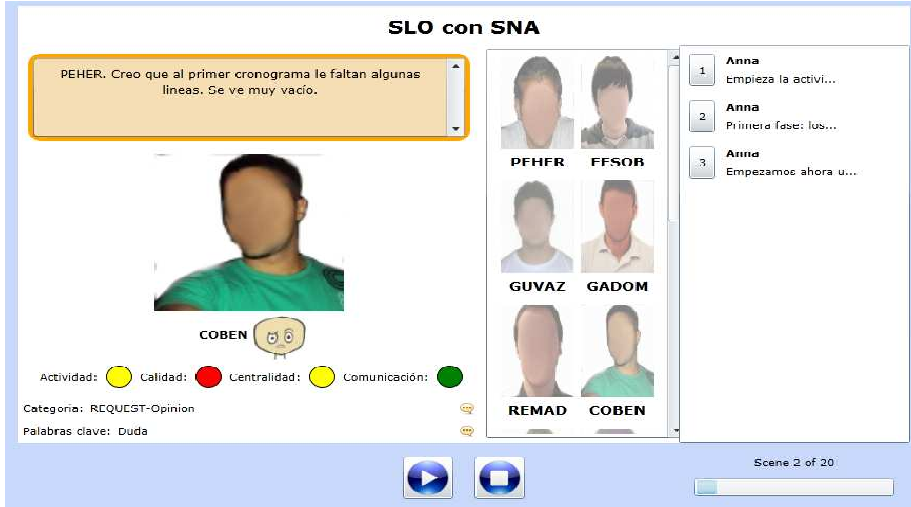 Figure 2: The prototype showing the "traffic light" indicators for Centrality and Communication on student avatars.
Critical Insight: Why This Matters
The real value of this work isn't just "showing social data," but the virtualization of collaboration. It allows a student in 2026 to "consume" a high-quality discussion from 2024 and still benefit from the social dynamics that occurred two years prior. By tagging participants with SNA metrics, the system provides a proxy for social presence, helping the new learner focus on the most "influential" parts of the conversation.
Future Outlook
The authors suggest moving away from cluttered dashboards toward integrated avatar design. For example, instead of a separate red/green light, the avatar's size could represent its centrality, or its facial expression could represent its emotional state. This move toward "embodied" social analytics is the next frontier for making virtual learning feel human.
Conclusion
CC-LR demonstrates that Social Network Analysis isn't just for researchers—it's a powerful feedback tool for students. By understanding who the "connectors" are, learners can navigate complex engineering discussions more effectively, turning a historical transcript into a living, social classroom.