
iSelf: Cracking the Cold-Start Problem in Smartphone Emotion Recognition
iSelf: Towards cold-start emotion labeling using transfer learning with smartphones
iSelf is a cold-start emotion labeling system for smartphones that utilizes transfer learning to infer user emotions from usage patterns. It addresses the data scarcity problem by mapping new user data to existing labeled models, achieving an average inference accuracy of 74-77% across six basic emotions.
TL;DR
Recognizing human emotions via smartphone usage typically requires months of intrusive manual labeling. iSelf breaks this barrier by using Transfer Learning to infer emotions (Happy, Sad, Angry, etc.) with minimal initial data. By treating new users as "unseen feature spaces" and mapping them to known distributions, it achieves a high accuracy of ~74%, all while consuming less than 2% of your battery.
The Bottleneck: Why "Cold-Start" is Killing Affective Computing
Most state-of-the-art (SOTA) emotion models are data-hungry. To train a model like MoodScope, researchers often need to track users for over two months, asking them to manually report their feelings multiple times a day. This is the Cold-Start Problem:
- Labor Intensive: Users hate constant questionnaires.
- Usage Diversity: My "excessive texting" might mean I'm happy, while yours might mean you're stressed—standard classifiers can't handle this variance without personalized training data.
Methodology: Bridging the Gap with Transfer Learning
The core innovation of iSelf is its ability to "translate" knowledge from a source group (where we have data) to a target user (where we have none).
1. Multi-Modal Feature Extraction
iSelf doesn't just look at one signal; it aggregates three distinct categories:
- Statistical Data (SD): Call durations, frequency of top contacts, and SMS counts.
- Stream Flow Data (SF): Accelerometer readings (Run/Walk/Still) and WiFi/Bluetooth proximity.
- Textual Data (TD): Semantic analysis of SMS and social media content using SentiWordNet.
2. The Transfer Engine
To map an "unseen" user to the known emotion space, iSelf utilizes a sophisticated mathematical bridge:
- J-divergence measures the similarity between statistical distributions of call/app logs.
- Dynamic Time Warping (DTW) handles sensor streams that may have different sampling rates.
- Cosine Similarity compares the sentiment vectors of textual inputs.
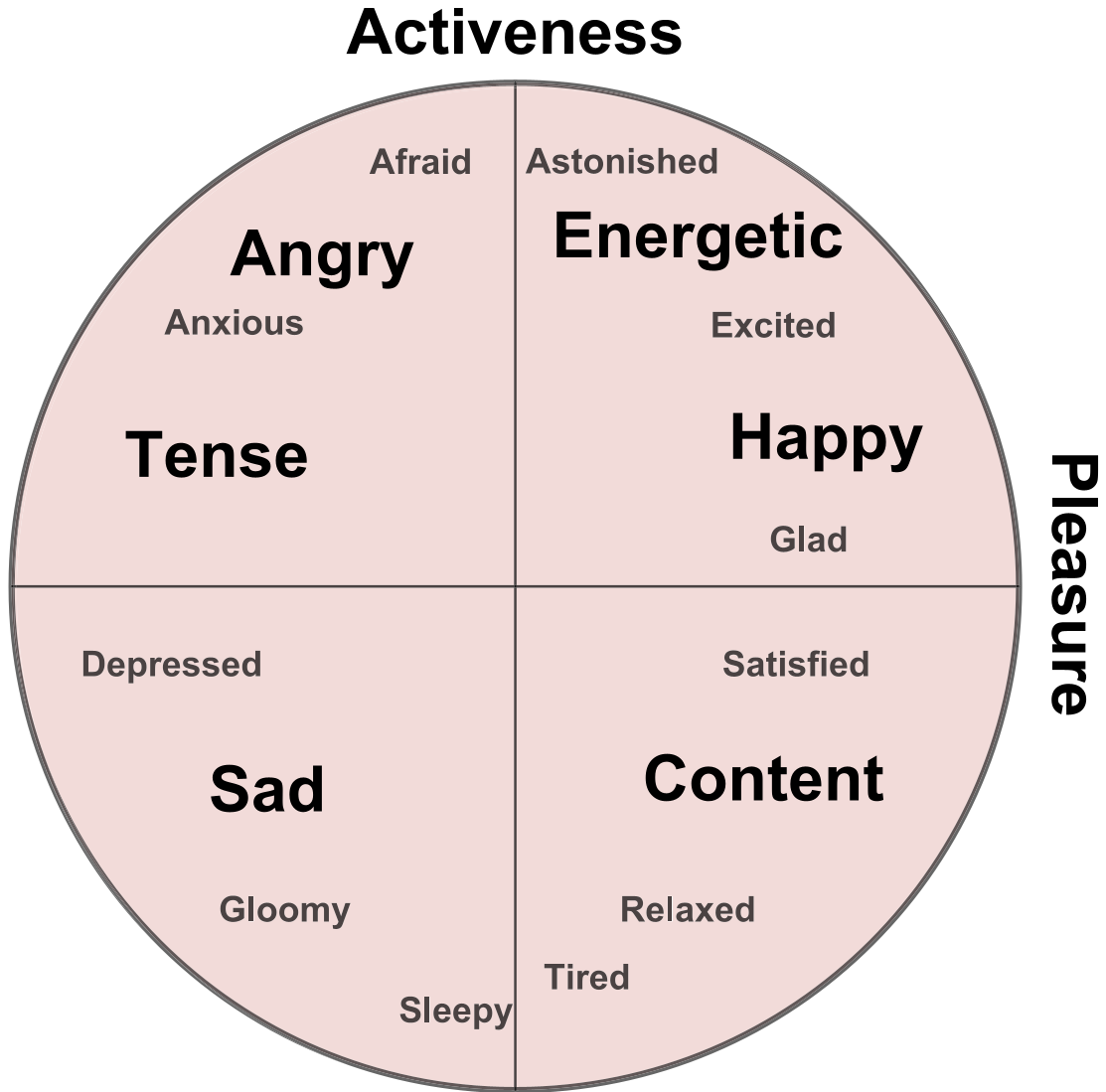 Figure 1: The overall architecture of iSelf, showing the split between mobile client processing and cloud-side model updates.
Hybrid Inference: From Public to Personal
iSelf doesn't stay stagnant. It uses a Hybrid Inference Engine:
- Step A (Public): Use the transfer learning model to provide immediate results.
- Step B (Validation): The system "overhears" emotion cues (e.g., when you select a "Sad" playlist in a music app) or uses Active Learning to ask for feedback only when it is highly uncertain.
- Step C (Personal): As ground-truth data accumulates, it trains a personal SVM (Support Vector Machine) specifically for that user.
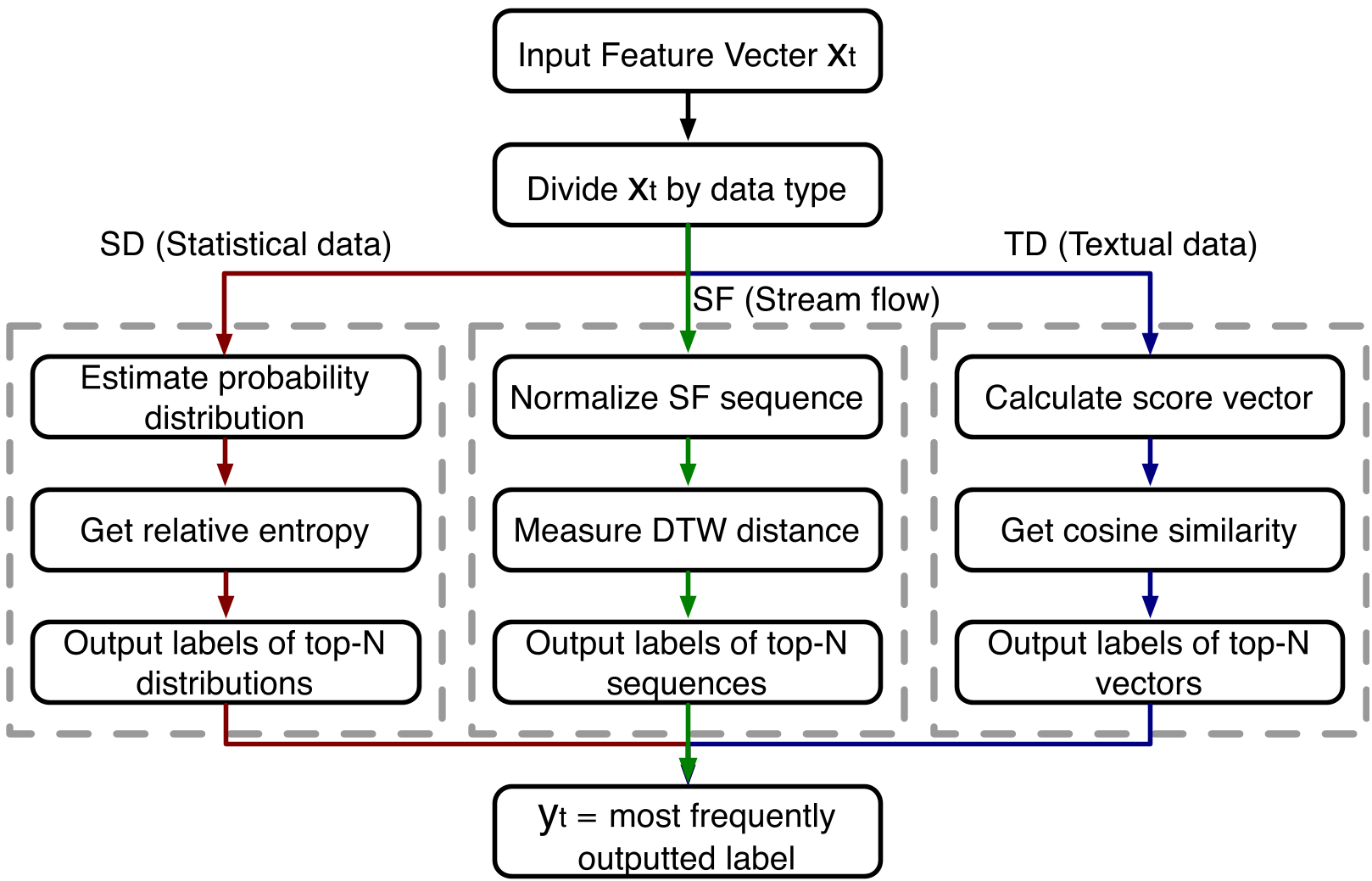 Figure 2: The hybrid logic determining when to use the Transfer model vs. the Personal SVM.
Key Experimental Findings
The researchers tested iSelf on 100 participants over eight weeks. The results were impressive:
- Accuracy: Started at 74% and climbed to 80% over time as the personal model matured.
- Emotion Specificity: "Happy" and "Sad" were detected with the highest precision (up to 90%), while "Tense" proved the most difficult to distinguish.
- Efficiency: Despite the complex math, the inference takes only 475ms.
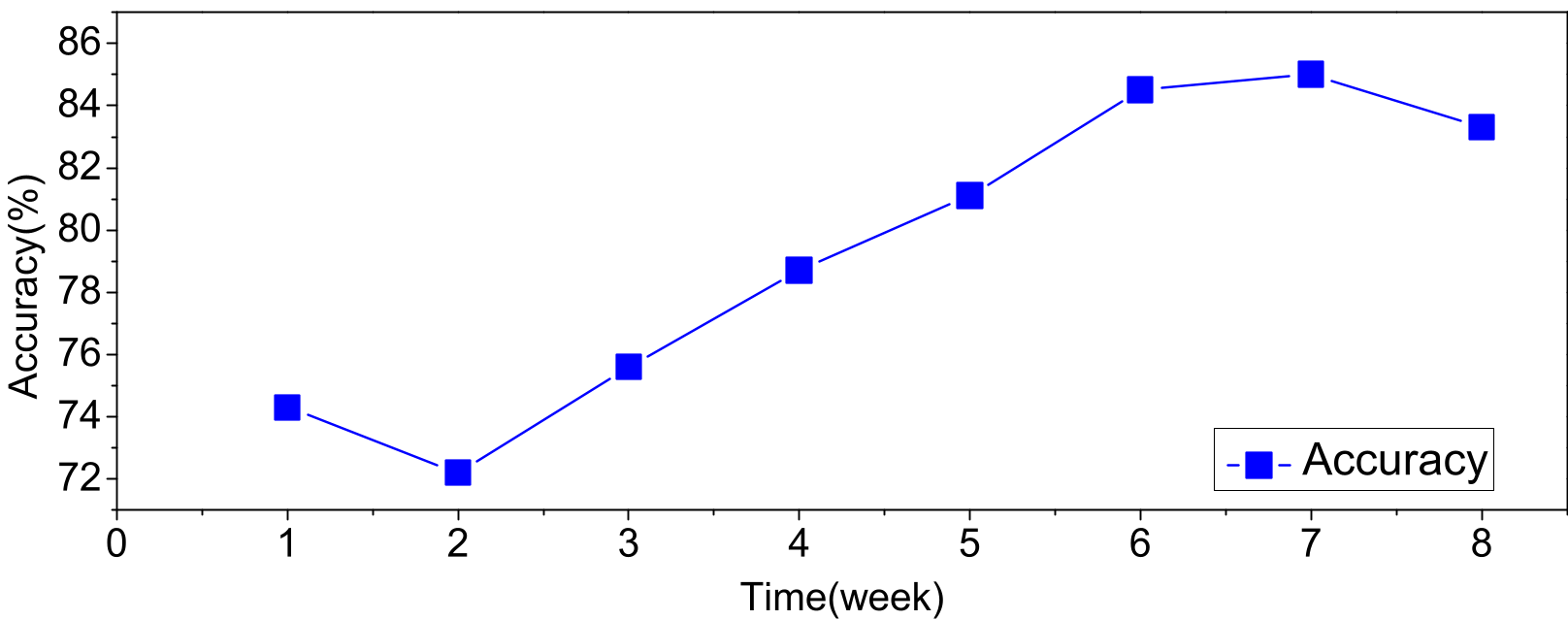 Figure 3: Generalization ability of iSelf showing accuracy growth as the system adapts to users.
Critical Insight: The "Why" Behind the Success
Why does iSelf work when others fail? The authors found that Content Data (TD) is the strongest predictor, but even without it, the Statistical Data (SD) of phone usage (who we call and when) has a 65% probability of mirroring our emotional state. iSelf succeeds because it acknowledges that "Personalities are unique, but usage distributions under specific emotions often follow translatable patterns."
Future Outlook
While iSelf is a leap forward, it still relies on relatively shallow semantic analysis. With the rise of on-device Large Language Models (LLMs), the "Textual Data" extraction could become significantly more nuanced. However, iSelf’s framework for Cold-Start Transfer Learning remains a gold standard for any developer looking to build "Emotion-Aware" apps without annoying their users for data.
Takeaway: The future of mobile AI isn't just about collecting more data, but about transferring the intelligence we already have to new contexts.