
TEC Island: Rebuilding Intercultural Bridges in a Virtual 3D World
A Model for Collaboration in Virtual Worlds Bringing Together Cultures in Conflict
The paper introduces a pedagogical framework using Social Virtual Worlds (SVW) to facilitate collaboration between students from cultures in conflict. By leveraging "TEC Island," an OpenSim-based virtual environment, the study moves beyond simple online interaction to synergetic "living together" simulations for Moslem, Druze, Christian, and Jewish children in Israel.
TL;DR
Can a virtual house bring together children from cultures in conflict? This paper explores the "TEC Model," a pedagogical framework that uses OpenSim virtual worlds to foster deep collaboration between Moslem, Druze, Christian, and Jewish students in Israel. By moving from simple text chats to "living" together in virtual homes, the project aims to reduce bias and build lasting social bonds.
Background: Beyond the Screen
In regions marked by historical conflict, physical meetings between youth can be fraught with tension and logistical hurdles. While the internet has long promised to bridge these gaps, many online platforms fail because they lack Social Presence. If students don't feel "present" with one another, the interaction remains superficial. The author addresses this by positioning Virtual Worlds not as a game, but as a specialized Collaborative Virtual Learning World (CVLW).
The Problem: The "Novelty Gap" and Competitive Bias
The researcher identifies two major pitfalls in prior work:
- Destructive Competition: Most virtual environments (like Minecraft or MMOs) are competitive. According to Allport’s Contact Hypothesis, competition can actually increase bias in conflict-prone groups.
- Teacher Technophobia: Many innovative educational tools fail because the technical entrance barrier is too high for both students and staff.
Methodology: The TEC Model and Virtual Co-habitation
The TEC Model (Technology, Education, and Cultural Diversity) follows a scaffolded approach:
- Text First: Initial communication is text-only to prevent visual bias (like religious attire) from forming immediate prejudices.
- The Training Island: To solve the "skill gap," everyone must complete 14 stations on a training island to earn their "wings" before entering the main world.
- The Joint Household: The breakthrough strategy is assigning a small group (2 Moslem, 2 Jewish, 2 Christian/Druze) an empty virtual house. They must shop for furniture, design interiors, and manage their "home" throughout the year.
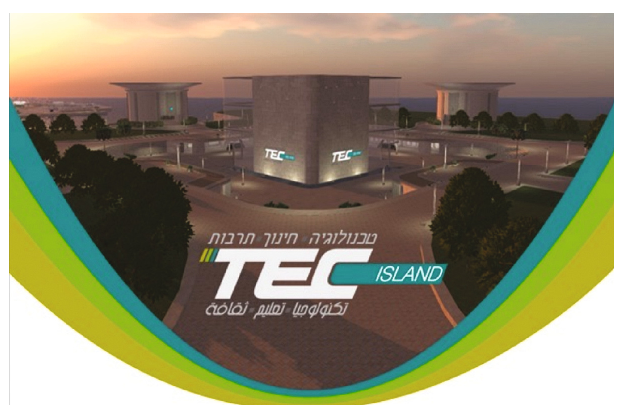 Figure 1: The virtual landscape includes inclusive spaces such as the Hillwah (Druze place of worship) and a Synagogue to foster mutual respect.
Designing for "Sociability"
The project leverages the "Big Five" components of teamwork:
- Team Leadership
- Mutual performance monitoring
- Backup behavior
- Adaptability
- Team orientation
By requiring students to collaborate on a shared creative task (the house design), the model forces "Backup behavior"—where one student helps another navigate or place an object—building a sense of Interdependence.
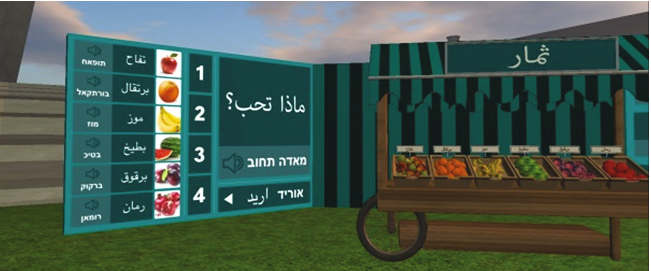 Figure 2: Role-playing in the virtual market facilitates language exchange and authentic interaction.
Results and Insights
The program has scaled to 100 schools and roughly 3,000 children annually. Key findings include:
- High Engagement: Students frequently requested to continue the program into a second year, a rarity for mandatory school ICT projects.
- Reduced Bias: Scaffolding the interaction (Text -> Voice -> Virtual Avatar -> Physical Meetup) successfully lowered the "initial threat" level of interacting with "the other."
- The "Home" Effect: Transitioning from "visitors" to "residents" in the virtual world increased the feeling of trust and belonging, essential for long-term intercultural literacy.
Critical Analysis & Conclusion
While the technical requirements (bandwidth, graphic cards) remain a hurdle for some schools, the TEC Model demonstrates that Immersive Co-creation is a powerful tool for social engineering. The move from "Working together" to "Living together" in a virtual space represents a significant shift in pedagogical design.
Future Outlook: As VR hardware becomes more accessible, the lessons learned from "TEC Island" could be applied to global conflicts, providing a safe, "neutral" digital territory where the next generation can practice the difficult art of coexistence through shared creativity.