
From Gym to Screen: How Career Stages Reshape Digital Collaboration
7646_Collaboration on Social Network Sites Amateurs, Professionals and Celebrities.
This paper explores how social network sites (SNS) facilitate collaboration across the career spectrum of bodybuilders, categorized into amateurs, professionals, and celebrities. Drawing from a 1.5-year field study, it identifies three core roles of SNS—Tool, Community, and Theater—and demonstrates a distinct shift from online toward offline collaboration as individuals gain professional status.
TL;DR
Professionalism changes how we use the internet. While amateurs use social network sites (SNS) to learn and find friends, professionals and celebrities use them as a stage—or ignore them entirely. This study of the bodybuilding community reveals a "shift to offline" that challenges our assumptions about digital communities.
Background: The Blur Between Work and Play
In the world of "Serious Leisure"—hobbies that require professional-level commitment—the line between a passionate amateur and a paid professional is razor-thin. Bodybuilding is the perfect laboratory for this research: it’s an isolated, stigmatized, yet highly visible sport where one’s body is both the product and the identity.
The Three Modes of Online Collaboration
The researchers identified three distinct "lenses" through which bodybuilders view platforms like BodySpace:
- Tool: Instrumental use—tracking weights, diet stats, and progress photos.
- Community: Social use—finding empathy from fellow "starving" dieters that regular society can't understand.
- Theater: Performative use—sharing "shredded" photos to gain ego-boosts or commercial sponsorships.
Methodology: A Tale of Two Tiers
The study combined 1.5 years of observation with 22 deep-dive interviews across Australia (an amateur hub) and California (the professional "Mecca").
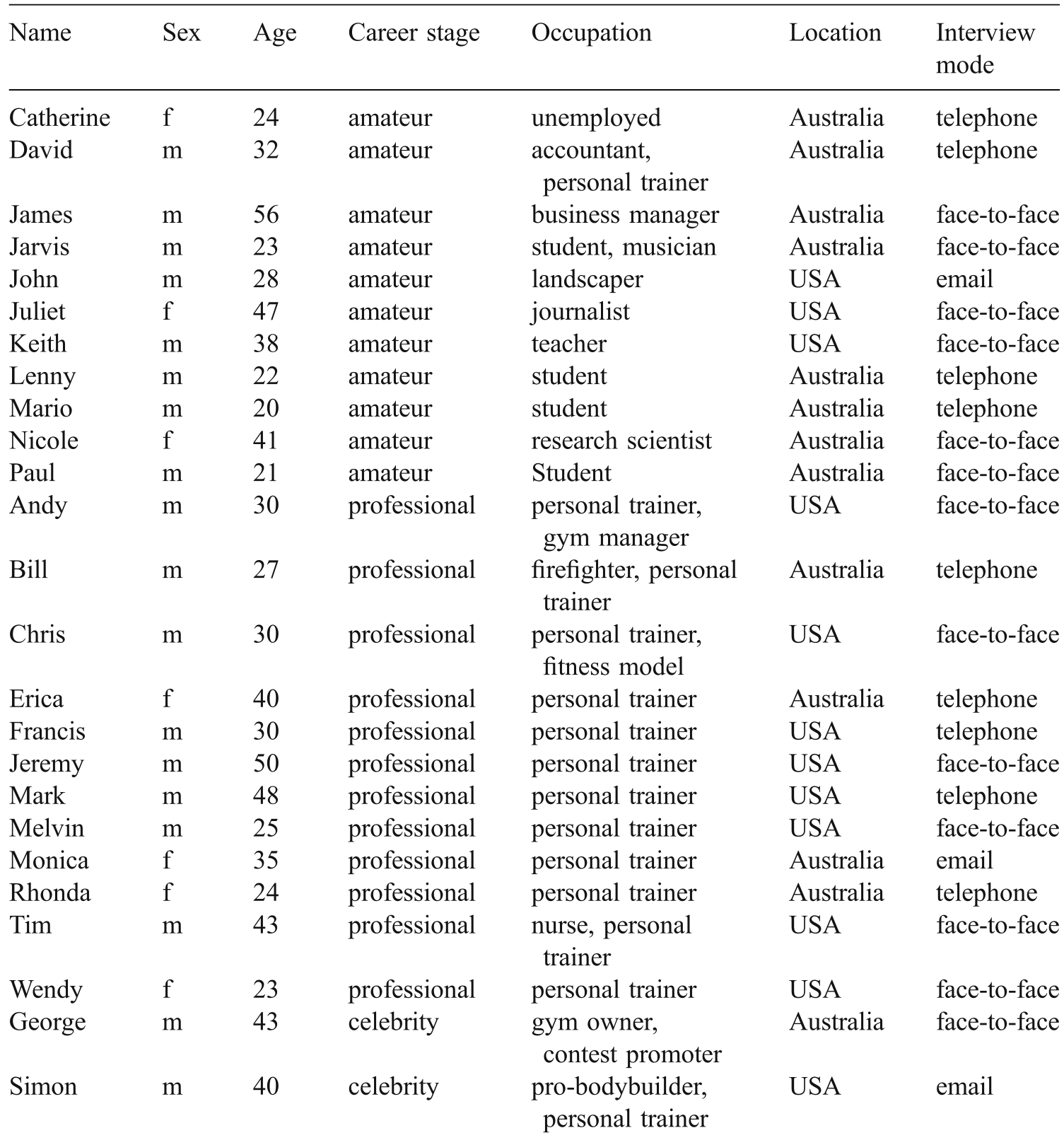 The study stratified participants by career stage to observe how SNS behavior evolves from the periphery to the center of the community.
Key Insight: The "Shift to Offline"
The most striking finding is the inverse relationship between career success and online tool usage.
1. Amateurs: Digital Lifelines
Amateurs are often "lone wolves" in their local gyms. For them, the SNS is a vital source of empathy. When they are suffering from the "hell of preparation" (extreme dieting), they turn to strangers online because their colleagues at their "day jobs" simply think they are crazy.
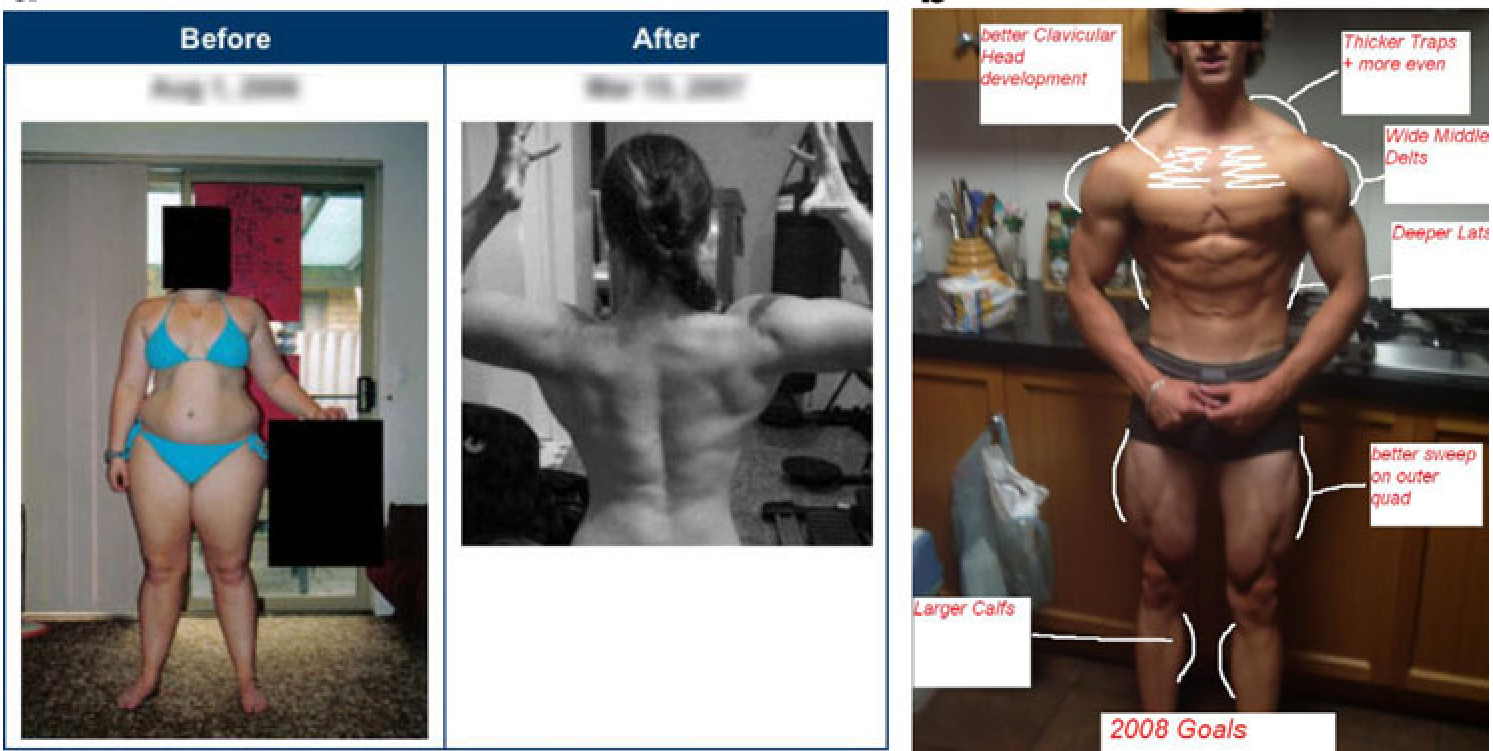 Amateurs use visual tools to track transformations, though the study noted a lack of truly 'critical' feedback online.
2. Professionals: It’s Just Business
As bodybuilders turn pro (e.g., becoming personal trainers), the "Tool" and "Community" aspects move offline. Why? Because they now have actual humans—coaches and training partners—to give them real-time, expert feedback. On the SNS, they shift to Theater. They stop asking for advice and start posting "teaser" photos to lure in paying clients.
3. Celebrities: The Invisible Elite
Top-tier celebrities (like Mr. Olympia winners) are rarely active on passion-centric SNS. They have "teams" (wives, managers, dietitians) providing 24/7 support. They don't need validation from strangers on BodySpace. When they do use social media, they prefer "mass media" styles like Facebook Fan pages to broadcast to thousands, rather than 1-on-1 interaction.
Critical Analysis & Design Lessons
This research highlights a major limitation in how we design "passion-centric" sites:
- The Critical Feedback Gap: SNS platforms struggle to provide the "tough love" required for high performance. Most comments are positive reinforcement/praise, which is great for motivation but bad for skill development.
- The Commercial Reality: Many SNS terms of service prohibit commercial activity, yet the study shows that professionals must use these platforms for business to remain engaged.
- Privacy vs. Transparency: Unlike Facebook, where privacy is a feature, in passion-centric domains, transparency is trust. Seeing a user's progress photos and training history is how the community "vets" their expertise.
Conclusion: Beyond the Screen
The journey of a bodybuilder is one of moving from the digital periphery into an offline core. For developers and researchers, the lesson is clear: A platform isn't just a place for users to hang out; it's a bridge. As users grow, the bridge must change from a school (Tool) to a neighborhood (Community) and eventually to a billboard (Theater).
If a platform fails to provide that "Theater" for its top-tier users, they will simply log off and head back to the gym.