
Collaborative Data Work: Reimagining Democracy Through an Ethic of Care
Collaborative Data Work Towards a Caring Democracy
This paper explores "Collaborative Data Work Towards a Caring Democracy," presenting an ethnographic study of "Block by Block," a grassroots civic data initiative. Using philosopher Joan Tronto’s "Ethic of Care," the authors demonstrate how community-led data collection on neighborhood neglect can reformulate democratic engagement through relational, rather than purely procedural, practices.
TL;DR
In an era where "Smart Cities" often equate to automated surveillance and efficient punishment, researchers from Georgia Tech present a radical alternative. In Collaborative Data Work Towards a Caring Democracy, authors Amanda Meng, Carl DiSalvo, and Ellen Zegura explore how a grassroots initiative called Block by Block uses data collection not as a tool for enforcement, but as a practice of care. By tracking neighborhood neglect through a feminist ethical lens, they demonstrate how data can foster solidarity and collective responsibility in marginalized urban spaces.
Motivation: The Failure of Neoliberal Civic Tech
Modern civic technologies, such as the ubiquitous 311 apps used in major cities, are built on a philosophy of individual responsibility. If a yard is overgrown, the system's logic is simple: report it, cite the owner, and fine them.
However, the authors argue that this "neoliberal ideal" ignores reality. Does the yard belong to a predatory real estate speculator or an elderly resident who is too infirm to mow it? Current systems cannot distinguish between the two, leading to what the authors call the "privilege of irresponsibility" for the powerful and punitive outcomes for the vulnerable. The goal was to move from "governmentality" to "caring with."
Methodology: Data Work as "Democratic Caring"
The study follows Mr. Leslie (Les) Canty, a resident of Atlanta’s English Avenue—a neighborhood marked by historical racist oppression and current disinvestment. Les founded "Block by Block" to collect parcel-level data on code violations (e.g., abandoned houses, illicit dumping).
The "Caring" Data Stack
The team developed a custom sociotechnical system that wasn't just about "marking points on a map." The architecture included:
- Attentiveness: Using tablets to catalog unmet needs (e.g., "yellow for trash") to direct community resources.
- The Responsibility Toggle: A crucial feature was a radio button allowing users to tag a violation for "Code Enforcement" (punitive) or "Block by Block" (community-led care).
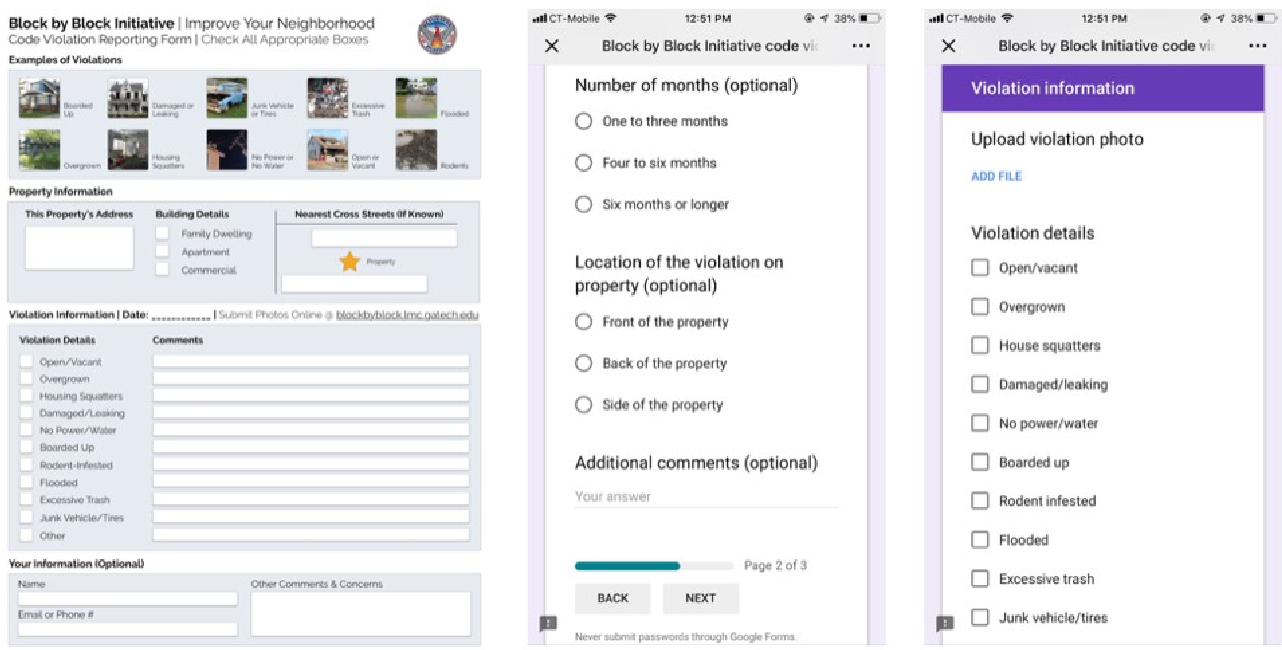 Figure 1: The iterative making of toolsets—from paper maps to digital forms—supporting local agency.
Key Insight: The "Ride-Along" Conflict
One of the paper's most striking sections describes a "ride-along" between Les and a City Code Enforcement supervisor. When Les offered his spreadsheet of data, the supervisor refused it, stating: "I’m not taking those... If it’s on my plate, I gotta serve it."
This highlights the clash of epistemologies:
- The Bureaucratic View: Data is evidence for a judge. Once "seen," the law must act unilaterally, regardless of the person's vulnerability.
- The Caring View: Data is a prompt for relationship. It allows for "Solidarity in Plurality"—knowing when to report a delinquent investor and when to organize a neighborhood cleanup for a struggling neighbor.
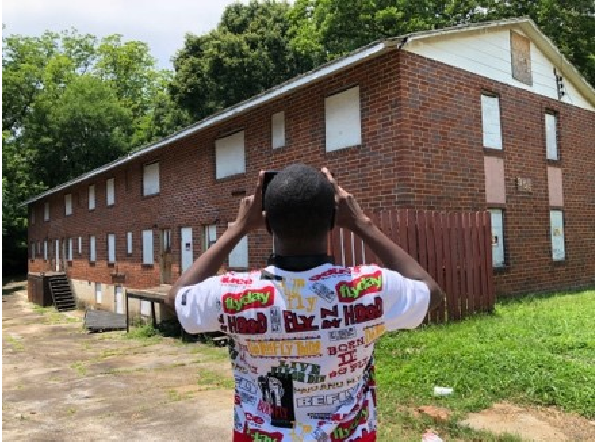 Figure 2: Tracking neglect in situ—data collection as an act of neighborhood surveillance vs. neighborhood care.
Results & Results: Data as Legitimacy
The researchers found that data provided residents with "strategic competence." In one instance, Watershed Management ignored reports of flooding until Les presented a structured spreadsheet and photos. The data acted as a "boundary object" that forced the city to take the residents' local knowledge seriously, granting them an "equity of voice."
Attentiveness vs. Surveillance
The paper makes a sharp distinction between:
- Surveillance: Automated, self-interested, and optimized for resource efficiency.
- Attentiveness: Laborious, collaborative, and centered on the perspective of those in need.
Conclusion: Democracy in the Small
The authors conclude with a call for "democratic design experiments in the small." While we often obsess over "scaling" technology to millions, the work of a caring democracy happens in the "thick" relationships of a single neighborhood.
Takeaway for Designers: We must stop designing civic tech that merely automates bureaucracy. Instead, we should build tools that recognize human vulnerability, facilitate pluralistic responses, and allow communities to define their own responsibilities.
Limitations
The study notes the difficulty of "caring with" municipal entities that are structurally resistant to non-hierarchical collaboration. True "caring democracy" is not an end state but an ongoing, often friction-filled process of negotiation.