
Collaborative FR: Why Your Friends' Models are Better at Recognizing You than a Centralized AI
Collaborative Face Recognition for Improved Face Annotation in Personal Photo Collections Shared on Online Social Networks
This paper introduces a "Collaborative Face Recognition" (FR) framework specifically designed for personal photo annotation in Online Social Networks (OSNs). By leveraging social network context and photo co-occurrence statistics, the system selects a personalized subset of expert FR engines from a user's social circle and fuses their results to achieve state-of-the-art annotation accuracy.
TL;DR
Personal photos shared on platforms like Facebook or Cyworld are notoriously difficult for standard Face Recognition (FR) due to poor lighting and candid poses. This paper proposes a Collaborative FR framework that doesn't rely on one "super-model." Instead, it selects a group of "expert" models from your social circle—friends who actually know you—and fuses their predictions. The result? Accuracy jumps by over 30%, and the system is perfectly built for decentralized privacy-conscious networks.
The Core Insight: Social Context as an Accuracy Booster
Traditional FR treats every image as an isolated data point. However, in Social Networks (OSNs), data is inherently relational. You are more likely to appear in photos with your family and best friends than with a random stranger.
The authors argue that personalized FR engines—models trained on a small, specific set of people (like a user's inner circle)—are inherently more "expert" at recognizing those specific individuals. By turning face recognition into a collaborative effort across a social graph, we can tap into these pockets of expertise.
Methodology: Selecting the Experts and Fusing the Votes
The framework operates in two critical phases:
1. Social Graph Modeling (SGM)
The system builds a weighted graph where nodes are users and edges represent the strength of social ties. This strength is calculated using:
- Occurrence Probability: How often a friend appears in your albums.
- Co-occurrence Probability: How often you and that friend appear together across the entire OSN.
Only FR engines belonging to contacts with a "Social Relevance Score" above the average are invited to participate in the recognition task.
2. Merging Heterogeneous Results
Since different users might use different FR algorithms (PCA, LBP, or Fisherfaces), the system must merge results from a "black box" perspective. The authors proposed two methods:
- BDRF (Bayesian Decision Rule Fusion): Converts distance scores from different engines into a common "a posteriori" probability.
- CMVF (Confidence-based Majority Voting): Counts the number of "votes" for an identity, weighted by the engine's social relevance and its own confidence score.
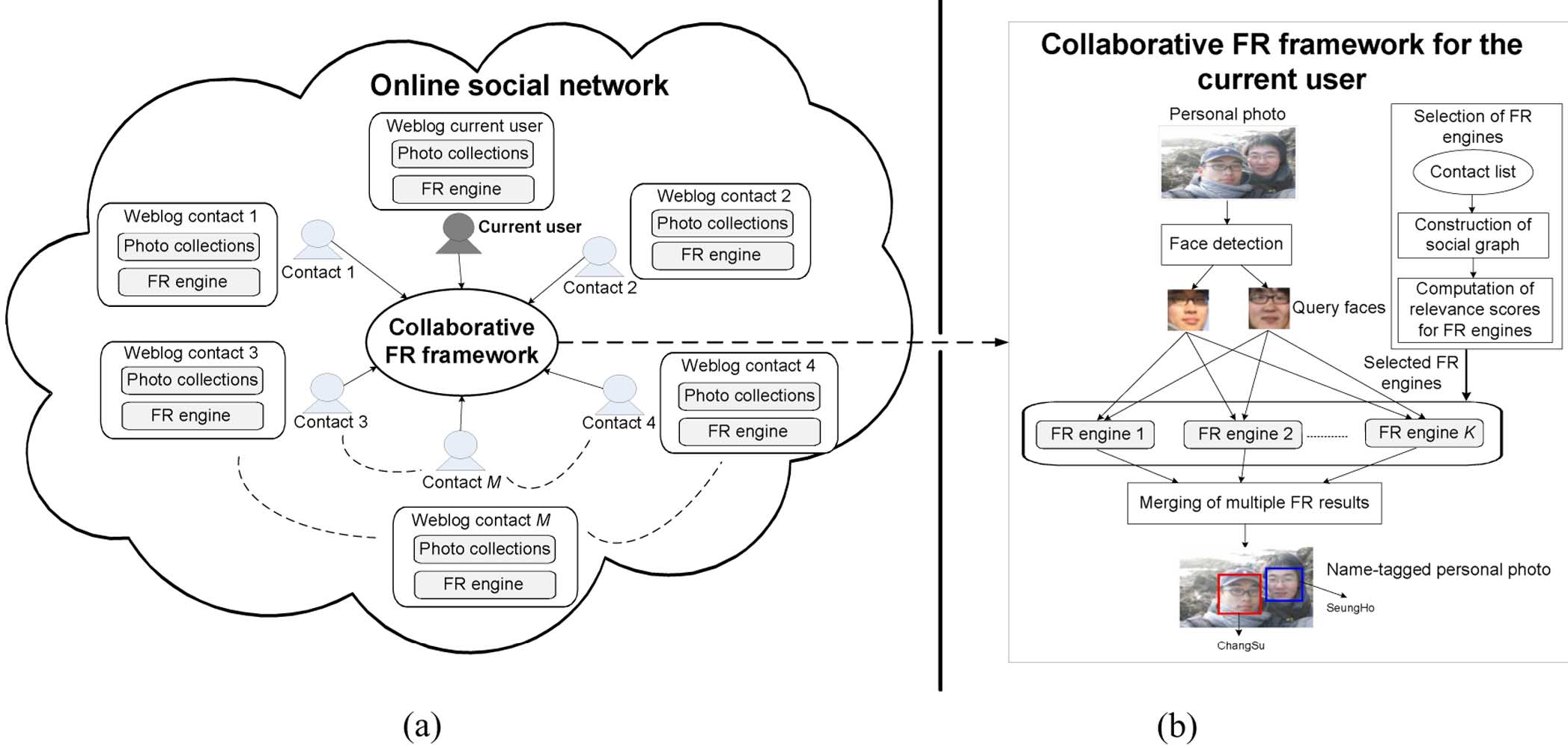 Figure 1: The proposed collaborative framework showing the flow from SGM selection to fusion.
Battle-Tested on Real-World Data
The researchers didn't just use standard datasets like LFW; they collected 547,991 photos from Cyworld. These images include heavy makeup, occlusions, and extreme poses—the "nightmare" scenarios for 2010-era computer vision.
Key Findings:
- Superiority over Centralized Models: Collaborative FR significantly outperformed "Centralized FR" (one model trained on everyone's data). This proves that local expertise is often more valuable than global scale.
- Efficiency: Despite using multiple models, the system is fast. By intelligently selecting only the "top" socially relevant engines, it avoids the computational trap of running hundreds of classifiers for a single face.
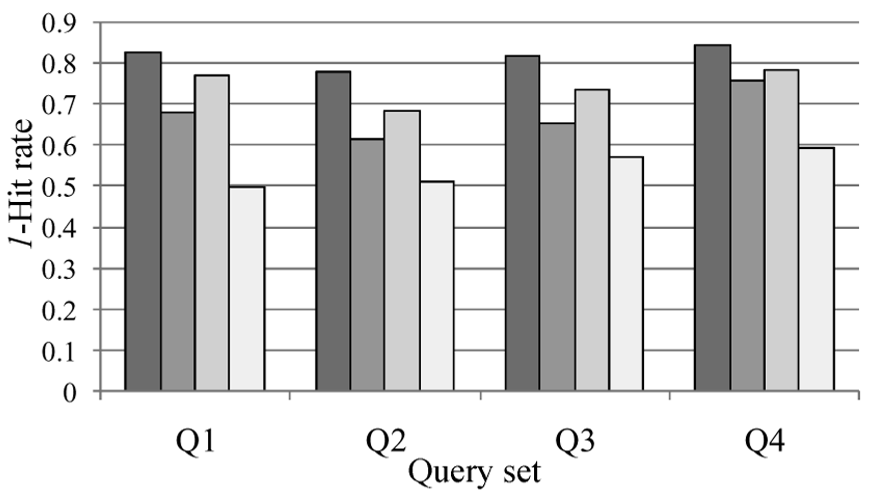 Figure 2: Impact of engine selection and weighting on 1-Hit accuracy.
Critical Analysis: A Precursor to Decentralized AI
While this paper was published in the context of early social networks, its implications for Decentralized OSNs (like Mastodon or Web3 social protocols) are profound.
Strengths:
- Privacy-Friendly: Engines only need to share a "score" rather than raw training data.
- Heterogeneity: It doesn't matter if my friend uses an expensive deep-learning model while I use a simple PCA; the Bayesian fusion handles both.
Limitations:
- Cold Start Problem: The system relies on at least some manual tags to build the initial Social Graph.
- Dependency on Connectivity: If a user has no social connections or photo history, the "experts" cannot be identified easily.
Conclusion
Choi et al. successfully demonstrated that intelligence in social networks should reside in the edges—the relationships between people—rather than just the center. By combining social context with ensemble learning, they turned a difficult 1-to-N recognition problem into a 1-to-Small-Group problem, drastically improving the quality of our digital memories.