
ERM-RLS: Scaling Face Recognition for the Social Media Era
A collaborative face recognition framework on a social network platform
This paper proposes a Collaborative Face Recognition framework designed for social network platforms, utilizing an Extended Recursive Reduced Multivariate Polynomial Regression (ERM-RLS). The method enables efficient, incremental updates to user-specific classifiers, achieving accuracy comparable to SVM while being up to 33.7x faster in inference.
TL;DR
As social media platforms exploded, traditional face recognition became a bottleneck. This paper introduces a Collaborative Face Recognition Framework that shifts away from static, centralized training. By using an Extended Recursive RM-RLS model, the system enables incremental "chunk-by-chunk" updates that are significantly faster than SVMs, allowing users to share tagging info and eliminate redundant manual labeling.
Background: The Shift from PC to Social Platforms
Historically, face recognition was a "product"—a tool for PC security with static datasets. In the age of social networks, it has become a "service." The authors identify several critical shifts:
- Data Dynamics: Social media sees daily updates from varied devices, not a single CCD camera.
- Feedback Loops: User interactions (re-labeling) provide immediate supervised data that must be integrated.
- Distributed Nature: Centralized re-training for millions of users is a computational nightmare.
| Viewpoint | PC Platform | Social Network Platform |
|---|---|---|
| Application | Security | Auto-tagging & Retrieval |
| Face Variation | Small/Constrained | Very large |
| Maintenance | Administrator | Individual user-based |
Methodology: High-Speed Incremental Learning
The core innovation lies in the Extended Recursive Reduced Multivariate Polynomial Regression (ERM-RLS).
1. Reducing the Polynomial Overhead
Standard multivariate polynomials explode in complexity with high dimensions. The authors use a Reduced Model (RM) that keeps the number of terms growing linearly () rather than exponentially.
2. Recursive Updates (RLS)
Instead of re-solving the Least Squares problem every time a new photo is uploaded, the model uses a recursive formulation. It updates the weight parameters based on the "Innovation" (the error between new data and current prediction) and the "Gain" (uncertainty of the new data chunk).
3. Distributed Collaboration
When User A tags a photo containing User B, the identification metadata is shared. User B’s local classifier is updated using this "feedback" without User B ever having to manually tag the photo, effectively creating a collaborative intelligence network.
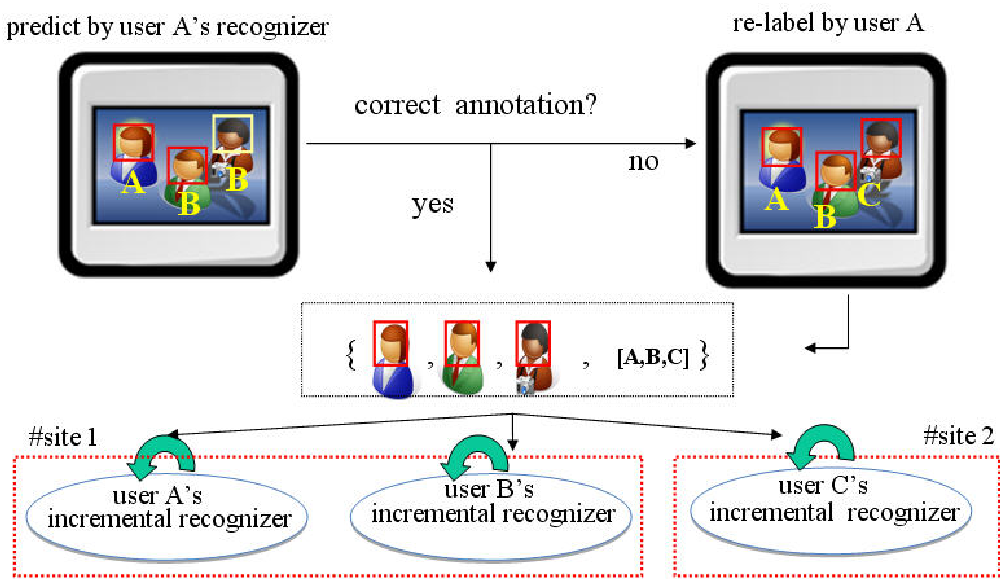 Figure 1: Conceptual flow of sharing identification info to avoid redundant tagging.
Experimental Performance
The authors pitted ERM-RLS against a Polynomial Kernel SVM, the gold standard at the time.
- Accuracy: On the EYALEB database, ERM-RLS (Order 3) achieved 96.1%, outperforming the batch-trained SVM (92.2%).
- Training Efficiency: As shown in the graphs below, SVM training time grows exponentially with the number of samples. In contrast, ERM-RLS maintains an almost constant training time, as it only needs to process the "new chunk" of data.
- Inference Speed: At 11,560 samples, ERM-RLS was 33.7 times faster than SVM, making it the only viable candidate for real-time web stress scenarios.
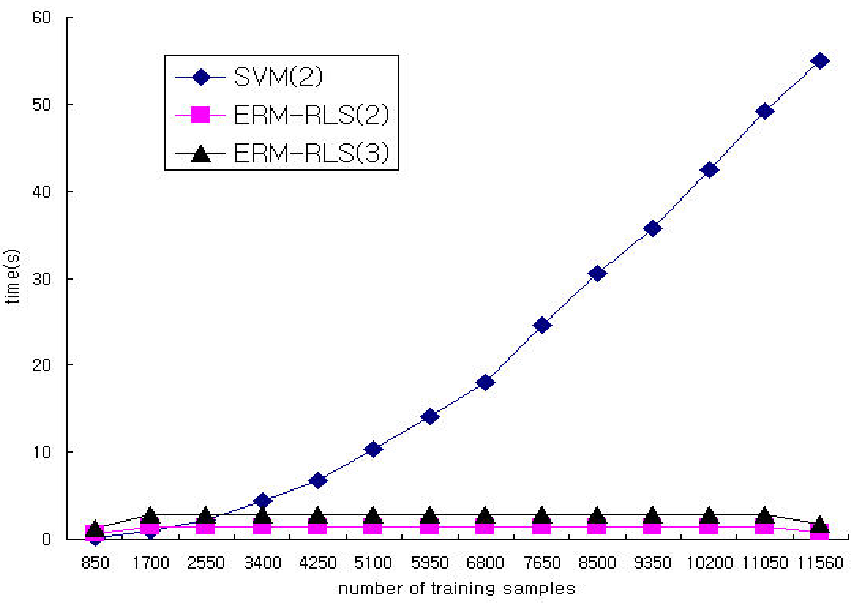 Figure 2: (a) Training time vs. samples; (b) Test time comparison showing the massive efficiency gain of ERM-RLS.
Critical Insight & Conclusion
The brilliance of this work isn't just in the speed—it's in the mathematical intuition. By treating face recognition as a recursive regression problem rather than a static classification problem, the authors unlocked "Live Learning."
While modern Deep Learning (CNNs/Transformers) has overtaken polynomial models in raw feature extraction, the recursive update logic presented here remains highly relevant for "On-Device AI" and "Continual Learning" where we cannot afford to re-train models from scratch.
Limitations
- Feature Dependency: The study relies on PCA for dimensionality reduction; performance may vary with more complex, non-linear feature extractors.
- Scalability of Classes: While efficient, the "One-vs-All" multi-class approach still grows with the number of classes, which might require hierarchical strategies in massive social networks.