
Beyond Feature Replication: A Systematic Domain Engineering for Social Networks
Collaborative Features in Content Sharing Web 2.0 Social Networks: A Domain Engineering Based on the 3C Collaboration Model
This paper presents a domain engineering approach for Web 2.0 content-sharing social networks using a modified FODA (Feature Oriented Domain Analysis) method. By integrating the 3C Collaboration Model and interaction patterns, the authors developed a reusable component kit based on the Groupware Workbench to streamline social network development.
TL;DR
Building social networks often feels like reinventing the wheel. This paper introduces a systematic Domain Engineering (DE) approach that uses the FODA method and the 3C Collaboration Model to identify, classify, and implement reusable components for Web 2.0 platforms. By transforming common features like "commenting" and "activity feeds" into a standardized component kit, the authors demonstrate how to move from manual coding to efficient system assembly.
Background: The Stagnation of Replication
Most Web 2.0 platforms share a massive overlap in functionality. Whether it's Facebook, Flickr, or YouTube, the core "social" experience relies on a predictable set of features. However, the industry remains in what the BRETAM model calls the Replication Phase: researchers and developers copy ideas but rarely reuse code effectively. The lack of toolkits that encapsulate these complexities leads to constant redevelopment and high costs.
Methodology: The 3C-Enhanced FODA Approach
The authors don't just list features; they categorize the "essence" of collaboration using the 3C Model:
- Communication: Exchange of messages (e.g., Commenting).
- Coordination: Managing people and activities (e.g., Recent Activities, Reporting Abuse).
- Cooperation: Joint operation in a shared space (e.g., Shared Content, Tagging, Rating).
They combined this with Interaction Patterns—a structured way to document the "why" and "how" of a feature, including "danger spots" (like security risks in comment fields).
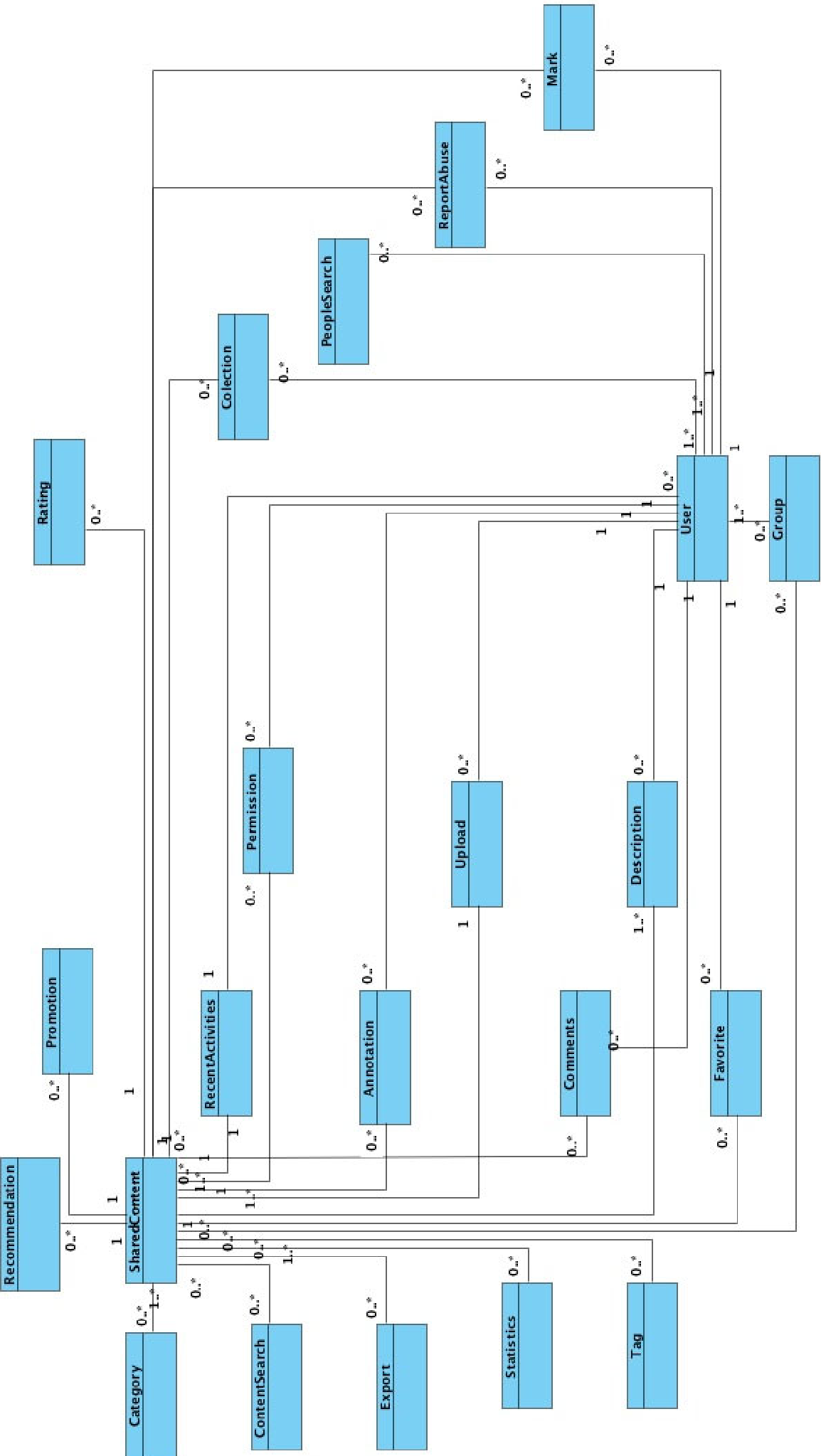 Above: The Feature Model showing mandatory and optional collaborative components identified across the domain.
From Analysis to Implementation: The Groupware Workbench
To turn theory into practice, the team used the Groupware Workbench. This platform allows features to be implemented as collablets—reusable Java-based components. A key innovation here is the one-to-one mapping between identified domain features and software components, enabling developers to compose applications through a graphical interface.
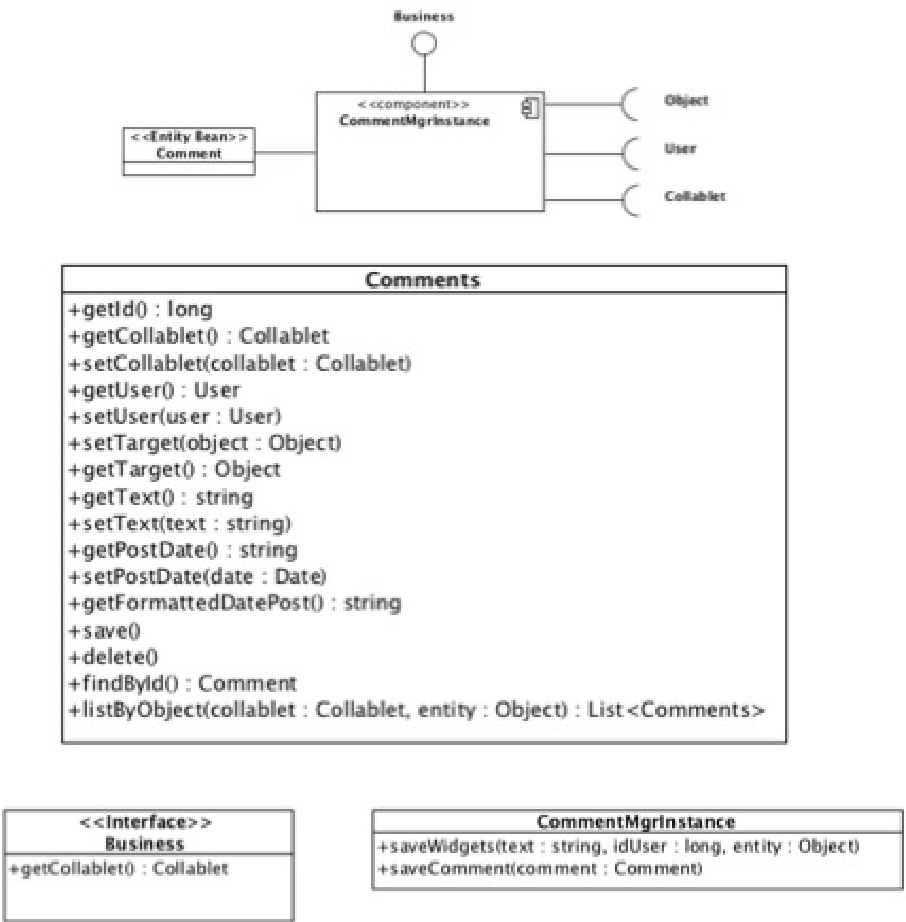 Above: Architecture of the 'CommentMgr' collablet, illustrating the internal structure of a reusable core component.
Experiments & Real-World Validation
The authors validated their work through two main lenses:
- Developer Experience: An experiment with 10 developers showed that the identified patterns (like "Recent Activities" and "Object Sharing") were highly recognizable in existing networks like Flickr and Netlog. While usability of the toolkit had room for improvement, the utility was rated almost universally high.
- Case Study (Arquigrafia Brasil): They applied the component kit to help build a social network for Brazilian architecture. They found that 12 out of the project's required features were already covered by the domain engineering artifacts, proving the methodology's predictive power.
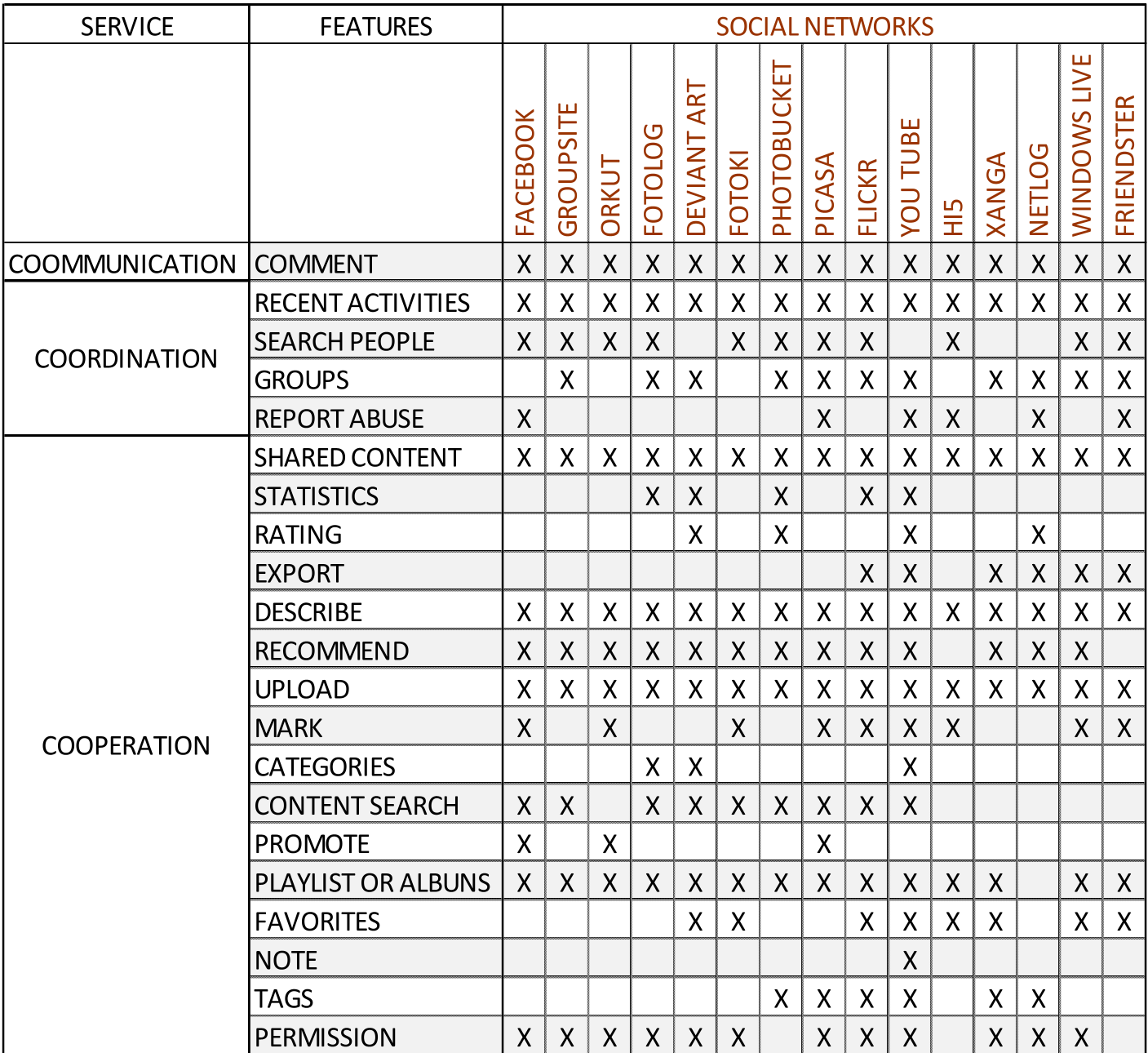 Above: A comparison of features across 15 major social networks, justifying the selection of the core component kit.
Critical Insight & Conclusion
The true value of this work lies in its standardization of the collaborative vocabulary. By using 3C and Interaction Patterns, the authors provide a bridge between "what the user wants" (Requirements) and "what the developer builds" (Components).
Limitations: While powerful for traditional Web 2.0, the current domain engineering might need updates for modernized "Web 3" social patterns (like decentralized identity or token-gated access). Additionally, the reliance on a specific workbench may introduce framework lock-in.
Takeaway: If you are building a collaborative system, stop writing your comment logic from scratch. Look at your domain through the lens of Communication, Coordination, and Cooperation to find your true "communalities" and build for reuse.