
Actively Building Collaborative Filtering: Leveraging Clustered Social Data and Active Users
Actively building collaborative filtering recommendation in clustered social data
This paper introduces a modified Collaborative Filtering (CF) framework designed for clustered social network data. It leverages an improved K-means clustering algorithm and a novel "active user" identification mechanism to enhance recommendation precision and stability while addressing data sparsity.
TL;DR
To tackle the perennial challenges of recommendation systems—data sparsity, scalability, and the cold-start problem—this paper proposes a modified Collaborative Filtering (CF) framework. By combining an optimized K-means clustering algorithm with a mechanism to identify and utilize "active users" within social clusters, the authors achieve higher precision and better stability than traditional CF methods.
Problem & Motivation: The "Information Explosion" Paradox
In modern social networks, we suffer from an "information explosion" where the sheer volume of data makes finding relevant items difficult. Paradoxically, while there is much data, there is a shortage of available relational data (likes/dislikes) because users are often protective of their privacy.
The authors identify two critical gaps in prior SOTA:
- Scalability Issues: Traditional CF cannot process millions of users/items in real-time without structural optimization.
- Neglect of Social Influence: Most systems treat all users as equal data points, ignoring the potential of "active users" to drive system accuracy and speed.
Methodology: Clustering Meet Social Authority
The core of the paper lies in its structured graphical model , where vertexes represent users or items and edges represent relationships.
1. Optimized Entity Clustering
The system uses an improved K-means clustering method. To avoid the arbitrary selection of 'k' (the number of clusters), they introduce Minimum Distance Variance (MDV). By iterating through possible values of and calculating the variance from the group centers, the system discovers the most "natural" grouping for that specific dataset.
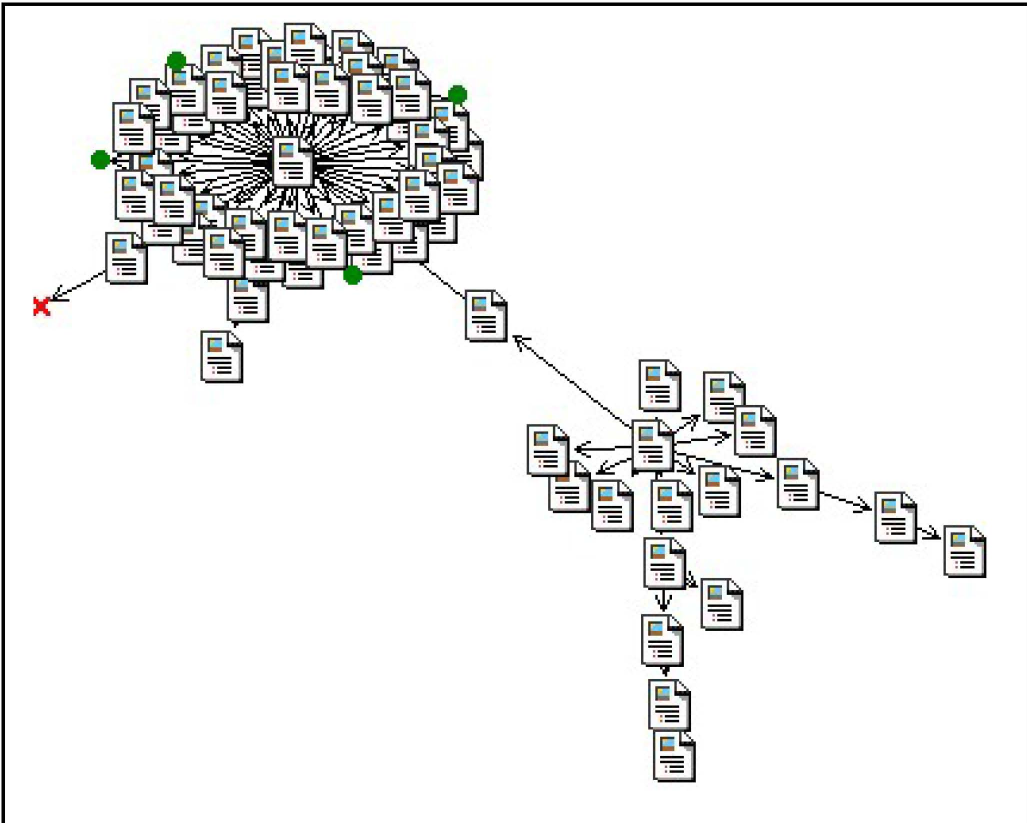 Figure 1: The graphical model representing entities and social relationships.
2. The Power of "Active Users"
The unique "Active User" mechanism focuses on the top 1.3% - 2.8% of users (categorized by a Popularity score). When a user provides comments or interacts via the system's JSP/HTML interface, their popularity increases. The system segments these active users into clusters, allowing new or inactive users to receive recommendations from "experts" within their specific interest group.
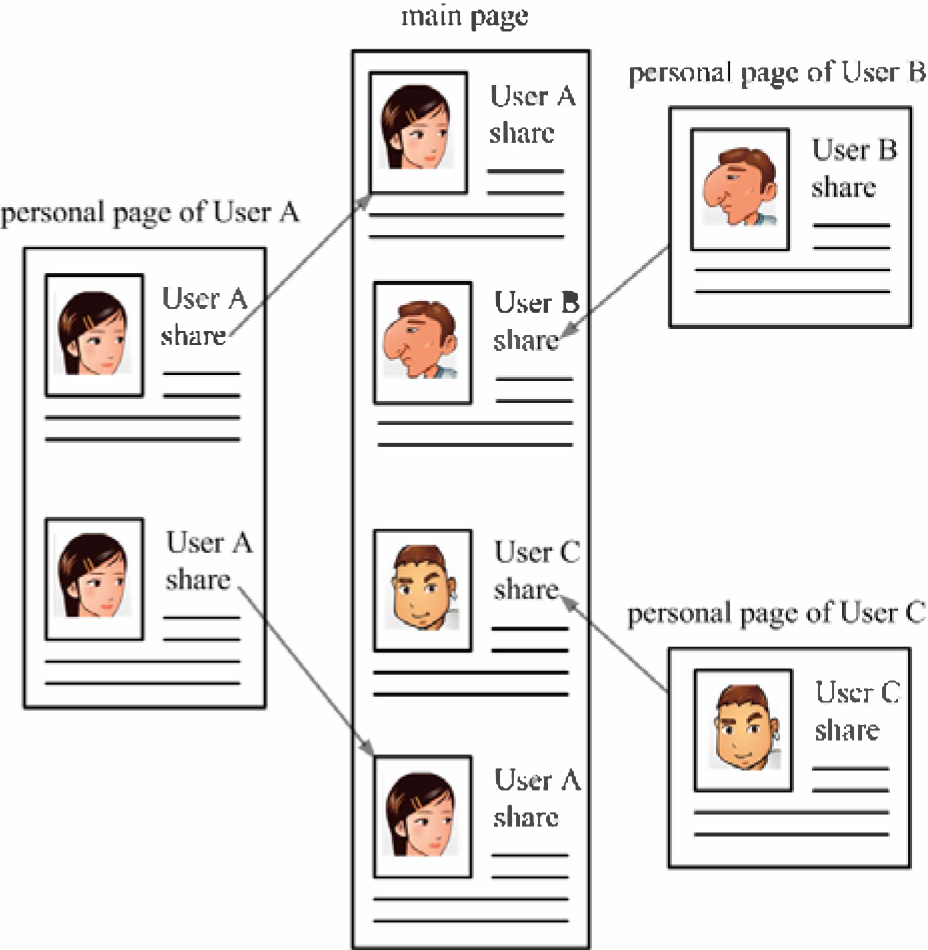 Figure 2: The interaction between the main page and personal pages to track user activity.
Experiments: Real-World Validation
The authors crawled data from MovieLens and Imdb using the WebSPHINX robot. They compared their Proposed Collaborative Filtering Recommendation (PCR) against a Naive CF (NCR) baseline.
| Metric | Dataset | Result |
|---|---|---|
| Precision | MovieLens | PCR significantly higher than NCR over 60 days |
| Stability | Imdb | PCR remained stable while NCR fluctuated wildly |
| Cold-Start | Both | Clusters provided immediate anchors for new users |
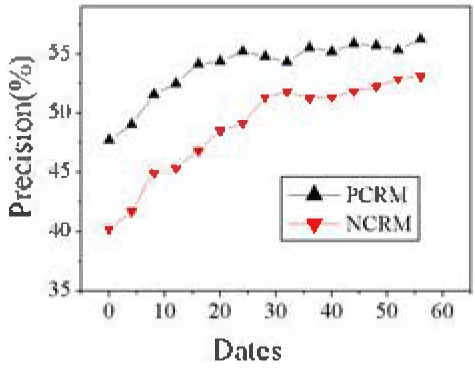 Figure 3: Precision comparison showing the proposed method leading in both accuracy and consistency.
Critical Insight & Conclusion
The beauty of this research lies in its hybrid nature. It doesn't just rely on raw math; it incorporates social psychology by recognizing that not all users contribute equally to a network's signal. By "actively" picking up the trend-setters (active users) and grouping them mathematically (K-means), the system creates a shortcut for recommendations that is both computationally efficient and human-centric.
Limitations: While the active user percentage (2%) is cited as optimal for their tests, this might vary significantly across different social platforms (e.g., Twitter vs. LinkedIn), requiring further adaptive tuning.