
Collaborative Leadership: The Hidden Engine of Smart City Governance
Understanding Factors and Mechanisms for Collaborative Governance Based on Smart Technologies Two Case Studies in China
Summary
Problem
Method
Results
Takeaways
Abstract
This research investigates Public-Private Partnerships (PPPs) in the smart city context, proposing a theoretical model of collaborative governance. It introduces three static leadership factors (Compressive Capacity, Openness, Profit Neutrality) and two dynamic mechanisms (Catalyzing Innovation, Controlling Conflicts). The study demonstrates how non-government entities in China (Tencent and CSA) successfully lead urban service projects despite lacking traditional administrative authority.
## TL;DR
Modern smart city projects often outpace the ability of traditional government contracts to manage them. This research reveals that success doesn't come from rigid rules but from **Collaborative Leadership**. Through two major Chinese case studies—WeChat in Shanghai and a Senior Services NGO in Beijing—the authors show how dynamic leadership mechanisms can turn private tech firms and non-profits into effective public service leaders.
## The Innovation Gap in Smart Governance
In the era of "Internet Plus," public services are no longer the sole domain of the government. However, we face a paradox: the government has the authority but lacks the technical agility, while private firms have the tech but lack public trust. Traditional Public-Private Partnerships (PPPs) rely on **contracts** to bridge this gap. But contracts are static, and technology is dynamic. When a project hits a technical wall or a data privacy crisis, a 50-page contract is often useless.
The authors argue that **leadership** is the "agile factor" that fills this institutional void.
## The Theoretical Framework: Static Traits vs. Dynamic Actions
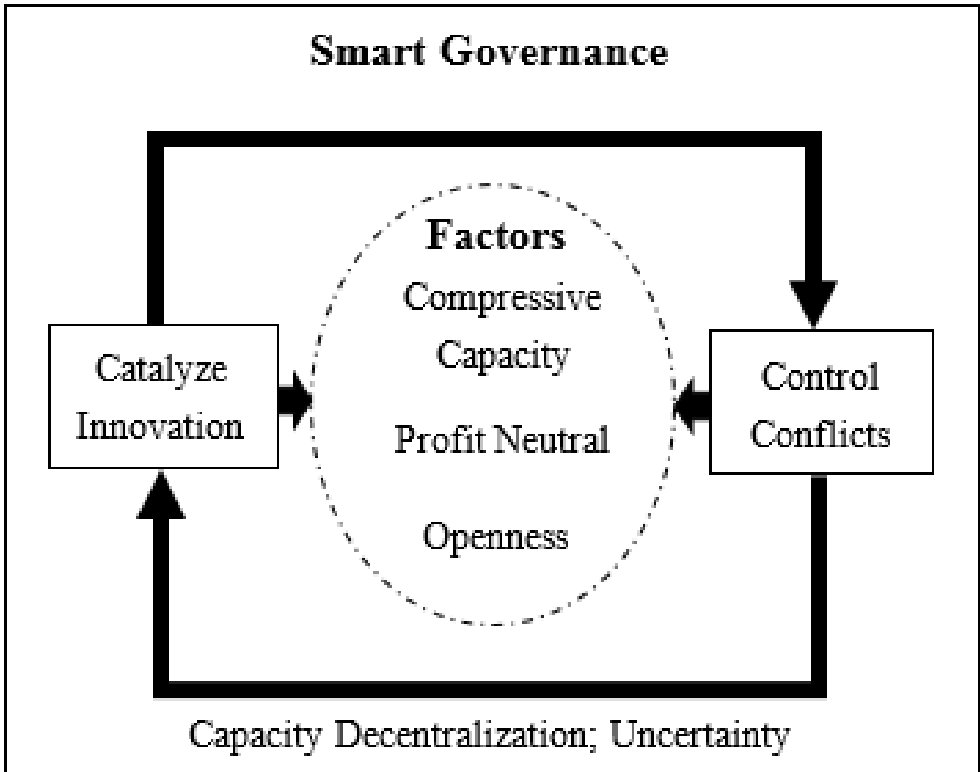
The researchers propose that effective leadership in smart cities consists of two layers:
### 1. Static Factors (What you *are*)
* **Compressive Capacity**: The power to make broad decisions, recover from setbacks, and take accountability.
* **Openness**: A willingness to listen to bottom-up feedback and integrate diverse perspectives.
* **Profit Neutrality**: Prioritizing the common good over financial gain—a major hurdle for private companies.
### 2. Dynamic Mechanisms (What you *do*)
* **Catalyzing Innovation**: Weaving stakeholders together to explore new ways to meet unexpected challenges.
* **Controlling Conflicts**: Mitigating trust issues and managing the competing "institutional logics" of government and business.
## Case Study: WeChat vs. The Community Service Association (CSA)
The paper uses a "most-different cases" approach to prove their theory.
### Case A: WeChat (Shanghai)
Tencent (a profit-based giant) led the "Urban Service via WeChat" initiative.
* **The Problem**: The government didn't trust a private firm with sensitive public data.
* **The Fix**: WeChat used **Controlling Conflicts**. They funded the project themselves and technically "isolated" the data—the government kept the data on their own systems while WeChat provided the "channel." By acting "Profit Neutral" in this specific instance, they won the mandate to lead.
### Case B: Senior Subsidies System (Beijing)
An NGO (CSA) led the digital transformation of elderly care subsidies.
* **The Problem**: As an NGO, the CSA lacked the "Compressive Capacity" (capital and authority) of a tech giant.
* **The Fix**: They used **Catalyzing Innovation**. They invited experts from Baidu, Alibaba, and Tencent to brainstorm for them and convinced the government to become their "patron." This expanded their budget and authority, effectively building their capacity through collaboration.
## Key Insights and SOTA Comparison
Unlike prior work that views PPPs as simple financial transactions, this paper positions the PPP as a **dynamic collaborative process**.
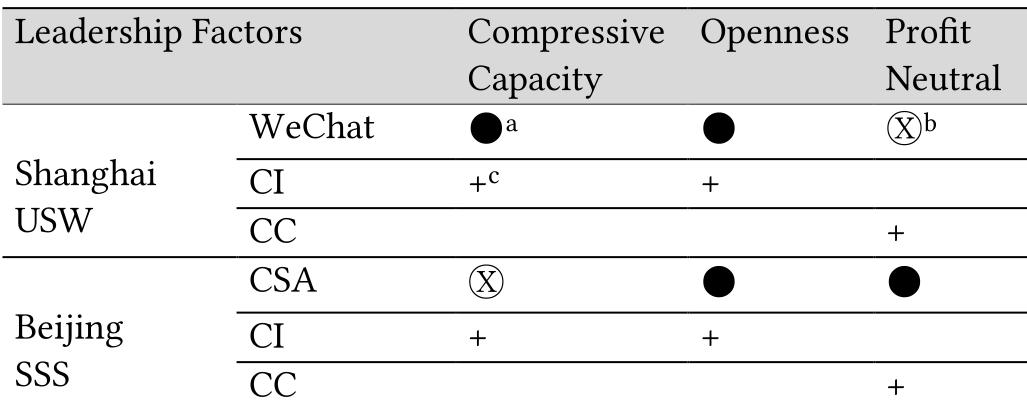
As shown in the table above, the research highlights that:
1. **Leadership is shared**: It doesn't reside in one person or even one organization.
2. **Mechanisms compensate for flaws**: A company that lacks "neutrality" can gain it through specific "conflict control" actions. An NGO that lacks "capacity" can gain it through "catalyzing" partners.
## Critical Analysis & Conclusion
The value of this paper lies in its rejection of the "government-centric" model of smart cities. It provides a blueprint for how social sectors—whether they are profit-seeking tech firms or lean NGOs—can seize leadership in modern urban affairs.
**Limitations**: The study is rooted in the Chinese political context (e.g., the "Internet Plus" policy), which provides a unique environment for government-social sector collaboration. How these mechanisms would function in more adversarial Western regulatory environments remains an area for future work.
**The Takeaway**: Smart cities aren't built on smarter code; they are built on smarter leadership frameworks. Organizations aiming to lead in this space must focus less on what they own and more on how they "weave" the network together.