
Google+ as a Pedagogical Bridge: Humanizing the Virtual MIS Classroom
Creating a Sense of a Collaborative Learning Community with Google+
This study investigates the integration of Google+ Community into an asynchronous online Management Information Systems (MIS) course. By leveraging the Community of Inquiry (CoI) model, the author established a social presence that facilitated collaborative learning and identity formation among undergraduate business students.
TL;DR
In the digital-first era of higher education, online courses often feel like "interaction deserts." This study transforms a standard Management Information Systems (MIS) course into a thriving social ecosystem by integrating Google+ Community and personal student websites. The result? A measurable shift from passive content consumption to active, collaborative "Social Presence," where students project themselves as real people rather than just usernames.
The "Social Desert" of Online Learning
Despite the skyrocketing enrollment in online degrees, the quality of the "learning experience" remains a contentious topic. The core problem identified by Claire Ikumi Hitosugi is the lack of Social Presence.
While traditional Course Management Systems (CMS) excel at delivering PDF lectures and hosting rigid forums (Cognitive and Teaching Presence), they often fail to foster the Community of Inquiry (CoI). Students frequently report feeling isolated—a digital version of "lecturing to an empty room." The author argues that learning is a social product; without emotional expression and group cohesion, deep inquiry rarely occurs.
Methodology: The Web 2.0 Synergy
The author didn't just add a forum; they built a multi-platform workflow designed to balance structure with spontaneity.
- Identity Foundation: Students created personal websites (Weebly) to showcase their lives, hobbies, and "real-person" personas.
- The Interaction Hub: Google+ Community acted as the social "water cooler" and discussion board.
- The Hybrid Flow: While official grades lived in the Sakai-based CMS (Laulima), the actual "heart" of the class beat on Google+, where students engaged in bi-weekly blog reflections and collaborative project discussions.
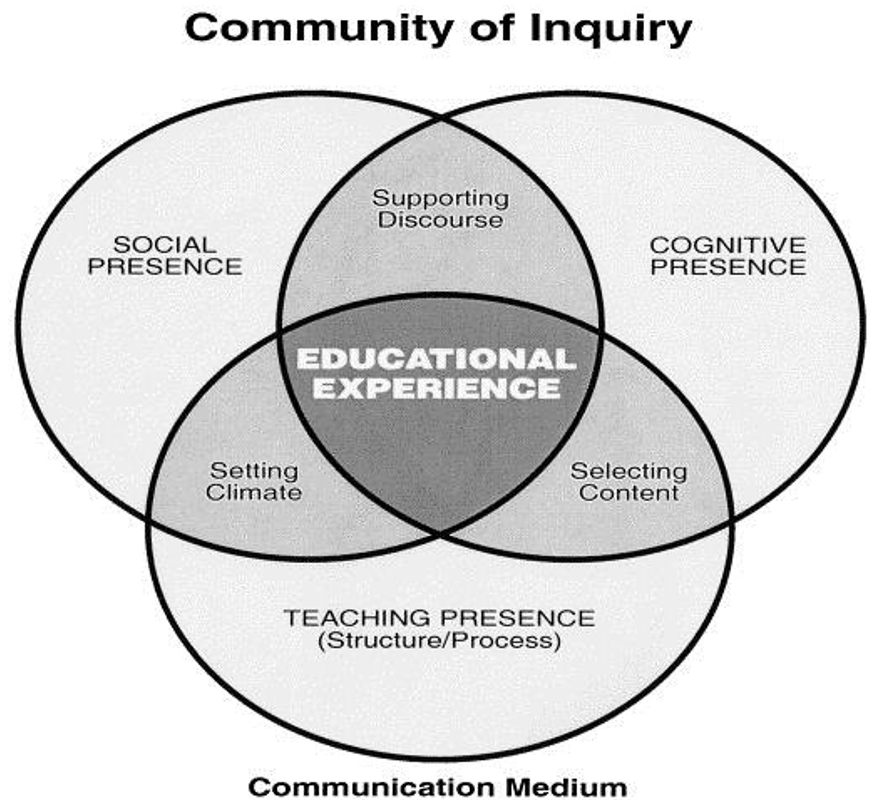 Figure 1: The Community of Inquiry (CoI) model, illustrating how Social Presence intersects with Cognitive and Teaching elements.
Why Google+? (Task-Technology Fit)
The choice of Google+ (at the time) was driven by Task-Technology Fit. Students—members of "Generation Facebook"—interact naturally within social feeds. Google+ offered:
- Circles: For easy group formation.
- Hangouts: For synchronous video interaction.
- Notifications: Instant Gmail alerts that allowed the instructor and peers to provide rapid, "in-the-moment" feedback.
Experimental Results: Breaking the Silence
The metrics speak to a high level of engagement that far exceeds typical asynchronous forums.
- Volume of Interaction: 655 discussion comments were generated over 15 weeks.
- Identity Construction: Students didn't just post text; they customized websites, shared personal stories, and created a "positive synergistic effect."
- Qualitative Mastery: Student feedback highlighted that having their "own space" (the website) linked to a "shared space" (Google+) made the technical MIS material feel accessible and relevant.
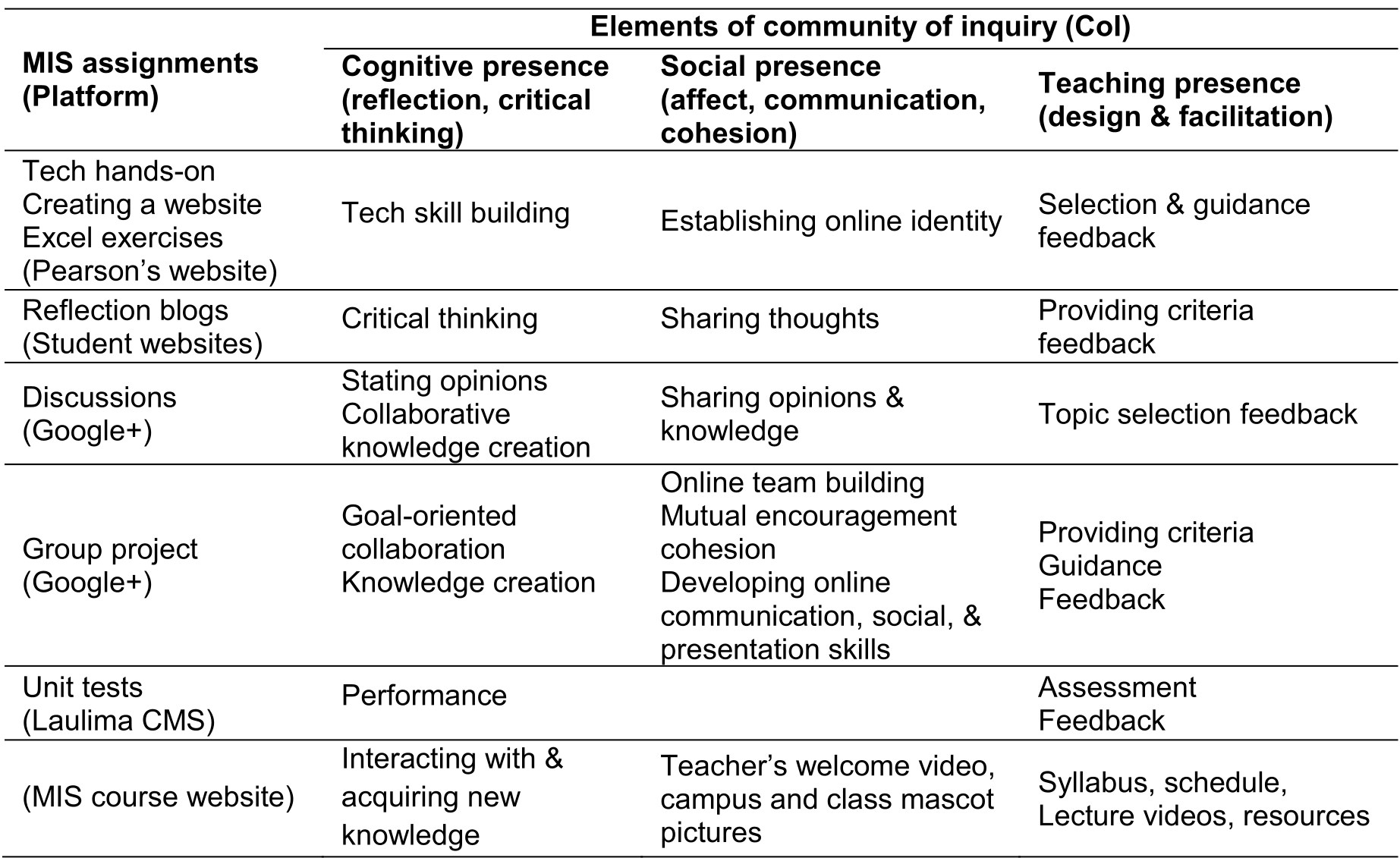 Table 1: Mapping MIS assignments to the CoI elements, showing how technical skill building was coupled with social identity.
Critical Insight & Practical Takeaway
The genius of this approach lies in the synergy between personal and community spaces. By requiring students to build their own "digital homes" (websites) and then visit their neighbors via a social network, the instructor recreated the physical campus's social dynamics.
The Takeaway for Modern Educators: Google+ is gone, but the principle remains: Do not rely on your CMS for community. To drive social presence, use tools that students already use in their daily lives. Whether it's Discord, LinkedIn Groups, or Slack, the medium must allow for "Risk-free expression" and "Group cohesion."
Future Outlook
While this study focused on undergraduate business majors, the framework is highly transferable. Future research should look at Text Analysis of these social interactions to quantify exactly how "Social Presence" triggers "Cognitive Growth." As we move into an era of AI-generated content, the "real-person" projection identified in this paper will become even more vital for authentic learning.
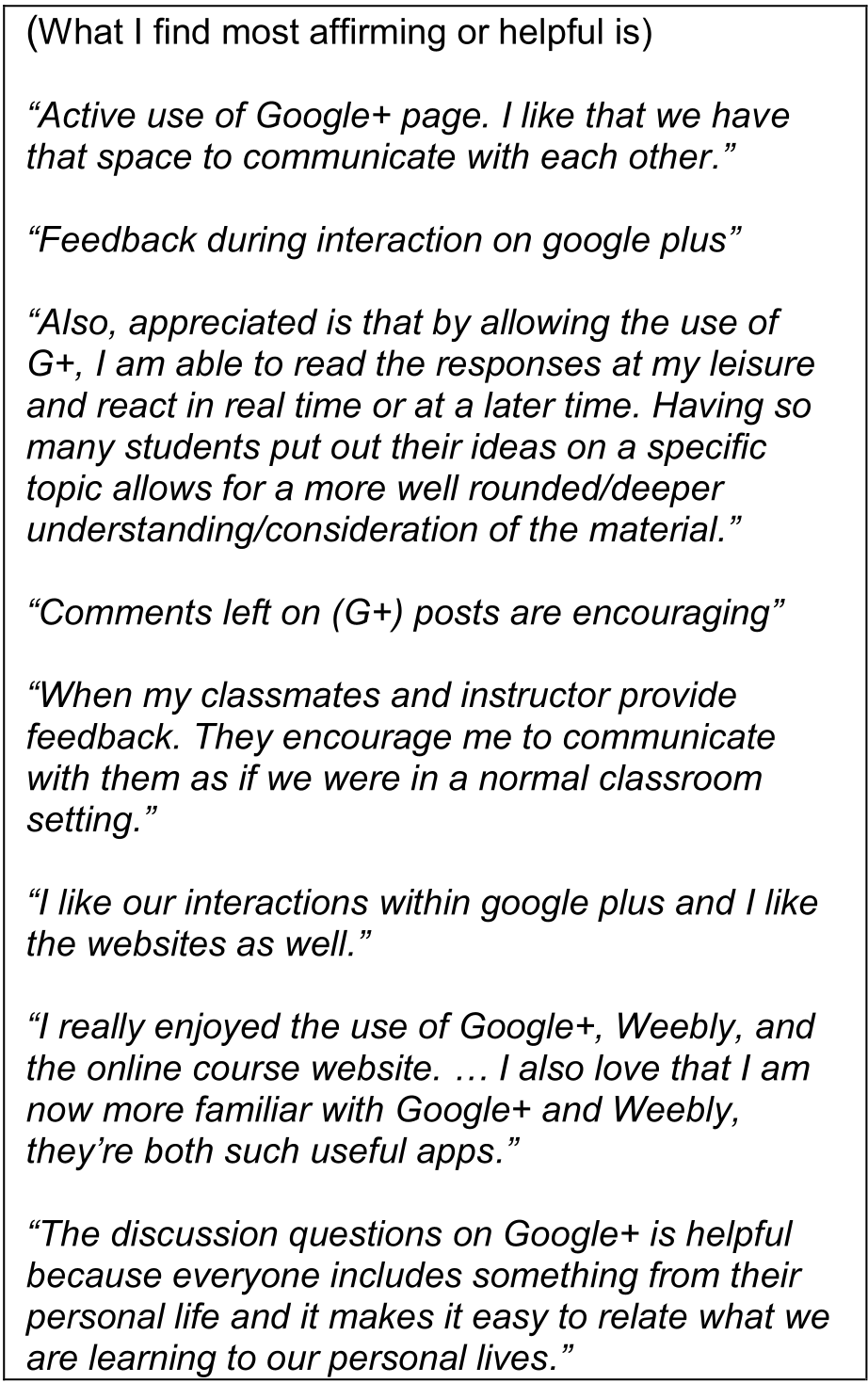 Figure 2: Qualitative evidence of student satisfaction and the humanizing effect of the SNS platform.