
Collaborative Network Coding: Bridging the Gap in Opportunistic Mobile Social Networks
Collaborative Network Coding in Opportunistic Mobile Social Network
The paper introduces Collaborative Network Coding (CNC), a message dissemination protocol for Opportunistic Mobile Social Networks (OMSNs) optimized for Bluetooth Low Energy (BLE). By combining Random Linear Network Coding (RLNC) with a benefit-matrix-based selection mechanism, the system achieves significant improvements in message delivery rates and reduced latency in infrastructure-less environments.
TL;DR
In scenarios where the Internet is inaccessible (e.g., disaster zones or dense subways), apps like Firechat rely on opportunistic contacts. This paper introduces Collaborative Network Coding (CNC), a protocol that uses Bluetooth Low Energy (BLE) and smart packet prioritization to increase delivery rates by 10% and significantly slash latency compared to traditional flooding.
Background: The Chaos of Mobile Social Networks
Opportunistic Mobile Social Networks (OMSNs) are a subset of Delay Tolerant Networks (DTNs) where "store-carry-and-forward" is the law of the land. Because nodes (people with smartphones) move unpredictably, connections are fleeting. Existing solutions often struggle with:
- High Redundancy: Flooding creates too many duplicate packets.
- Resource Constraints: High power consumption from constant radio scanning.
- Short Contact Windows: Nodes move out of range before meaningful data transfer completes.
The Insight: Data with a Purpose
The authors realized that Network Coding (NC)—the mathematical blending of packets—is not enough on its own. If a node randomly picks which coded packet to send, it might send information the receiver already possesses or cannot use.
The solution? Collaborative selection. By integrating a social similarity threshold (to decide who to chat with) and a benefit matrix (to decide what to send), the network becomes more surgical in its dissemination.
Methodology: The Benefit Matrix
When two nodes encounter each other, they don't just dump data. Instead, they follow a sophisticated handshake:
- Social Filtering: Nodes use a similarity formula to determine if they share enough common context to participate in the same "chatroom."
- Benefit Matrix Construction: The broadcaster maintains a matrix of neighbors and the messages they need.
- Gain Calculation: For every candidate message , the node calculates its Gain—the sum of neighbors who would find this message "innovative" (i.e., helpful for decoding).
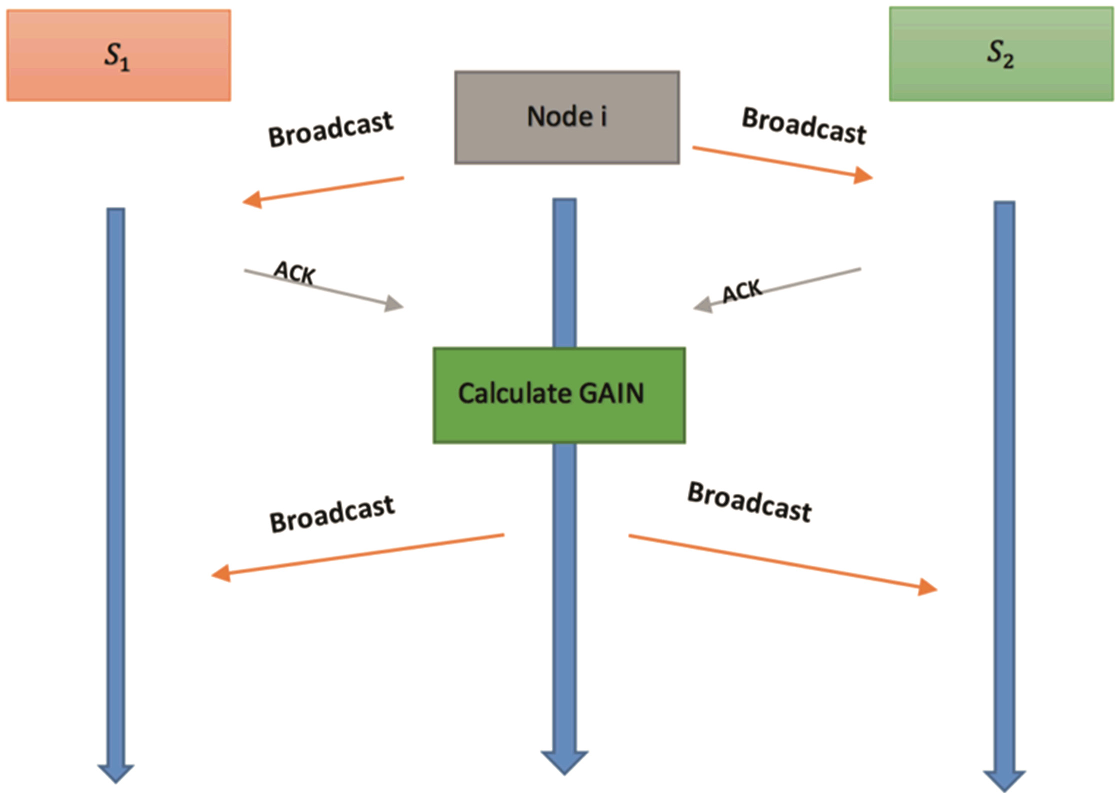 Fig 1: The CNC protocol flow illustrating the ACK-driven broadcast cycle.
Experiments: Real-World Traces
Unlike many papers that use idealized "Random Waypoint" mobility models, this study used the NCCU Trace, involving 115 students over two weeks. This provides a realistic look at how humans actually move and encounter one another.
Performance Metrics
- Delivery Rate: CNC consistently stayed above flooding and vanilla NC, proving that collaborative selection utilizes limited contact time more efficiently.
- Delay: This was the biggest win. CNC significantly reduced the time it took for a message to reach all interested parties.
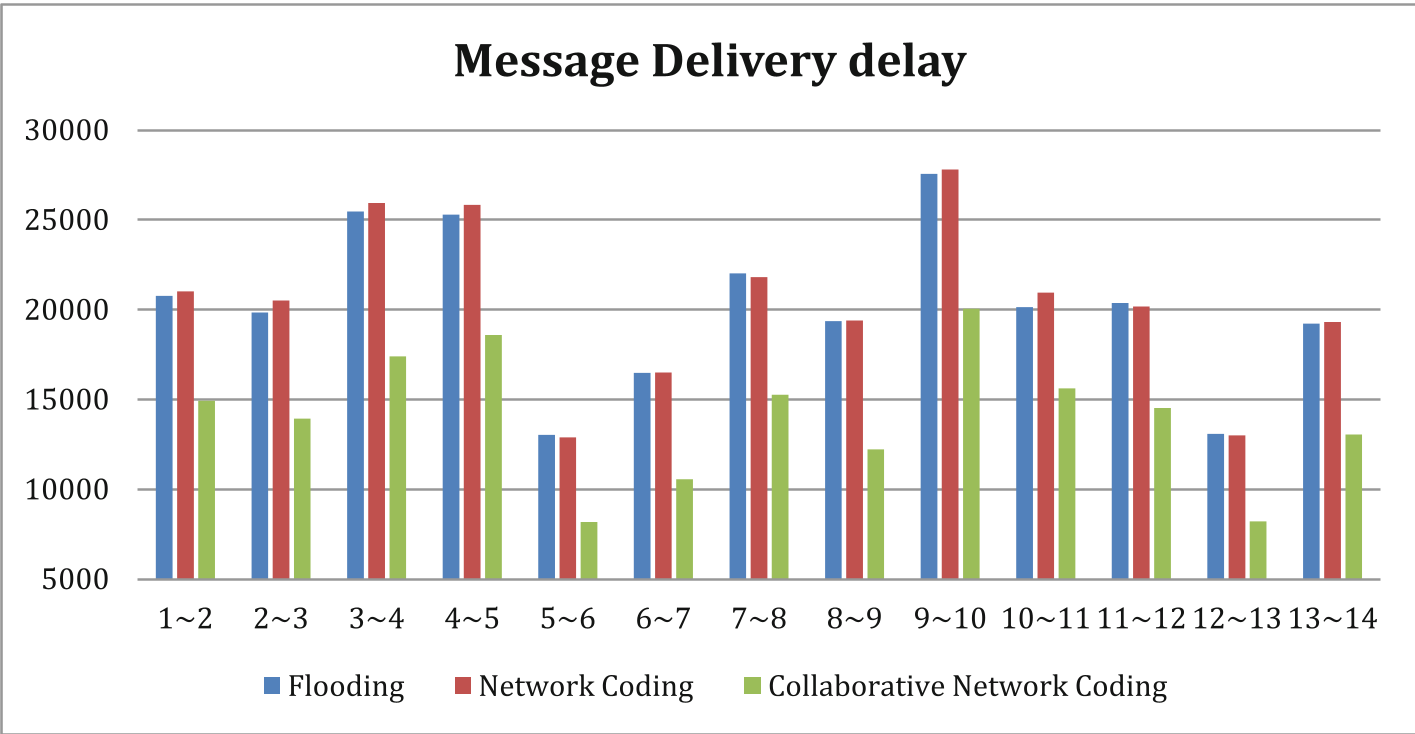 Fig 2: Comparison of message delivery delay across different protocols.
Critical Analysis & Conclusion
Takeaway
The core value of this work lies in the Feedback Loop. By adding a simple ACK mechanism to the Random Linear Network Coding process, the authors transformed a "blind" broadcast into a "targeted" one.
Limitations
- Energy Overhead: While BLE is efficient, the constant calculation of Gaussian elimination for packet decoding and the maintenance of benefit matrices still impose a computational cost on mobile CPUs.
- Scalability: The "generation" approach (dividing messages into 1-hour windows) is a smart heuristic, but in hyper-dense environments, managing these generations might become complex.
Future Outlook
As decentralized social media gains traction, protocols like CNC will be vital. Future iterations could integrate Artificial Intelligence to predict node mobility, allowing the benefit matrix to prioritize not just current neighbors, but future neighbors that a node is likely to meet next.
Author Perspective: This paper successfully navigates the trade-off between the mathematical robustness of network coding and the practical realities of mobile hardware. It’s a pragmatic step toward truly resilient off-grid communication.