
The Power of the Crowd: Bridging Business Models and Collaborative Platforms
Collaborative Software Development Platforms for Crowdsourcing
This paper explores the evolution of "Collaborative Software Development Platforms for Crowdsourcing," highlighting the integration of crowdsourcing business models with 3C+A (Communication, Collaboration, Coordination, and Awareness) frameworks. It provides a comparative analysis of existing platforms like TopCoder and uTest against traditional PaaS and Open Source models.
TL;DR
Crowdsourcing is transforming from a "hobbyist" open-source activity into a structured business phenomenon. This paper analyzes how software development platforms are evolving to support distributed collaboration through the 3C+A model, enabling companies to tap into global talent while maintaining enterprise-grade control.
Contextual Positioning
This work acts as a strategic roadmap for "Crowdsourced Software Development" (CSD). It positions crowdsourcing at the intersection of Open Participation and Business Value Transfer, distinguishing it from traditional outsourcing (closed participation) and Open Source (generally lacking formal value transfer).
The Problem: The Complexity Gap
Why hasn't every company moved to crowdsourcing? The challenge lies in the nature of software itself. Unlike simple micro-tasks (like labeling images), software development is highly interdependent. Existing platforms often struggle with:
- Context Switching: Crowds lack "Group Awareness"—understanding the project's physical presence, structural status, and social dynamics.
- Resource Fragmentation: Most platforms handle tasks but not the environments (IDE, libraries, data) needed to build them.
- IP Rigidity: Legally transferring ownership from a global, temporary workforce to a requester is a technical and administrative nightmare.
Methodology: The 3C+A Framework
The authors argue that a successful platform must excel in four dimensions:
- Communication: Bridging the gap between requesters and providers to clarify requirements.
- Collaboration: Supporting shared artifacts (code, models) through version control.
- Coordination: Managing the delegation, evaluation, and rewarding of tasks.
- Awareness (The Secret Sauce): Ensuring contributors understand the broader project status to prompt learning and prevent redundant work.
 Figure 1: Distinguishing Crowdsourcing from Outsourcing and Open Source.
Comparative Landscape
The paper provides a critical assessment of the current technology stack:
- Crowdsourcing (e.g., TopCoder): Strong on rewards (Value Transfer) but often "Fair" to "Poor" on deep real-time collaboration.
- PaaS (e.g., Google App Engine): Excellent for hosting and tools, but lacks the "Crowd" community mechanisms.
- Open Source (e.g., GitHub): Best for collaboration and community, but weak on formal financial incentives.
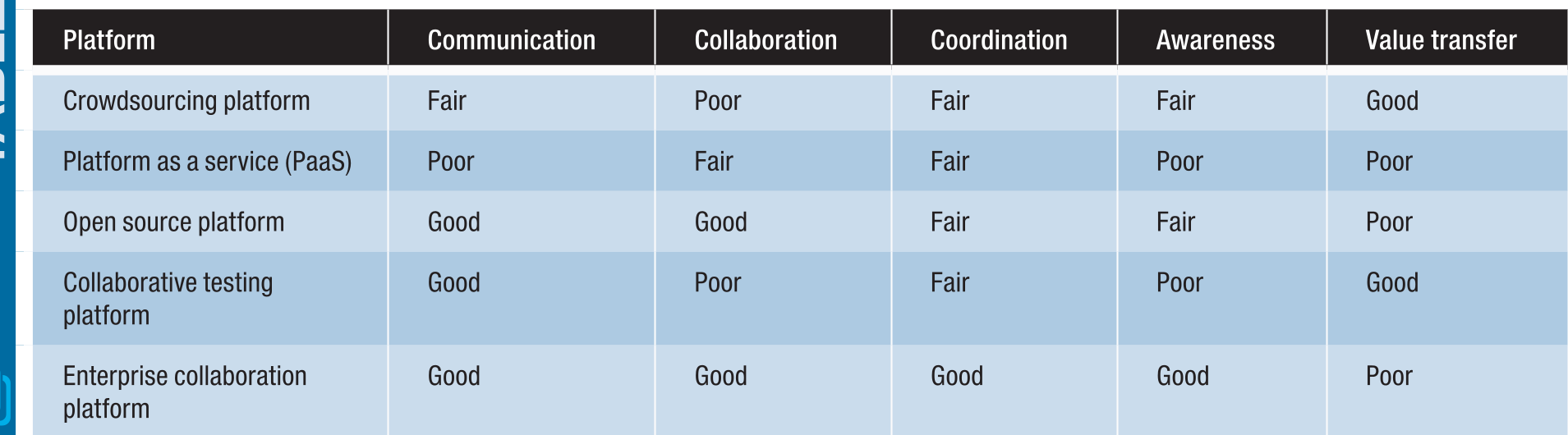 Table 1: Competitive Analysis of Collaborative Platforms.
Case Study: ABB and TopCoder
A standout example is the ABB case. By using TopCoder's competition mechanism and "Copilots" (coordinators who manage the crowd), ABB was able to decompose a complex legacy modernization project into modular tasks.
- Result: 30% reduction in costs and time.
- Innovation: High-quality solutions were guaranteed through competition, while reusable components were archived for future use.
Future Outlook: The Next Generation
The authors predict a convergence. Future platforms will likely be Activity-Based, automatically allocating virtual machines, libraries, and tools the moment a developer joins a task. They will move beyond simple task-postings to "Internal Crowdsourcing," where large companies leverage their own employees across department silos to solve technical bottlenecks.
Summary Takeaway
Crowdsourcing is no longer "just a hobby." By integrating Lifecycle Management from enterprise tools with Incentive Models from crowdsourcing, the industry is entering a new era of "on-demand" software engineering.
Note: This analysis is based on the paper "Collaborative Software Development Platforms for Crowdsourcing" by Xin Peng, Ali Babar, and Christof Ebert.