
Designing for Connection: How Collaborative Tablet Apps Enhance Language Skills in Children with ASD
Collaborative tablet applications to enhance language skills of children with autism spectrum disorder
The paper introduces two collaborative iPad applications, "I Know" and "I Can Tell," designed to improve language skills and social interaction in children with Autism Spectrum Disorder (ASD). By leveraging multi-touch technology, the apps facilitate mistake-free, open-ended quiz and storytelling activities involving parents and therapists.
TL;DR
Researchers from the National University of Singapore have developed two iPad applications, "I Know" and "I Can Tell," specifically designed to bridge the gap between language therapy and social interaction for children with Autism Spectrum Disorder (ASD). Using a participatory design framework, the study demonstrates that collaborative, mistake-free digital environments can turn a "solitary" screen experience into a shared social activity between children and their caregivers.
Background: The Technology Paradox in ASD
Children with ASD are often naturally drawn to technological devices, sometimes learning faster through screens than via traditional methods. However, a significant gap exists: while consumer electronics evolve rapidly, specialized Assistive Technology (AT) often remains clunky, non-intuitive, and isolating.
The authors argue that the biggest failure in AT is the lack of stakeholder involvement. When "design for" happens without the input of parents and teachers, the resulting tools are often abandoned.
Problem & Motivation
The research addresses three core challenges:
- Stakeholder Disconnect: Most AT is designed in a vacuum, ignoring the daily realities of caregivers.
- Instructional Rigidity: Many apps use a strict "Correct/Incorrect" feedback loop. For children with ASD, "wrong" answers can trigger extreme anxiety and "meltdowns," stalling the learning process.
- The Social Barrier: Typical apps encourage solitary play, whereas the primary need for children with ASD is social integration and collaborative communication.
Methodology: From Symptoms to Features
The core of this work is the Participatory Design (PD) approach. The researchers spent four months observing children in special schools like the St. Andrew’s Autism Centre and collaborating with parents to map clinical symptoms to software features.
The Framework: Linking Symptoms to Intervention
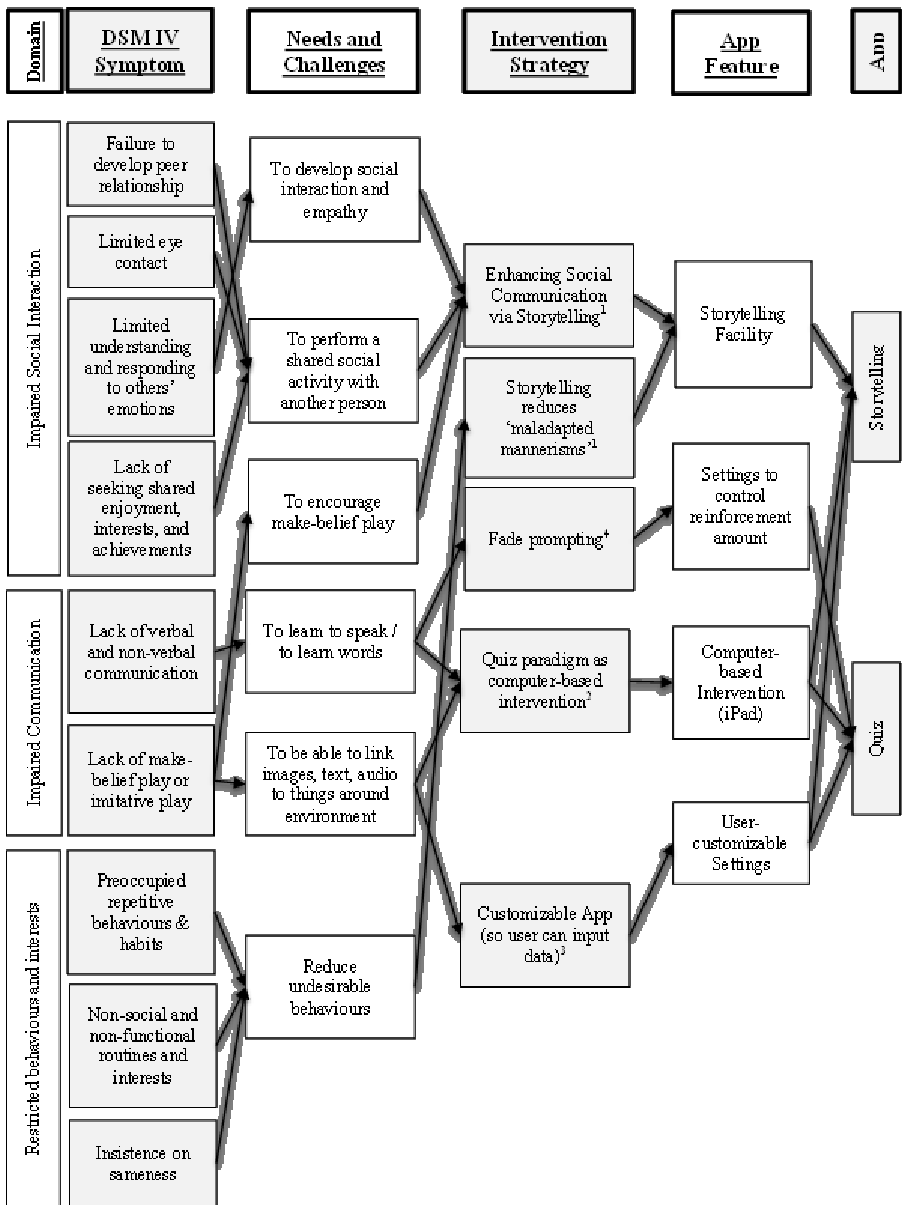
The authors created a logical map (see Figure 2 in the paper) that connects:
- Symptoms: Lack of social reciprocity, delayed speech.
- Needs: Visual prompts, familiar environments.
- Interventions: Narrative building, PECS (Picture Exchange Communication System).
- App Features: Voice recording, custom photo uploads, and collaborative sidebars.
App Architectures
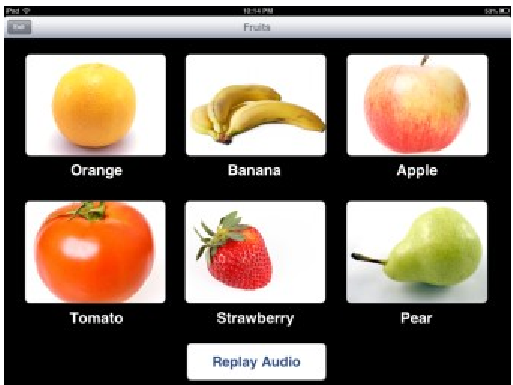
- "I Know" (Quiz App): Unlike standard quizzes, it allows parents to take photos of the child's own environment (e.g., their specific water bottle) and record their own voice. This reduces the cognitive load by utilizing familiar stimuli.
- "I Can Tell" (Storytelling App): This features a "Story Area" with dual sidebars. The parent and child can both manipulate objects on the screen simultaneously. It records both the screen movements and audio, allowing the child to "re-watch" the social interaction later.
Experiments & Results: Real-World Efficiency
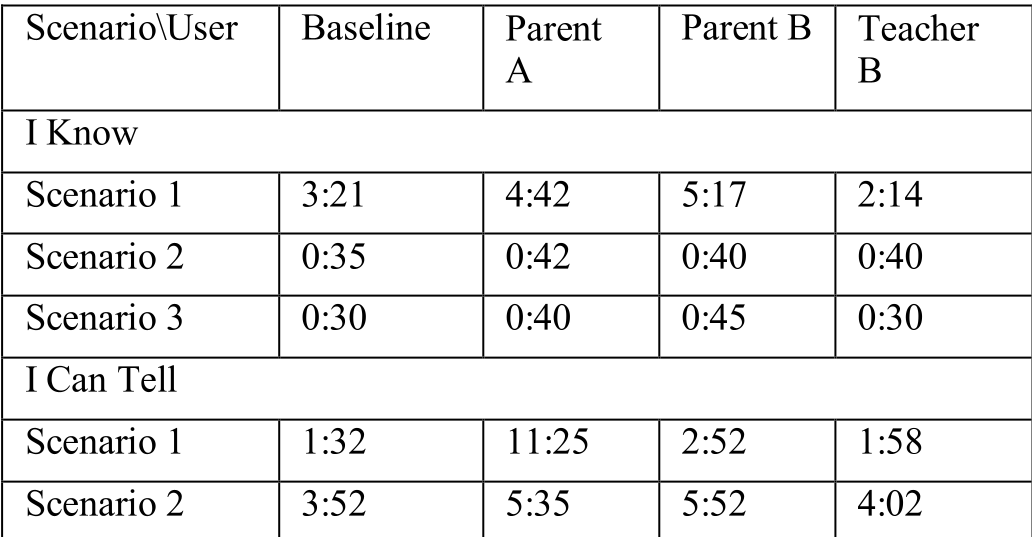
The team tested the apps with parents, teachers, and usability experts. A key finding was the "Teacher's Optimization". While the researchers intended a specific sequence of adding images, one teacher realized she could batch-process tasks (adding all images first, then all text) to bypass the keyboard pop-up delays, significantly outperforming the baseline timing.
Performance Table
The usability study measured the time taken for various scenarios. Most users completed tasks within reasonable ranges of the baseline, proving the interface's intuitiveness.
Critical Analysis & Conclusion
Takeaway
The success of "I Know" and "I Can Tell" lies in their open-ended nature. By moving away from "Correct/Incorrect" prompts and towards "Creation/Collaboration," the apps reduce the barrier to entry for children with lower functioning ASD while providing a platform for language growth.
Limitations & Future Work
The authors noted a significant challenge in the lack of ASD statistics in Singapore, which hampers funding and focused research. Furthermore, while the apps are "mistake-free," future iterations could include location awareness—altering the interface based on whether the child is at home, school, or a park to provide context-aware language prompts.
In conclusion, this work proves that for the ASD community, the tablet is not just a toy or a teacher—it is a bridge for collaboration.