
From Digital Footprints to Strategic Insight: A Framework for Exploiting Collaborative Traces
A framework for exploiting collaborative traces
This paper introduces a formal framework for exploiting "Collaborative Traces" within computer-supported cooperative work (CSCW) environments. It proposes a structured model to transform voluminous, heterogeneous interaction data into actionable insights using a target formalism, exemplified by the automated generation of a SWOT (Strengths, Weaknesses, Opportunities, Threats) analysis.
TL;DR
In professional collaborative environments, every message, document edit, and join-request leaves a "trace." This paper presents a formal framework to harvest these digital footprints, turning raw interaction data into high-level strategic tools like SWOT Analysis. By combining domain ontologies with logical filters, the authors bridge the gap between "what happened" and "what should we do next."
The Problem: The "Silent" Knowledge in Our Tools
Modern work happens in digital workspaces (Wikis, Slack, Teams). While these platforms record everything, the knowledge generated during these interactions is often lost the moment the task ends. Traditional Case-Based Reasoning (CBR) struggles here because it expects neatly packaged "cases," whereas collaborative work produces a chaotic stream of heterogeneous traces.
The challenge is: How do we filter the signal from the noise and format it for a human decider?
The Insight: Reasoning with Traces (TBR)
The authors shift from CBR to Trace-Based Reasoning (TBR). Instead of looking for identical past problems, they interpret traces as a continuous record of experience.
The Methodology: A Two-Step Transformation
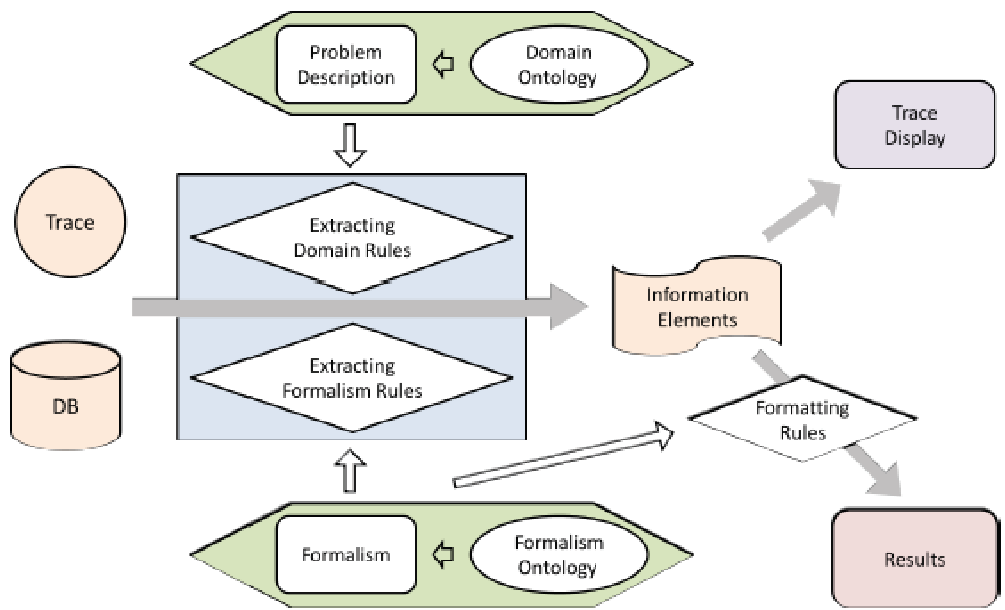
The exploitation process is governed by a formal model: . It breaks down into two distinct phases:
- Information Element Extraction: Using a Domain Ontology (), the system applies filters to the trace set. For example, if a team member frequently discusses "wireless charging" in a project about portable devices, the system identifies this as a potential "Expertise" element.
- Formalism Mapping: These elements are then processed through formatting rules () into a specific target structure, such as a SWOT matrix.
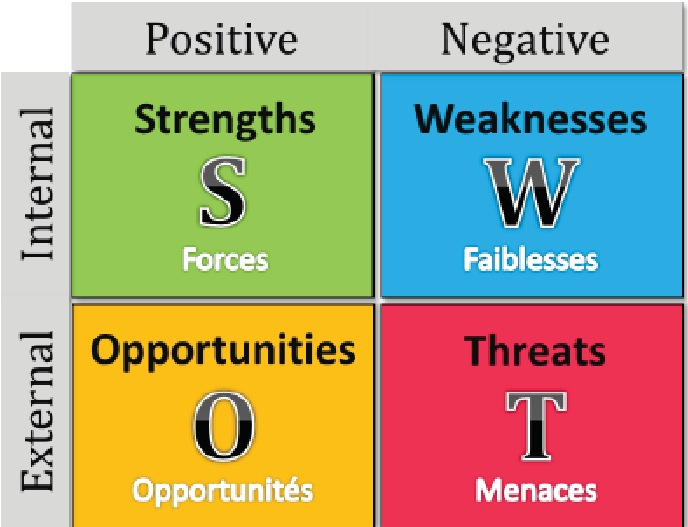
The SWOT Example: Identifying Hidden Strengths
To ground their theory, the authors apply the framework to SWOT Analysis.
- Question: "Do we have talented experts on staff?"
- Trace Analysis: The system scans the
EmitterandReceiverproperties of traces. If user "Alice" has generated of the group's messages regarding "Screen Design," the rule flags Alice as an expert. - Output: This automatically populates the Strength quadrant of the SWOT matrix.
Mathematical Backbone
The paper defines a trace as a triple: where is the emitter, the receiver, and the set of property-value pairs. By using complex filters (), the system can perform sophisticated queries that go beyond simple keyword searches, looking for patterns of collaboration.
Critical Analysis & Conclusion
Takeaway: This work is a significant step toward "Organizational Intelligence." It moves away from manual reporting toward a system where the workspace itself advises the manager.
Limitations:
- Rule Construction: Currently, rules () must be constructed manually or through complex natural language techniques, which could be a bottleneck.
- Privacy: The paper focuses on the technical extraction but does not deeply address the privacy implications of monitoring every "trace" an employee leaves.
Future Outlook: Integrating this trace-based approach with generative AI could allow for natural language "interrogation" of a team's history, allowing a manager to ask, "Based on our last six months of chats, what is our biggest threat?" and receive a data-backed SWOT analysis in seconds.