
Breaking the Bilingual Bottleneck: A Collaborative Pipeline for Crowd-Powered Translation
Collaborative workflow for crowdsourcing translation
The paper introduces a three-phase collaborative pipeline for crowdsourcing translation tasks, specifically targeting low-resource language pairs (e.g., Telugu-English, Telugu-Hindi). By decomposing the complex cognitive task of translation into smaller, verifiable sub-tasks, the authors achieve higher BLEU scores and lower costs compared to traditional independent crowdsourcing methods on Amazon Mechanical Turk.
TL;DR
Translation is traditionally seen as a "high-skill" task requiring expert bilinguals, making it expensive to scale via crowdsourcing. This paper proposes a structural shift: instead of asking one person to do everything, it breaks down translation into a three-phase pipeline involving word-level translation, assisted drafting, and monolingual synthesis. The result? Higher quality translations for low-resource languages at 20% lower cost.
Context: The Crowdsourcing Quality Crisis
In the early 2010s, researchers realized that platforms like Amazon Mechanical Turk were great for simple labels (like "Is this a cat?") but struggled with complex outputs like translation. For low-resource languages like Telugu or Urdu, the problem is three-fold:
- Scarcity: There aren't enough expert bilinguals in the "crowd."
- Ambiguity: There are a thousand ways to translate a sentence, making "majority vote" consensus difficult.
- Noise: Non-experts often produce "broken" translations that are hard to verify without already knowing both languages.
Methodology: Divide and Conquer
The authors identify a key insight: You don't need a PhD-level translator if you have a smart workflow. They proposed a three-stage pipeline that effectively utilizes non-experts.
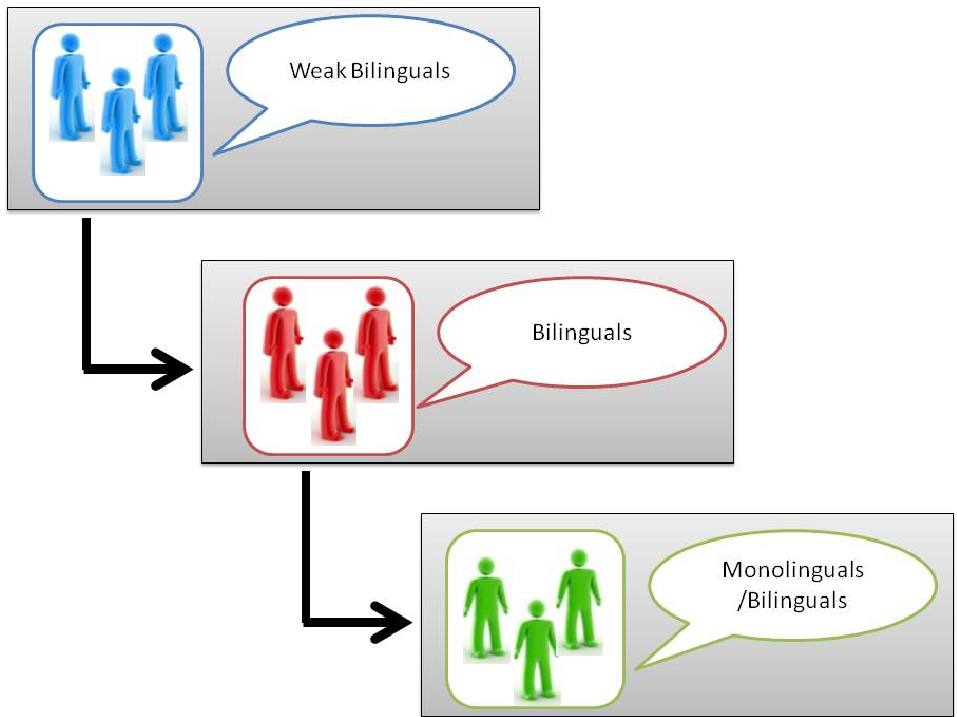
Phase 1: Contextual Lexical Anchoring
Instead of starting with the whole sentence, workers translate individual content words within the context of the sentence. Because translating a single word is easier, multiple workers can achieve consensus quickly. This creates a "scaffold" for the next step.
Phase 2: Assisted "Weak" Bilingual Drafting
"Weak" bilinguals (people who understand the language but may lack fluid translation skills) are given the source sentence and the word translations from Phase 1. This reduces cognitive load and prevents common vocabulary errors, acting as a primitive version of modern "predictive text" for translators.
Phase 3: Monolingual Synthesis
Perhaps the most brilliant part: the final polish is done by monolingual speakers of the target language. They take several (potentially messy) drafts from Phase 2 and use their native intuition to synthesize a fluent, grammatically correct sentence. They don't need to speak the source language; they just need to "fix" the output.
Experimental Results: Better, Faster, Cheaper
The authors tested this on Telugu-English and Telugu-Hindi pairs. The results demonstrated that structured collaboration beats independent "expert" attempts.
| Language Pair | Baseline BLEU | Collaborative BLEU |
|---|---|---|
| Telugu-English | 21.22 | 27.82 |
| Telugu-Hindi | 18.91 | 20.90 |
Beyond the quality jump, the cost-benefit analysis is striking. By using cheaper tasks (word translation and monolingual revision), the total cost per 100 sentences dropped from 41.
Critical Insight: The "Why" Behind the Success
The success of this method lies in Inductive Bias provided by the workflow. By forcing workers to use specific lexical translations in Phase 2, the pipeline reduces the "search space" of possible translations. In Phase 3, the workflow utilizes the "wisdom of the crowd" in its purest form—using native speakers to handle what they do best: identifying natural-sounding syntax.
Limitations and Future Outlook
While pioneering, this work was conducted in 2012. Today, Machine Translation (MT) has improved significantly. However, the logic of this paper remains highly relevant for:
- LLM RLHF: How we structure human feedback for complex reasoning.
- Low-Resource Data Augmentation: Using "weak" human signals to fine-tune models for languages like Swahili or Quechua where high-quality parallel data is still scarce.
Conclusion
This paper serves as a masterclass in Human-Computer Interaction (HCI) for NLP. It reminds us that when the "crowd" fails, the fault often lies not with the workers, but with the lack of structure in the tasks we assign them.