
Beyond Basic Thermostats: Leveraging IoT and ML for Smart Building Energy Signatures
Collecting Indoor Environmental Sensor Values for Machine Learning Based Smart Building Control
This paper presents a proof-of-concept IoT system for collecting indoor environmental data to support Green Building Certification and machine learning-based control. The authors developed a custom sensor box using off-the-shelf hardware (Raspberry Pi, SPS30, S8) and a cloud-based storage system, achieving a reliable throughput of nearly four updates per second.
TL;DR
Researchers from Mid Sweden University have designed a hardware-to-cloud ecosystem that bridges the gap between simple environmental sensing and complex building control. By combining off-the-shelf components like Raspberry Pi with high-end CO2 and particle sensors, they’ve created a system capable of predicting heating demands a week in advance, providing a blueprint for data-driven "Green Building" certifications.
Problem & Motivation: The Knowledge Gap in Building Operation
The building sector accounts for a staggering 40% of Sweden’s total energy demand. Despite the rise of "Smart Buildings," a critical bottleneck remains: the scarcity of skilled manpower to manually tune advanced automation systems. Current systems often operate on limited parameters (temperature and basic schedules), ignoring vital indicators of indoor comfort and occupancy like CO2 levels or airborne particles.
The authors argue that to achieve rigorous certifications (like BREEAM or LEED), we need a continuous, high-resolution "Energy Signature"—a unique behavioral profile of a building that remains consistent regardless of external weather fluctuations.
Methodology: From "Boxes" to the Cloud
The authors' approach is two-fold: integration with existing Building Automation Systems (BAS) and the deployment of a custom Indoor Environmental Sensor Value Collector.
1. Hardware Architecture
Instead of relying on industrial-grade proprietary sensors, the team used versatile, high-quality off-the-shelf components:
- Compute: Raspberry Pi 3 A+
- Sensing: SPS30 (Particles), Sensair S8 (Actual CO2), BME680 (Air Quality), and VEML6030 (Light).
- Enclosure: Rugged IP67 protection modified for environmental exposure.
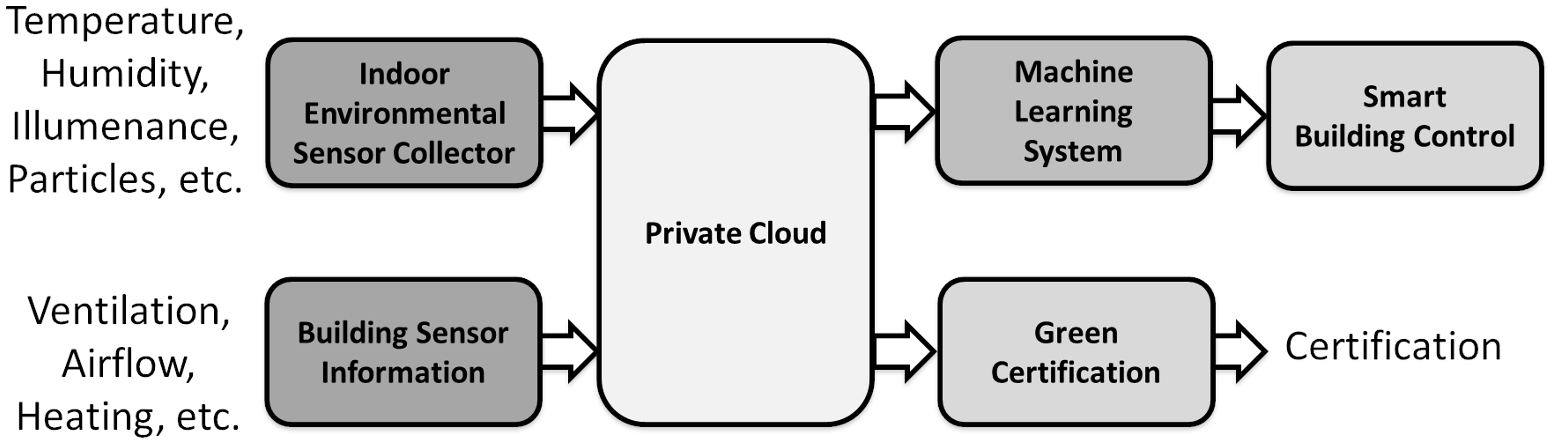 Fig 1. Schematic of the integrated data flow from building sensors to cloud-based ML control.
2. The Cloud Backend
Data is pushed via a REST interface to a Raspberry Pi 4-powered server running InfluxDB (for time-series storage) and Grafana (for real-time visualization). This lightweight stack allows for rapid prototyping and data labeling for training ML models.
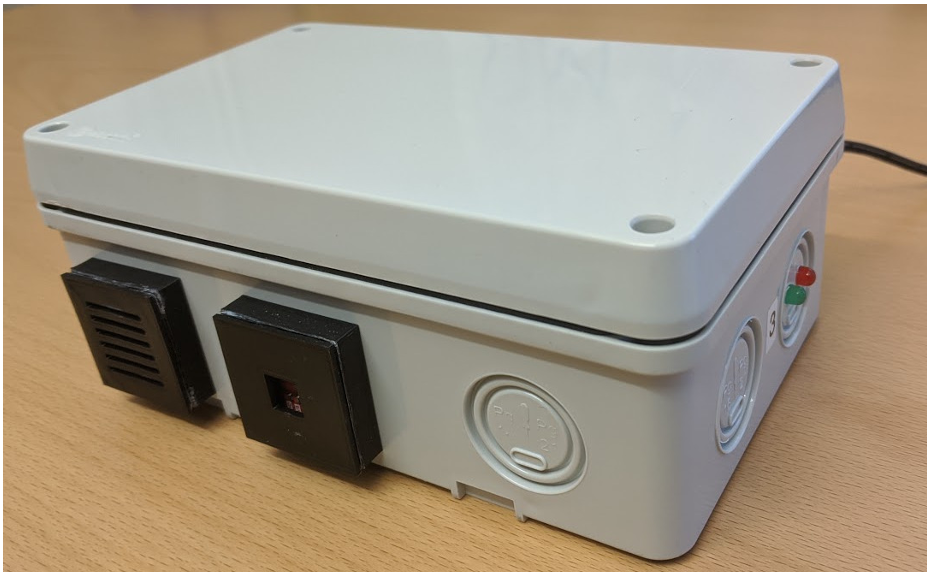 Fig 2. The final physical realization of the custom environmental sensor box.
Experiments & Results: Accuracy and Scalability
System Performance
The researchers conducted stress tests to ensure the "cheap" hardware could handle real-world loads.
- Latency: Average upload time was 129 ms.
- Throughput: The single-board cloud server managed nearly 4 updates per second before reaching its queue limit.
Machine Learning Insights
The team compared Linear Regression, Multi-Layer Perceptrons, and LSTM networks to predict heating demand across 17 different buildings.
- Key Finding: Surprisingly, Linear Regression using a 240-hour sliding window proved most effective for winter months, accurately predicting heat demand for a full 168 hours (one week) ahead.
- Seasonal Variance: While winter predictions were highly accurate (R² metrics were strong), summer predictions remained difficult due to the low overall energy consumption causing high relative noise.
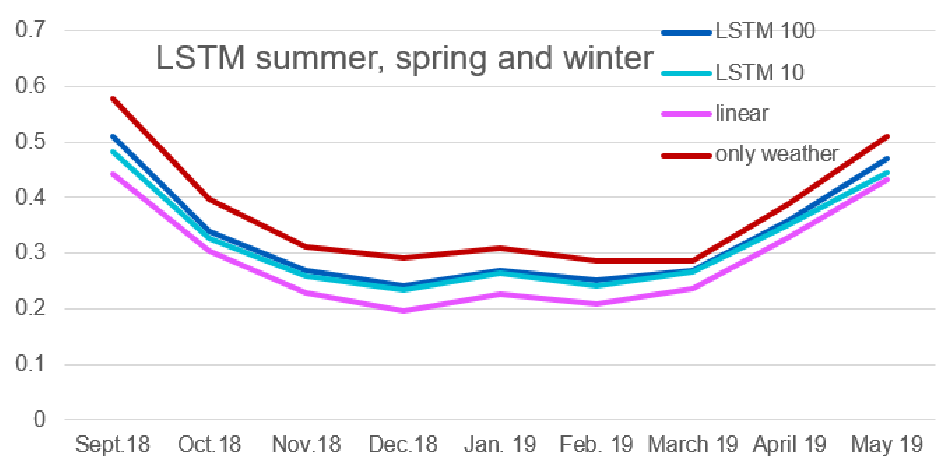 Fig 3. Seasonal accuracy evaluations: Comparing predictive models across different buildings.
Critical Analysis & Conclusion: The "Energy Signature" Future
The real value of this work isn't just in the hardware, but in the Energy Signature concept. By correlating CO2 peaks (occupancy) with heat demand and lighting usage, building owners can:
- Automate Fault Detection: If the energy signature shifts suddenly, it indicates a equipment failure (e.g., a stuck ventilation fan) rather than just "cold weather."
- Objective Certification: Green ratings can be based on real-time data rather than occasional audits or static models.
Limitations: The reliance on local Wi-Fi and a Raspberry Pi backend limits commercial scalability. Future iterations will need to move to Cellular IoT (NB-IoT/LTE-M) and industrial cloud providers (AWS/Azure) to ensure enterprise-grade uptime.
In conclusion, this research marks a significant step toward an autonomous building management system that "understands" its occupants through a sophisticated digital nervous system.