
WEDA: Orchestrating Private Life Through Social Workflows and Experience Reuse
Collecting, reusing and executing private workflows on social network platforms
The paper introduces the WEDA project, a personal workflow management service integrated into social networks (notably Facebook). It utilizes a process-oriented Case-Based Reasoning (CBR) approach to enable private users to model, share, and automate complex personal tasks like moving house or planning vacations.
TL;DR
Managing a cross-country move or a group vacation is a logistical nightmare often handled via messy group chats. This paper introduces WEDA, a framework that transforms these complex personal goals into executable workflows integrated directly into social networks like Facebook. By combining a simplified modeling language with Case-Based Reasoning (CBR), it allows users to "clone" and adapt successful plans from others, automating the coordination of tasks like polls and event scheduling.
The Gap: From Business Logic to Personal Chaos
Mainstream Workflow Management Systems (WfMS) are built for the enterprise—rigid, technical, and focused on ROI. On the other end, social networks offer "atomic" tools like Facebook Polls or Group Walls but no way to link them into a cohesive strategy.
The authors identify a significant support gap: private users need the "glue" to connect these disparate services. The challenge lies in the fact that private users won't model workflows from scratch; they need a system that captures procedural experience and makes it reusable.
Methodology: Socially-Driven Case-Based Reasoning
The core of the WEDA approach is the CAKE system (Collaborative Agile Knowledge Engine), which treats every personal plan as a "case."
1. Intuitive Modeling for Non-Techies
To overcome the entry barrier, the authors streamlined UML Activity Diagrams into three basic control-flow elements: parallel execution, conditionals, and loops. The philosophy is "form follows user needs," aiming to make process modeling feel more like a game than a programming task.
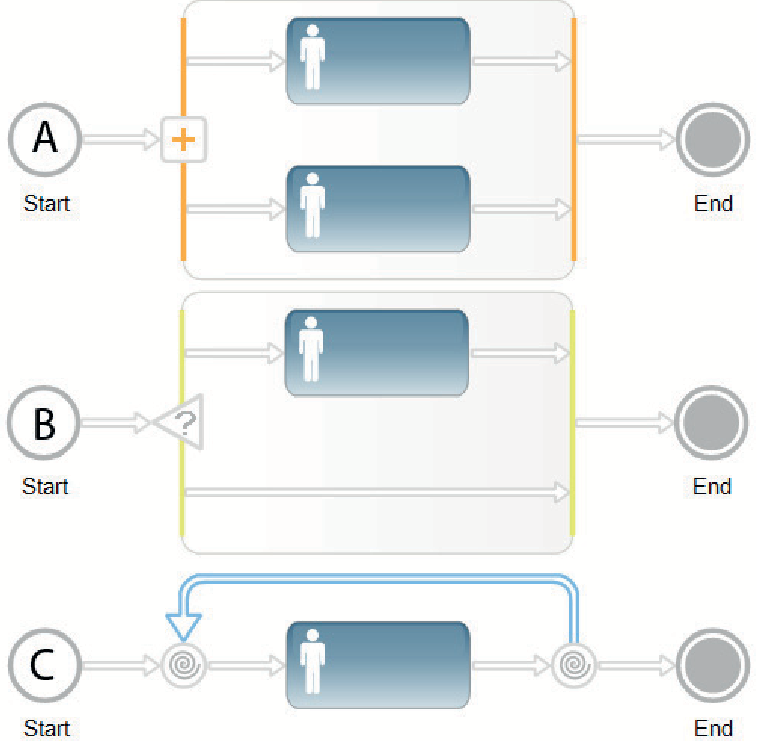 Fig 1: Simplified control flow elements designed for high "enchantment" and user acceptance.
2. The CBR Cycle
Instead of a blank canvas, users start with a Workflow Repository.
- Retrieval: Users enter a few tags (e.g., "moving," "Berlin") or a brief sketch of 2-3 tasks. The CBR engine retrieves the most similar successful workflows.
- Adaptation: The system supports manual and semi-automatic adaptation, allowing users to tweak a template to fit their specific set of friends or constraints.
- Execution: The workflow engine triggers Facebook APIs (e.g., creating a wall post or a poll) in the defined sequence.
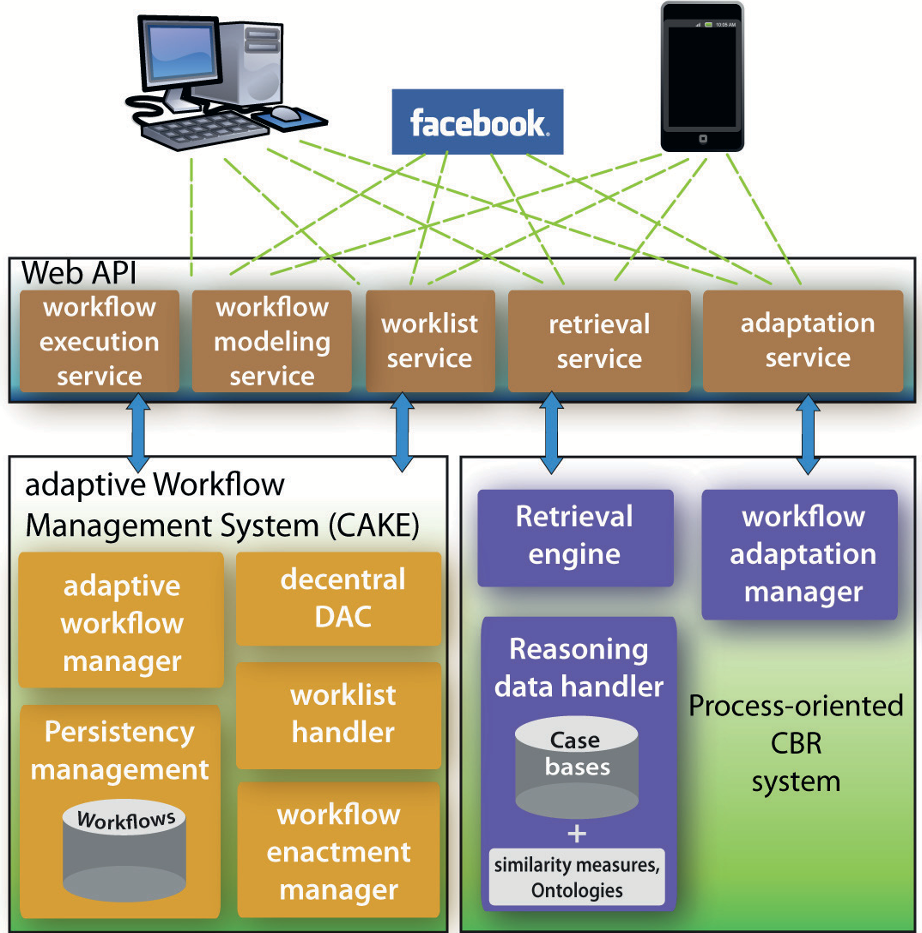 Fig 2: The WEDA architecture bridging the CAKE engine with social network APIs.
Experiments & Social Dynamics
The success of WEDA hinges on "The Cold Start Problem." Who will build the first workflows? The authors propose seeding the community with "key users" (students) and utilizing Social Tagging (Folksonomy) to organize content.
They also introduce a Decentralized Discretionary Access Control (DAC) model. This is crucial for privacy: users must own their workflows, but they also need the ability to transfer portions of that ownership (e.g., allowing a friend to manage the "Buy Beer" task).
Critical Analysis & Outlook
The WEDA project was visionary in its attempt to structuralize human experience before the era of AI agents.
Strengths:
- Privacy-First Sharing: The feedback mechanisms for DAC address the "black hole" of data sharing—users see not just who has their workflow, but how they are using it.
- Agile Execution: The "breakpoint mechanism" allows users to modify a live workflow without crashing the entire process—essential for the unpredictable nature of private life.
Limitations:
- Modeling Friction: Even with simplified UI, the cognitive load of "modeling" may still be too high for casual users compared to natural language.
- Platform Dependency: Being tightly coupled with the Facebook API of 2012 makes the specific implementation dated, though the theory of experience reuse is more relevant than ever in the age of LLMs and AutoGPT.
Takeaway
WEDA proves that personal workflows are not just about automation—they are about capturing and transferring human experience. Today, we might see this as a precursor to "Prompt Engineering" or "Agentic Workflows," where the "social net" is the training ground for the procedural knowledge of the future.