
Beyond Individual Pixels: Leveraging Collection Context for Social Group Suggestion
Collection-based sparse label propagation and its application on social group suggestion from photos
The paper introduces a novel framework for automatic social group recommendation in photo-sharing platforms using Collection-Based Sparse Label Propagation (CSP). By integrating visual features and textual metadata with a sparse graph-based model of a user's entire photo collection, it achieves state-of-the-art performance in suggesting relevant interest groups.
TL;DR
When we upload photos to sites like Flickr, we often struggle to find the right "Special Interest Groups." This paper argues that we should stop looking at images in isolation. By treating a user's photo collection as a sparse graph, the authors demonstrate that they can "propagate" correct labels from easy-to-identify photos to more ambiguous ones, significantly boosting recommendation accuracy.
Background: The Social Recommendation Challenge
Online social sub-communities (groups) are the lifeblood of media sharing, yet manually assigning tags and categories is a tedious "semantic gap" problem. Most previous SOTA methods try to classify images one by one. The researchers here realized an essential truth: Photos in a single user's collection are highly correlated. If one photo is clearly a "Flower," the blurry macro shot next to it in the same album is likely a flower too.
Methodology: Sparse Label Propagation (CSP)
The core innovation is Collection-Based Sparse Label Propagation (CSP). The process follows three main stages:
- Group Categorization: Using SimRank to analyze tag bipartite graphs, the system groups thousands of Flickr groups into 11 broad semantic categories (e.g., Architecture, Seashore, Portrait).
- Initial Prediction: A multi-modal approach combining visual descriptors (GIST, CEDD, Tiny Images) and textual topics (extracted via Latent Dirichlet Allocation) feeds into an SVM to get a "first guess."
- The Sparse Graph: Instead of a standard K-NN graph, they use L1-regularization to find the sparsest possible set of neighbors within the collection to reconstruct each image's features. This removes noise and avoids the "arbitrary K" problem.
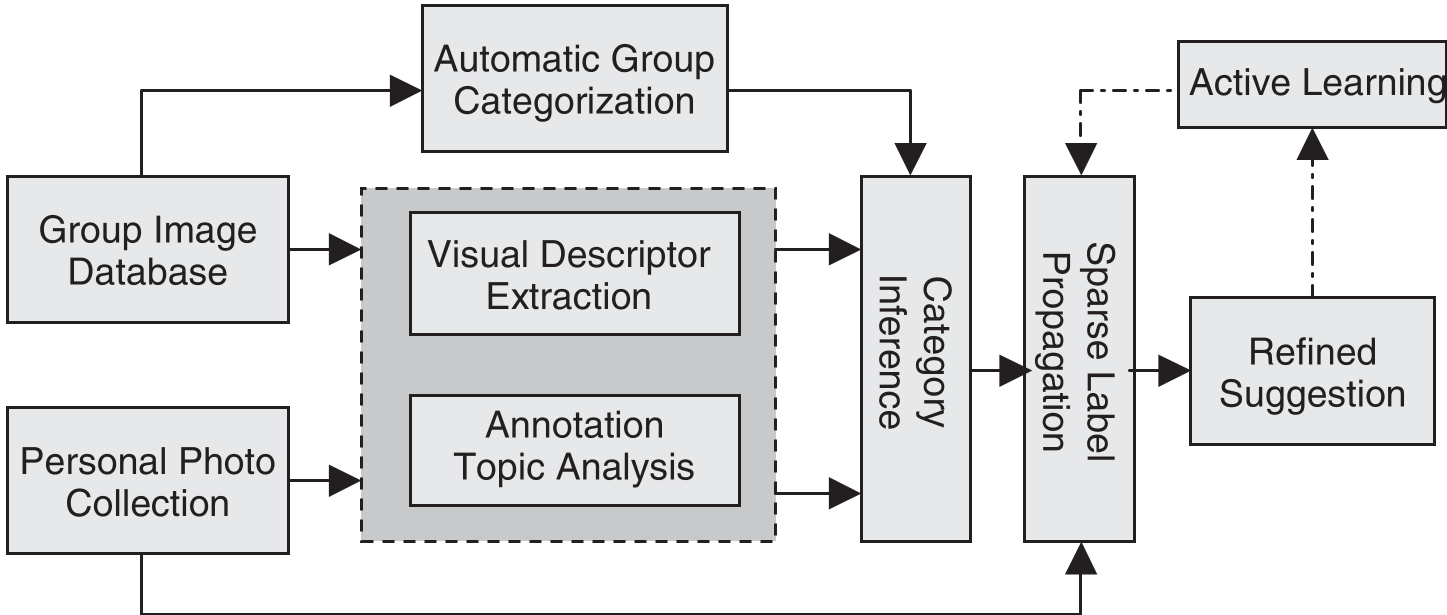 Figure 1: Overview of the proposed group suggestion framework.
Why Sparsity Matters?
In traditional label propagation, labels can "leak" through noisy connections. By enforcing a sparse W matrix, the model ensures that an image only influences others that are genuinely representative of the same "personal style" or "event" within the collection.
Active Learning Without Retraining
A major bottleneck in AI is that the model needs to "retrain" to learn from user feedback. This paper introduces an Active Relevance Feedback (ARF) mechanism. By selecting the most "influential" nodes in the sparse graph—those whose label change would impact the most neighbors—the system updates its suggestions in real-time without touching the underlying SVM weights.
Experimental Performance
The authors validated their approach on a real-world Flickr dataset. They found that:
- Visual Fusion: Integrating multiple visual descriptors via PCA outperformed any single feature.
- Superiority over LNP: Their method significantly outperformed Linear Neighborhood Propagation (LNP) because it specifically harnessed the "collection context" rather than a global dataset similarity.
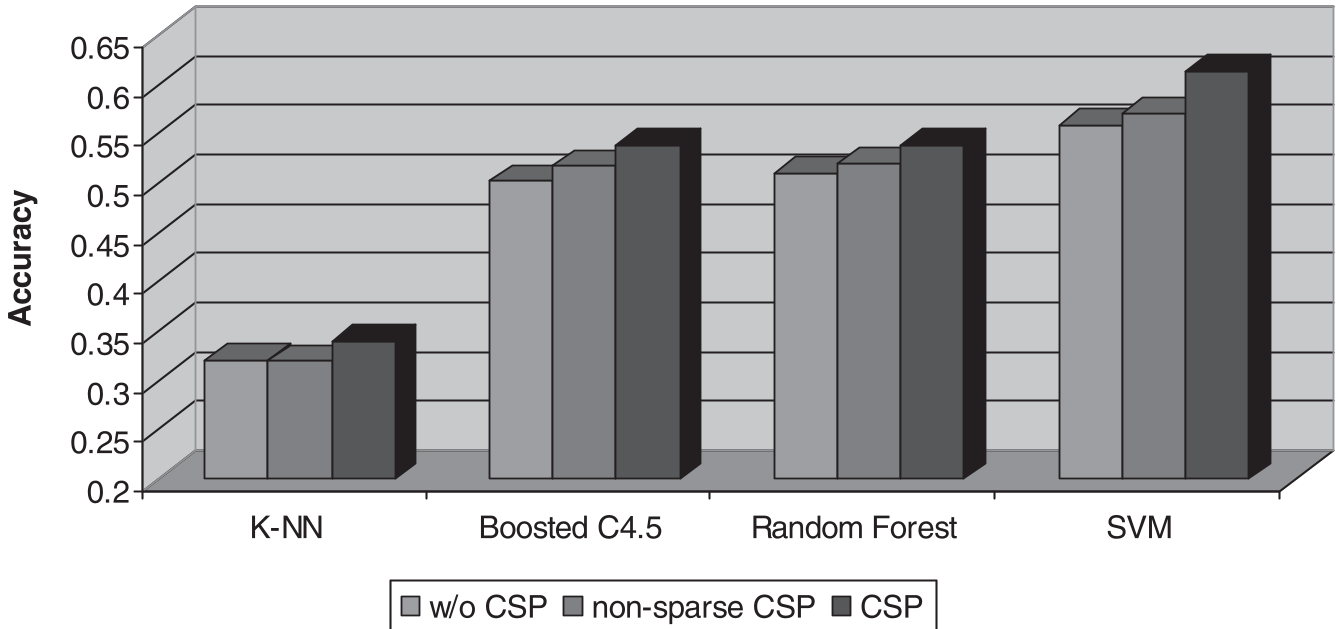 Figure 8: Performance comparison showing CSP's improvement over various baseline classifiers.
Critical Analysis & Conclusion
Takeaway
This work highlights that context is king. In a world of billion-parameter models, sometimes the most effective way to improve performance isn't a bigger model, but a smarter way to model the relationships between data points in a user's session or collection.
Limitations & Future Work
- Scalability: While efficient at the collection level, calculating the sparse matrix for massive global datasets remains a challenge.
- Diversity: The model relies on the assumption that collections are somewhat homogeneous. If a user uploads a completely heterogeneous "dump" of images, the propagation gains may diminish.
Future research should look into Social Link Analysis—if we know who your friends are, we might predict your favorite "Interest Groups" even better.