
Beyond URLs: Using Hierarchical Meta-Paths to Unmask Phone-Based Spammers on Twitter
Collective Classification of Spam Campaigners on Twitter: A Hierarchical Meta-Path Based Approach
The paper proposes a collective classification framework to detect Twitter spammers who use phone numbers to spread campaigns. Unlike URL-based detection, this approach models Twitter as a Heterogeneous Information Network (HIN) and introduces the Hierarchical Meta-Path Score (HMPS) to identify spammers through structural proximity.
TL;DR
As spammers pivot from fragile URLs to more "trusted" phone numbers, traditional detection systems are failing. This paper introduces a specialized framework that models Twitter as a Heterogeneous Information Network (HIN). By calculating a Hierarchical Meta-Path Score (HMPS) and using a feedback-based active learning loop, the authors achieved a 67.3% improvement in AUC over state-of-the-art baselines, even identifying spammers that Twitter’s own security team hadn't suspended.
The Shift in the Spam Landscape: Why Phone Numbers?
Most spam research treats the problem as a content-classification task: look for "shady" URLs or specific keywords. However, cybercriminals are increasingly using phone numbers as action tokens.
- Inherent Trust: Users are more likely to trust a physical phone number than a shortened bit.ly link.
- Cost Barrier: Unlike free email domains, phone numbers cost money, making them a "stable resource" that spammers use for longer periods.
- Cross-Platform Blindness: The attack happens on the telephony network, but the promotion happens on OSNs, creating a visibility gap for platforms like Twitter.
Methodology: The Power of Heterogeneous Networks
The authors argue that you can't find these spammers by looking at a single user in isolation. Instead, they model Twitter as a HIN where nodes (Users, Campaigns, Phone Numbers, URLs) are interconnected.
1. Hierarchical Meta-Path Score (HMPS)
The core innovation is HMPS. A meta-path (e.g., User -> Phone -> User) defines a composite relation. The authors organized the HIN into a hierarchical tree where the Least Common Ancestor (LCA)—usually a phone number or campaign—limits the scope of similarity.
The intuition? If two users share a phone number or are part of the same campaign structure, they are architecturally "close," regardless of what their profile biography says.
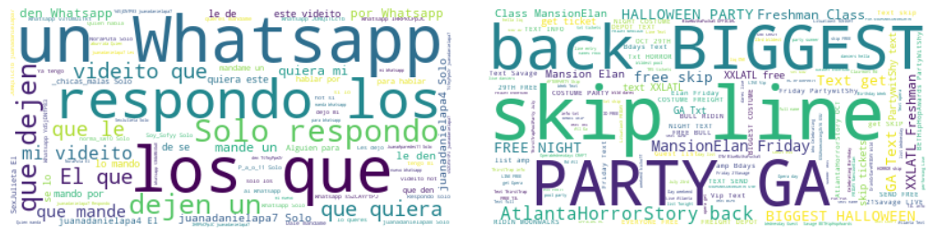 Figure 1: The framework for campaign identification and unigram extraction.
2. Feedback-Based Active Learning
Spam detection often suffers from "Cold Start" problems—not enough labeled spammers per campaign. To solve this, the authors used:
- One-Class Classification (OCC): Since they only had "suspended users" as ground truth, they trained the model to recognize the "target" (spammer) rather than trying to define "normal" behavior.
- The Feedback Loop: If a user is identified as a spammer in Campaign A and that same user exists in Campaign B, they are automatically added to the training set for Campaign B. This iterative expansion maximizes the utility of limited labels.
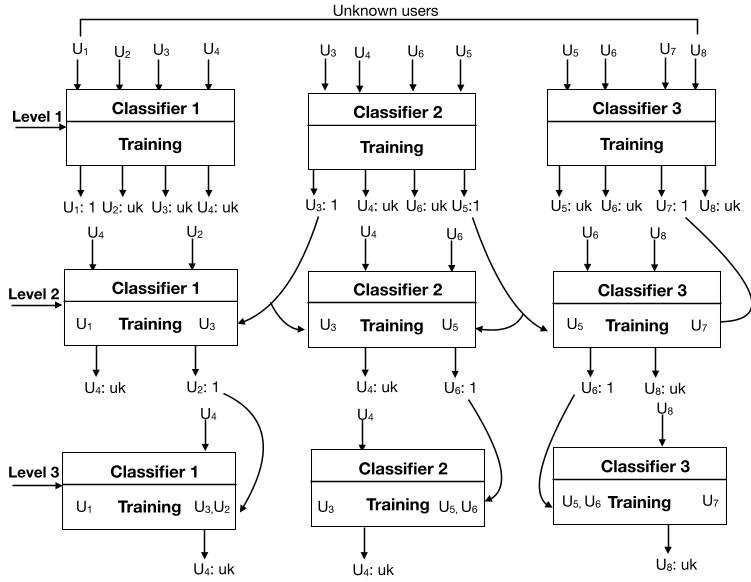 Figure 2: Distribution showing that while suspended users are rare, user overlap across campaigns is high (21%).
Experimental Battleground
The researchers tested their approach against three heavy-hitting baselines (Benevenuto et al., Khan et al., and Adewole et al.).
Key Results:
- Setting 1 (Known Spammers): HMPS + Profile Features achieved 84% accuracy, vastly outperforming URL-based methods.
- Setting 2 (Human-Annotated Labels): The HMPS-only model achieved a staggering 0.99 Precision.
- Active Learning Impact: Without the feedback loop, precision plummeted by 57%, proving that "shared intelligence" across campaigns is vital.
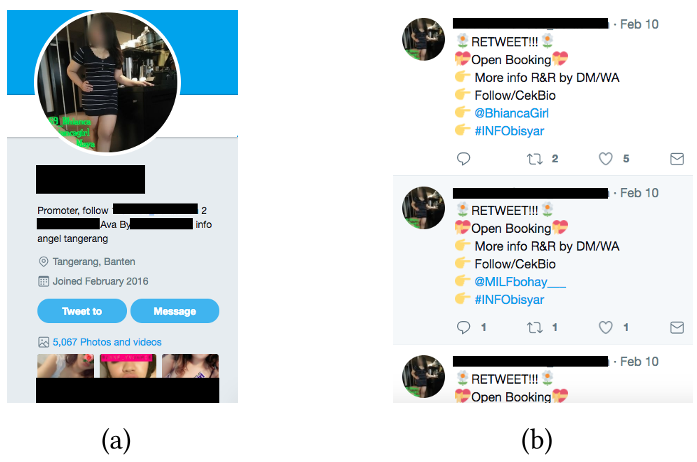 Figure 3: Comparative performance showing the superiority of the HMPS + Active Learning approach.
Critical Insight: Real-World Superiority
The most compelling evidence is the Case Study. The authors found active accounts promoting pornography and lotteries. These accounts had balanced follower/friend ratios and avoided links—tricking Twitter’s standard filters. However, because they shared technical infrastructure (phone numbers) with known spam rings, the HMPS system flagged them instantly.
Conclusion & Future Outlook
This work signals a shift from Content Analysis to Infrastructure Analysis. By focusing on the resources spammers must use to monetize (phone numbers), the defense becomes much harder to evade. Future researchers might look to apply this "Hierarchical Meta-Path" logic to other stable resources like crypto-wallets or hardware IDs to further tighten the net around digital campaigners.
Takeaway: In the cat-and-mouse game of OSN security, structure is harder to fake than content.