
Beyond Algorithms: Harmonizing Web Service Composition with Collective Intelligence
A Collective Intelligence Based Approach for Satisfying the Actors Requirements in Web Services Composition
This paper introduces a novel framework for Web Service (WS) composition that integrates Collective Intelligence (CI) to better satisfy actor requirements. By combining a dynamically constructed situation ontology with real-time social network interactions, the approach moves beyond static semantic matching to a collaborative, interactive decision-making process.
TL;DR
Web Service composition is no longer just a matching game between WSDL files. This paper proposes a paradigm shift by injecting Collective Intelligence (CI) into the workflow. By leveraging dynamic ontologies mined from the web and real-time social interactions, the system helps users navigate complex choices—like planning a flight—through peer wisdom and structured situational knowledge.
Background: The Limitations of "Black-Box" Composition
In the Service-Oriented Computing (SOC) landscape, we've traditionally relied on automated engines to stitch services together. However, these engines often lack the Inductive Bias provided by human context. When a user looks for a flight from London to Paris, a purely semantic search might return fifty identical-looking options. The pain point isn't a lack of data; it's a lack of discernment.
Methodology: The Two Pillars of Collective Wisdom
The authors break down their approach into two distinct yet synergistic components:
1. The Situation Ontology (The Brain)
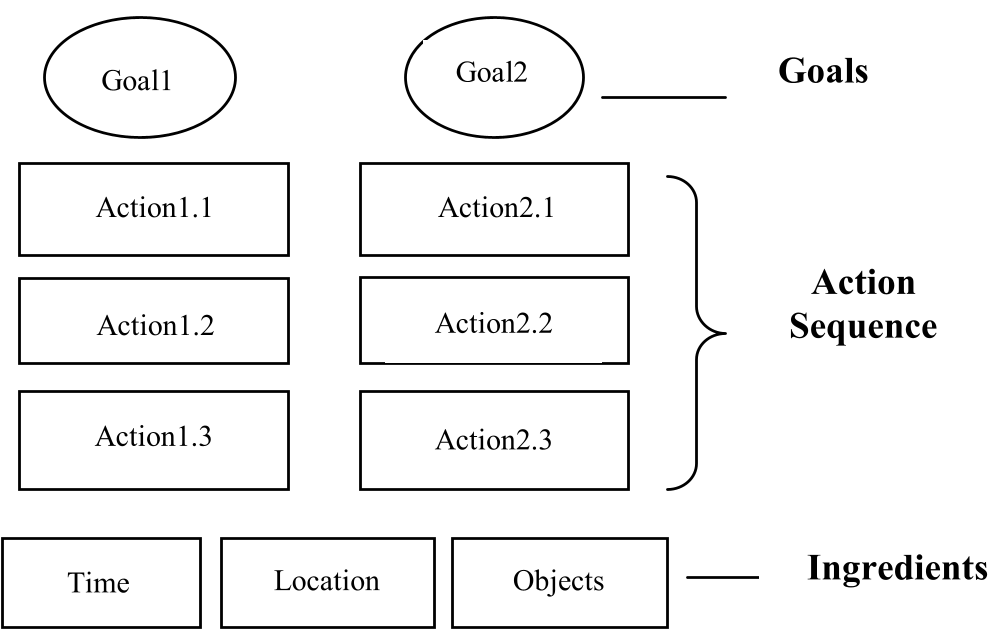
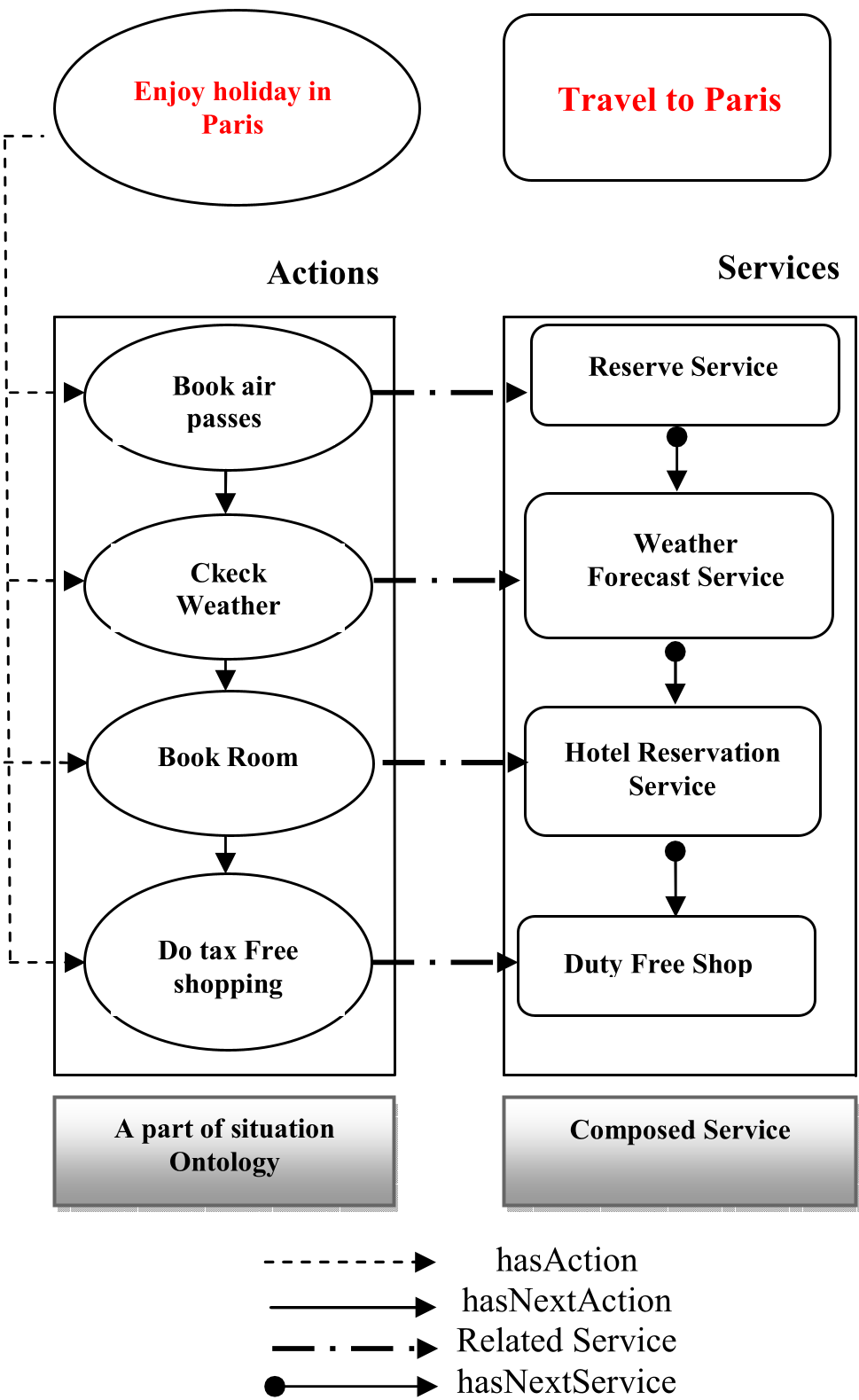
Instead of relying on static, pre-defined schemas, the system builds an ontology by mining "how-to" instructions from sites like eHow and wikiHow. This allows the system to understand the temporal and causal logic of human activities (e.g., "Booking a flight" leads to "Selecting a seat" which leads to "Payment").
2. Social-Interactive Feedback (The Voice)
The methodology moves from a "closed system" to an "open social system." During the composition, the user can invoke GetOpinion or AskToFriends modules. This integrates real-time feedback from social platforms like Facebook or Twitter directly into the decision loop, grounding the technical composition in social trust.
Technical Core: Matching and Compatibility
To ensure the services selected are technically viable, the paper employs a matching algorithm based on Euclidean Distance Scoring. The query's attributes () are mapped against provider candidates to calculate a compatibility score :
This formula provides a quantitative foundation, ensuring that while the system is "social," it remains mathematically rigorous in its service-level agreements (SLA).
Critical Insight: Why This Matters
The true value of this work lies in its acknowledgment that human judgment is a non-linear variable that automated systems cannot fully replicate. By treating social networks as a "distributed database of experiences," the authors provide a bridge between the rigid world of SOAP/WSDL and the fluid world of user intent.
Limitations & Future Outlook
While the conceptual framework is robust, the paper leaves room for further exploration in:
- Data Veracity: How do we filter "noise" or "fake reviews" from social networks?
- Latency: Real-time human interaction ("AskFriends") introduces significant delays in a system typically measured in milliseconds.
The future of SOC likely involves AI-Agents that act as proxies for this collective intelligence, navigating social graphs to make informed composition decisions on behalf of the user.
Conclusion
This paper serves as a vital reminder that in the age of automation, the most powerful "intelligence" is still the collective experience of the community. By embedding this into the very fabric of Web Service composition, we move closer to software that truly understands not just what we want, but why we want it.