
Collective Intelligence: Moving Beyond "kWh" to Change Energy Behavior
Collective intelligence for promoting changes in behaviour: a case study on energy conservation
The paper explores the use of Collective Intelligence (CI) tools, specifically EvidenceHub and EnergyUse.eu, to foster energy conservation through community-driven knowledge building. It presents a sociotechnical framework to shift public perception from abstract climate change concepts to actionable everyday habits.
TL;DR
Data alone doesn't change habits. This paper argues that fighting climate change requires Collective Intelligence (CI)—tools that help communities collaboratively build knowledge. By analyzing two UK-based case studies, the researchers demonstrate that social interaction, storytelling, and "tangible" feedback are far more effective at promoting energy conservation than simply showing people their electricity bills.
The Motivation: The "Invisible" Electricity Problem
Technological investments in energy efficiency are futile if the public remains disengaged. Most people view climate change as a "distant" concept and find energy metrics like kWh or CO2 emissions abstract and confusing.
The authors identify a critical gap:
- Informal Behavior: Most of our energy use is automatic and unreflective.
- Technical Feedback: Most tools are purely data-driven, creating a "language barrier" between experts and laypeople.
The core insight of this work is that behavior change happens when we move from the Technical mode (monitoring) to the Informal mode (daily habits) by passing through the Formal mode (social norms and community rules).
Methodology: Two Fronts of Engagement
The researchers deployed two distinct CI environments:
1. The Workplace (EvidenceHub & The Energy Tree)
To make energy "visible" in a research department, the authors combined an argumentative debate tool with a physical installation called the Energy Tree.
- The Insight: The tree served as a "shared symbol." As people contributed to the online debate (sharing ideas like "not using the elevator alone"), the tree’s branches lit up.
- Visual Evidence:
 Figure 1: (a) In-home display, (b) Smart plug, (c) Evidence Hub interface, (d) The Energy Tree.
2. The General Public (EnergyUse.eu)
Moving beyond academia, the trial expanded to 150 UK households using a forum-style platform to share "energy stories."
- The Shift: Instead of data charts, the focus was on narratives (e.g., "I replaced 23 halogen bulbs with LEDs and saved 1.4 kWh/day").
Key Findings: What Actually Drives Participation?
The study revealed a surprising hierarchy of interaction:
- Low Friction is King: Voting accounted for 68% of all interactions. People want to participate, but they need it to be easy.
- Privacy Matters: While people were happy to discuss "ideas" publicly, they preferred to keep their specific consumption data private, discussing it offline during coffee breaks rather than on the platform.
- The "Technical" Barrier: Community leaders noted that terms like "kWh" are exclusionary. The most successful content focused on money and specific appliances (kettles, washing machines) rather than abstract units.
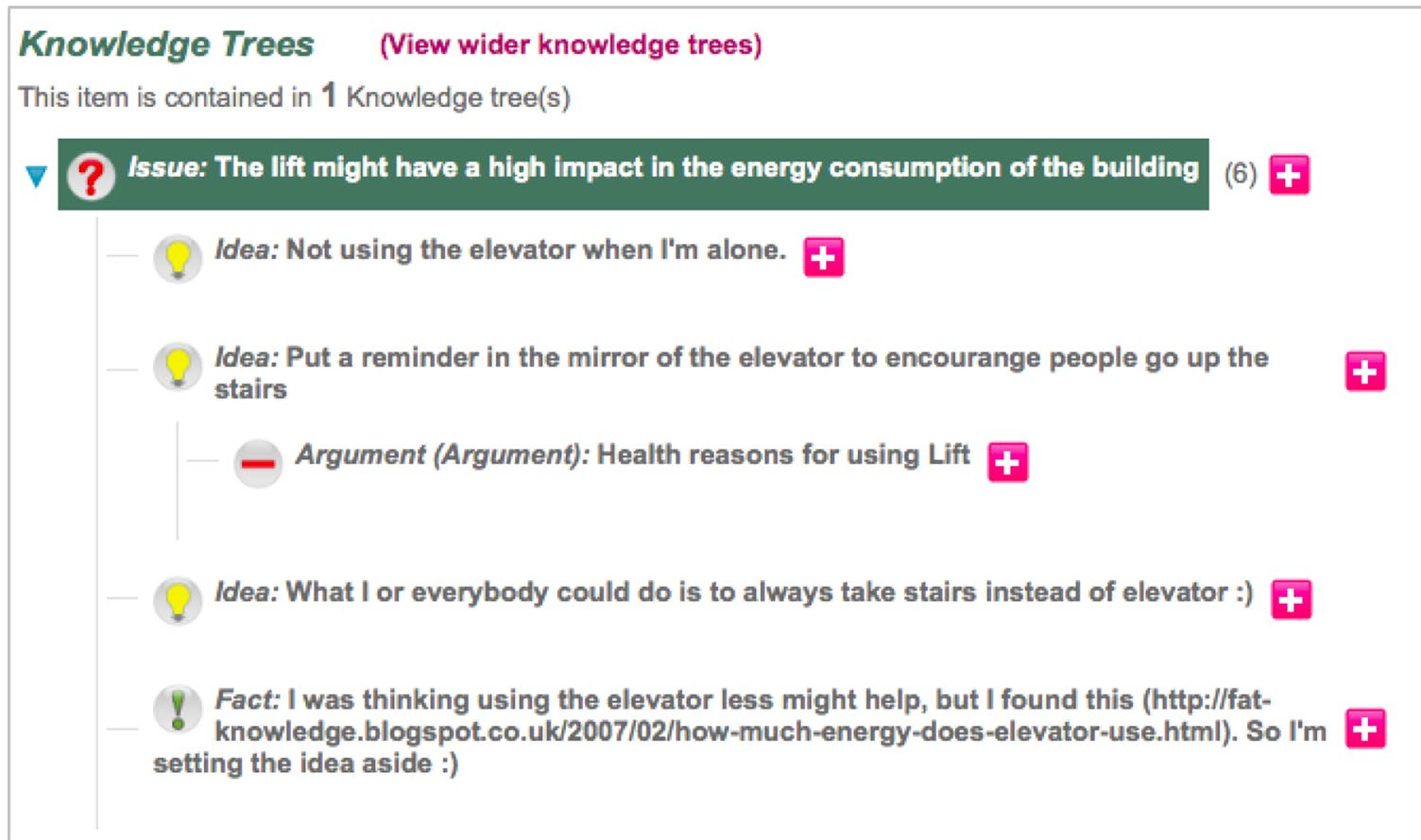 Figure 2: The Evidence Hub dynamic map showing connections between ideas and users.
Design Implications for the Future
Based on the "5 Doors" Theory, the authors provide a framework for future developers (summarized in the table below):
| Condition | Strategy for Success |
|---|---|
| Desirability | Create "thematic campaigns" (e.g., tackling background load) to trigger interest. |
| Enabling Context | Avoid complex tech; focus on storytelling and narratives over raw data. |
| Can Do | Use "tags" (e.g., #cooking, #kettle) that reflect everyday life to build self-efficacy. |
| Buzz | Recognize top contributors; use visual social maps to show community growth. |
Critical Analysis & Conclusion
The value of this research lies in its sociotechnical approach. It acknowledges that modern smart meters are often "designed for people who already know IT," leaving the average citizen behind.
Limitations: The study notes a "participation gap"—those who find the tools complex quickly disengage.
Future Outlook: The next generation of energy-saving tools shouldn't just be "smart"; they need to be "social." By bridging the gap between technical metrics and human stories, we can transform energy conservation from a chore into a collective social norm.