
Beyond Monitoring: Leveraging Collective Intelligence to Re-Humanize Elderly Care
A Method Using Collective Intelligence for Communication Activation Among Elderly People Living Alone
This paper proposes a collective intelligence-based framework for activating communication among elderly people living alone. It introduces a method of synthesizing specialized knowledge from diverse caregivers into "Collective Wisdom" to generate personalized conversation topics, tested through an ICT-based television communication system.
TL;DR
As the global population ages, the "loneliness epidemic" among the elderly living alone has become a critical medical risk. This paper moves beyond simple monitoring sensors, proposing a method that gathers Collective Intelligence from diverse specialists to generate engaging conversation topics. By transforming technical "monitoring" into "warm communication," the study aims to slow dementia and improve quality of life using a non-intrusive ICT television system.
The "Cool" vs. "Warm" Observation Dilemma
In the current landscape of home-based care, we see a divide between two philosophies:
- Impersonal (Cool) Observation: Viewing the elderly as objects through sensors and automated alerts. While efficient for bureaucracies, it ignores human psychology and can exacerbate a sense of rejection.
- Personal (Warm) Observation: Bi-directional communication where the elderly person is an active agent. This affirms their self-worth but is difficult to scale due to caregiver shortages.
The authors argue that the missing link is content. Even with a communication channel, what should we talk about?
Methodology: Synthesizing Collective Wisdom
The core innovation lies in the structured "Setting" for expert dialogue. The authors believe that no single specialist (e.g., just a doctor or just a helper) can solve the diverse needs of an elderly individual.
The Dialectic Process
The method follows a philosophical "Thesis-Antithesis-Synthesis" loop:
- Thesis: Individual expert opinions based on their specific field (e.g., a psychologist focusing on the "psychology of the extraordinary").
- Antithesis: Differences in opinion that arise during discussion.
- Synthesis: Facilitated consensus that results in Collective Wisdom—knowledge that is generalized and highly effective for activating communication.
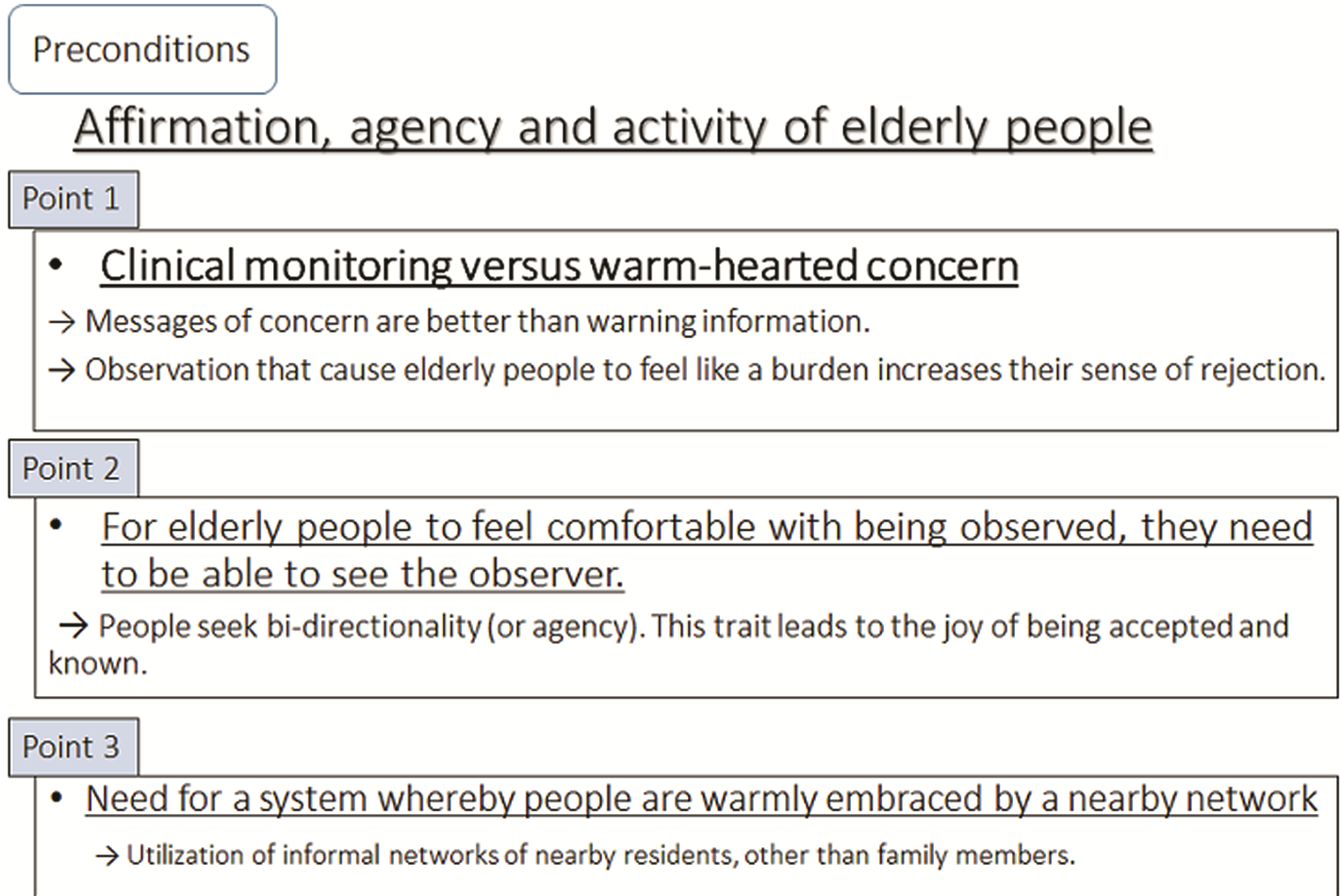 Figure 1: The foundational pillars of elderly observation: Affirmation, Agency, and Activity.
Experimental Results: From Data to Wisdom
The authors conducted an "in situ" experiment involving a helper, a geriatric psychologist, an ICT expert, and a researcher. Over a 2.5-hour window, they processed over 100 raw opinions.
- Outcome: The group distilled these into 8 specific intelligence items and 2 generalized wisdom pillars.
- Key Insight: They discovered that communication must pivot between "Ordinary Psychology" (daily life) and "Extraordinary Psychology" (special events/visitors) to keep the elderly engaged and cognitively active.
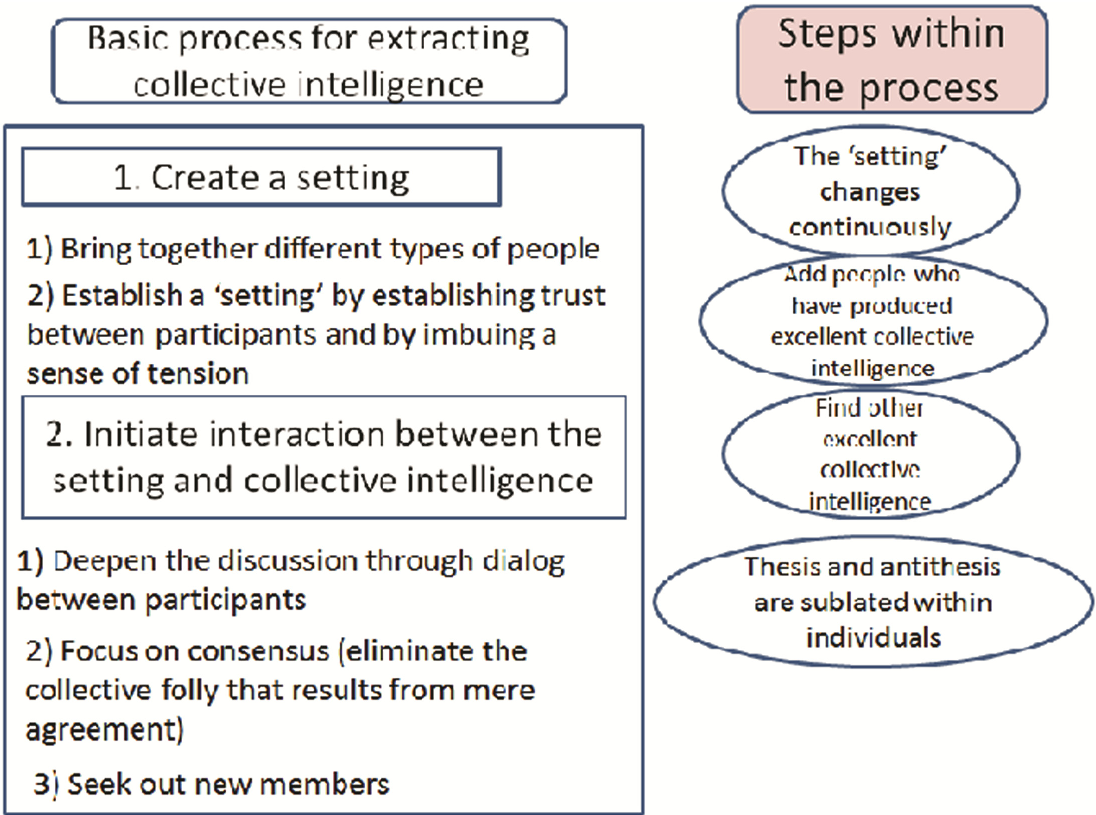 Figure 2: The interaction between the "Setting" and the emergence of Collective Intelligence.
Critical Analysis & Future Outlook
While the study provides a robust qualitative framework, it faces two main challenges:
- Scalability: Bringing 5 experts together for 2.5 hours per "setting" is labor-intensive. The authors suggest moving to virtual environments (video conferencing) to mitigate this.
- Automation Potential: In the era of AI, one could envision using the "Collective Wisdom" generated by this method to fine-tune LLMs, allowing them to act as a "first-responder" for warm communication, guided by human-derived expertise.
Conclusion
This work serves as a reminder that in the field of elderly care, technology should be the medium, not the observer. By using collective human intelligence to fuel ICT systems, we can move from mere "surveillance" to true "care."
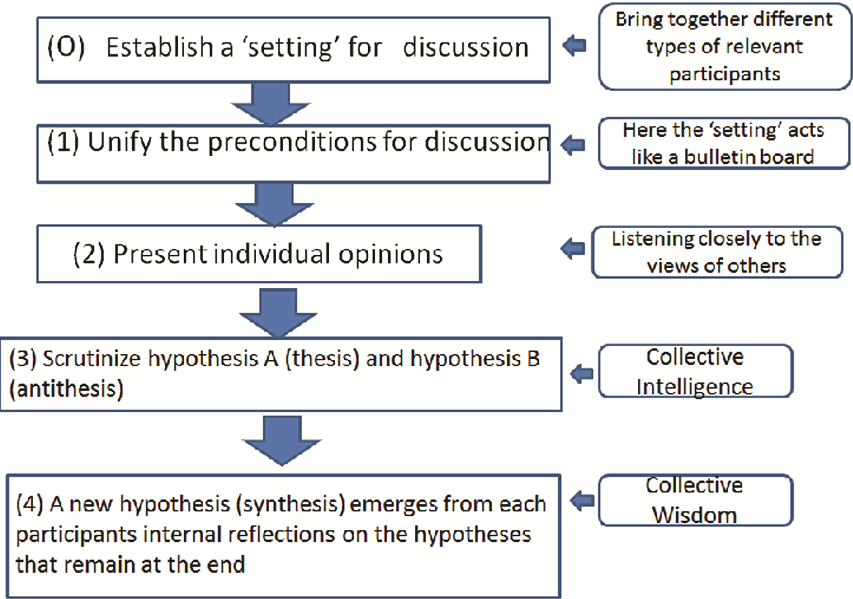 Figure 3: Overview of the discussion results and the hierarchy of knowledge extracted.