
Collective Intelligence: Revolutionizing FOREX Trading with Multi-Agent Systems
Collective Intelligence Supporting Trading Decisions on FOREX Market
The paper introduces A-Trader, a multi-agent system (MAS) designed for high-frequency FOREX trading. It leverages "Collective Intelligence" by integrating diverse agents—using technical and fundamental analysis—managed by a Supervisor agent that utilizes consensus and evolutionary strategies to generate optimized trading signals.
TL;DR
Financial markets, particularly FOREX, move at speeds that defy human manual analysis. This paper presents A-Trader, a multi-agent system that shifts the burden of decision-making from single indicators to a "collective" of intelligent agents. By utilizing evolutionary algorithms and consensus mechanisms, the system filters market noise to provide actionable, high-probability trading signals (Buy/Sell/Hold) in near real-time.
Background Positioning
In the landscape of algorithmic trading, we are moving past simple technical indicators (like Moving Averages). A-Trader sits at the intersection of Multi-Agent Systems (MAS) and Collective Intelligence, essentially creating a "digital boardroom" where specialized agents vote on the best trade, supervised by an AI that evaluates their historical accuracy.
Problem & Motivation: The Chaos of High-Frequency Trading
High-Frequency Trading (HFT) places an enormous premium on speed and robust indicators. Traditional systems fail because:
- Over-reliance on single models: A strategy that works in a trending market often fails during consolidation.
- Manual Overload: Traders cannot manually compute Sharpe ratios, volatility coefficients, and profit/loss metrics fast enough to react to M1 (1-minute) price ticks.
- Rigidity: Most bots use fixed parameters that don't evolve as market sentiment shifts.
The authors' insight is that different agents possess different "expertise." By combining them, the system can cancel out individual errors and amplify strong signals.
Methodology: The Core of A-Trader
The architecture of A-Trader relies on a hierarchical structure:
- Market Communication Agents (MCA): The "ears" of the system, pulling news and live quotes.
- Intelligent Agents: The "thinkers" who apply fuzzy logic, technical analysis, and sentiment analysis.
- The Supervisor (S): The "CEO" who resolves conflicts (e.g., when one agent says "Buy" and another says "Sell") using localized performance data.
The Evolution-based Strategy
One of the most innovative parts is the use of an Evolutionary Algorithm to determine agent weights. Instead of assuming all agents are equal, the system treats the weights for open/close positions as a "genotype," evolving them to find the most profitable "phenotype" (set of decision rules).
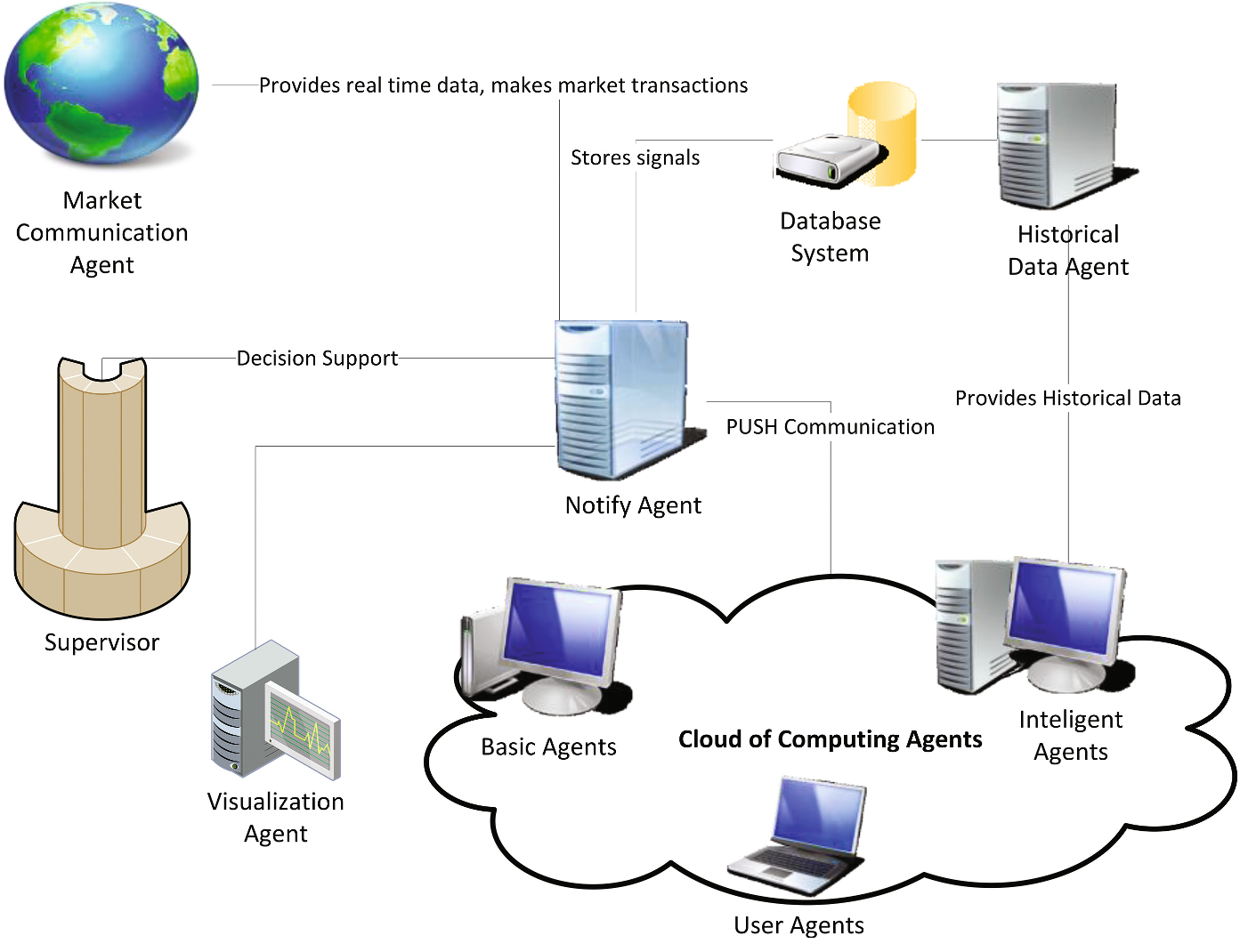 Figure 1: The hierarchical multi-agent architecture of A-Trader.
The decision rule for a short position is defined by whether the weighted sum of agent signals exceeds a threshold, while also satisfying "compulsory" safety parameters:
Experiments & Results
The authors tested the system on USD/PLN M1 data across three distinct periods in 2015. They compared their Consensus and Evolution-based strategies against a traditional Buy and Hold (B&H) benchmark.
Performance Highlights:
- Profitability: In Period 1, the Consensus strategy yielded 680 pips, dwarfing the B&H loss of -41 pips.
- Efficiency: The Evolution-based strategy showed incredible precision, needing only 4-6 transactions to achieve significant gains, whereas Consensus was more "active" with 32-37 transactions.
- Risk Management: The "Value of Evaluation Function (y)"—a multi-criteria metric including Sharpe ratio and volatility—consistently ranked the multi-agent strategies higher than the benchmark.
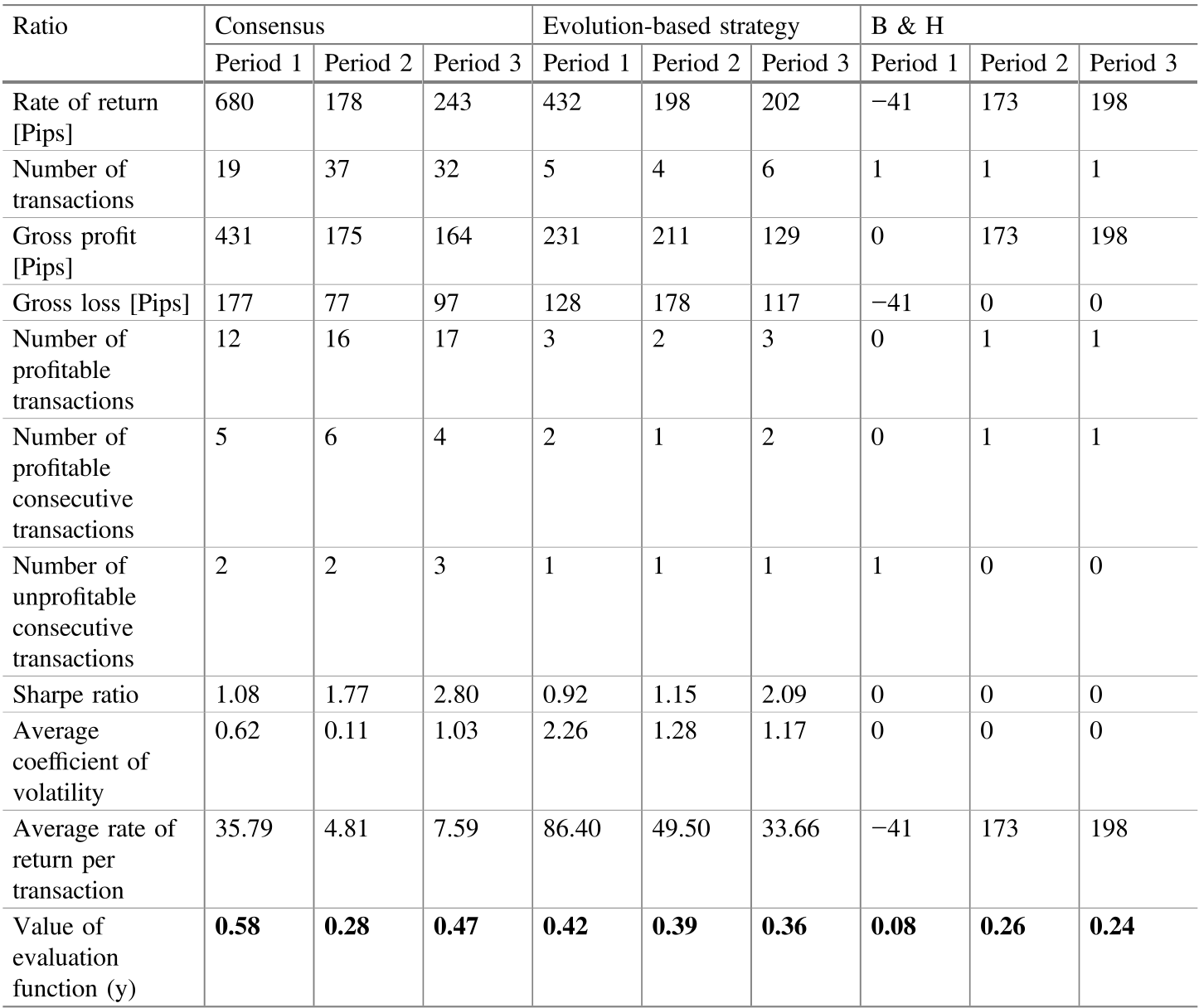 Table 1: Quantitative comparison across different trading periods.
Critical Analysis & Conclusion
Takeaway
A-Trader proves that diversity in algorithms leads to stability in returns. The Supervisor's ability to automatically switch focus to the best-performing strategy in real-time is a significant jump from static "Expert Advisors" (EAs) common in platforms like MetaTrader.
Limitations
- Transaction Costs: While the paper mentions costs are proportional to the number of transactions, the high activity of the Consensus strategy (30+ trades/day) might see profits eroded by spreads and slippage in a real-world liquidity environment.
- Generalization: The test periods were short (spanning a few days in late 2015). Longitudinal data across different market regimes (Bull vs Bearing vs Flash Crash) would further validate the evolutionary robustness.
Future Outlook
The next step for this research involves Agent Synergy. Instead of just voting, agents could "cooperate"—where one agent's output becomes the input for another, creating a deep mesh of financial intelligence.