
Decoding the Micro-Pulses of Collective Intelligence: How Wikipedia Articles "Swarm" into Existence
How collective intelligence emerges: knowledge creation process in Wikipedia from microscopic viewpoint
This paper presents a microscopic analysis of the knowledge creation process in Wikipedia through a case study of the "Fukushima Daiichi nuclear disaster" article. The author introduces a "Visaphor" (visual metaphor) based on swarm intelligence to visualize dynamic user-paragraph interactions and the evolution of collective intelligence.
TL;DR
How does a chaotic influx of edits from thousands of strangers transform into a structured, reliable encyclopedia entry? This research moves beyond "bird's-eye" statistics to perform a microscopic autopsy of the Fukushima Daiichi nuclear disaster Wikipedia article. By treating users and paragraphs as a dynamic, swarming network, the author reveals the hidden phases of knowledge synthesis through a specialized digital metaphor called a Visaphor.
Background: Beyond the Macro-View
In the study of Web 2.0, Wikipedia is often cited as the pinnacle of collective intelligence. However, most research focuses on "Power Struggles" (macroscopic battles) or simple text movement. We know that articles grow, but we rarely see the mechanics of how individual interventions—adding a comma, deleting a paragraph, or debating a fact—actually weave the fabric of an article.
The author argues that to understand collective intelligence, we must observe it at the microscopic level: the intersection where a specific user meets a specific chunk of information.
Methodology: The User-Paragraph Network
To capture this, the researcher didn't just look at the number of edits. They developed a user-paragraph network.
- Parsing History: Every revision was tracked by user, timestamp, and the specific quantity of information changed.
- Mapping Influence: By creating a network where circles represent users and rectangles represent paragraphs, the researcher could visualize "who influences what."
- The Swarm Metaphor: Using the notion of Visaphor (a term coined by Donna Cox), the study employs particle effects to represent users as "swarming" around the article, teeming and debating until an "intellectual balance point" is reached.
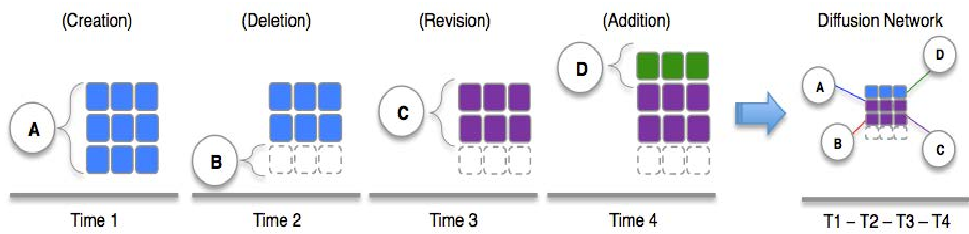 Figure 1: The architecture of the user-paragraph network showing information diffusion.
Phases of Growth
The research identifies that knowledge creation is not a linear climb but a 6-phase journey:
- The Initial Seed: The first preliminary ideas are sowed.
- The Swarm: A rapid influx of users reacting to real-world events (like the Fukushima disaster).
- The Synthesis: Authors begin revising and merging conflicting viewpoints.
- Balance Point: The stage where the core content stabilizes, and only minor stylistic revisions occur.
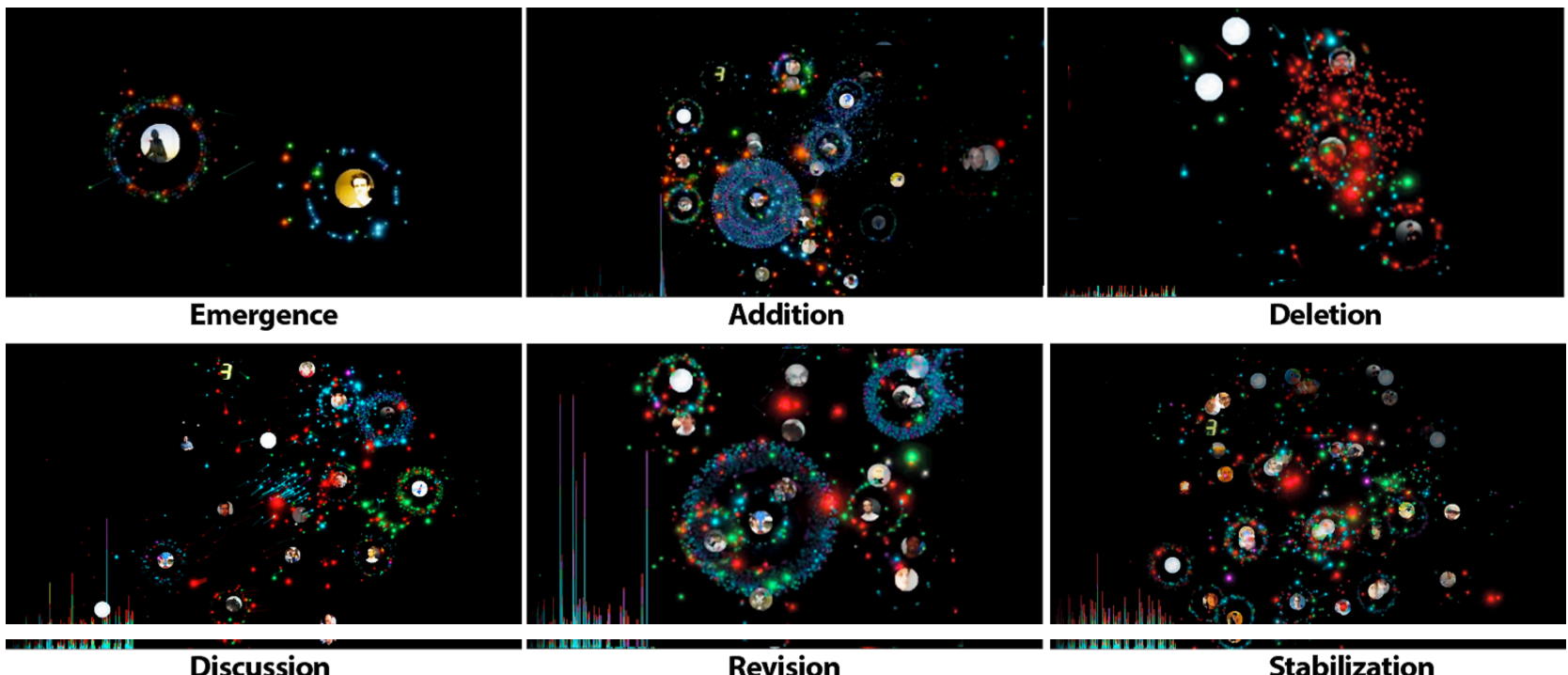 Figure 2: Microscopic view of user interactions at different stages of the article's life cycle.
Key Insights & Academic Value
The brilliance of this work lies in its Inductive Bias toward biological systems. By viewing Wikipedia through the lens of Swarm Intelligence, the author moves away from treating an article as a static document and starts treating it as a living organism.
The quantitative breakdown of roles—Creators, Deleters, Revisers, and Adders—allows us to categorize the "functional biology" of a digital collaborator. The study proves that "intellectual balance" isn't just about reaching a word count; it's about the stabilization of the user-paragraph network.
Critical Perspective & Future Work
While the "Fukushima" case study is a powerful example of high-stakes, rapid knowledge creation, one might ask: Does this swarming behavior hold true for more obscure or "evergreen" topics?
The author suggests that the next frontier is applying this visualization to other platforms like GitHub or Delicious. For developers and data scientists, this implies a future where we can visualize the "health" and "maturity" of a codebase or a knowledge base not by its lines of code, but by the dynamic swarming patterns of its contributors.
Conclusion
This paper serves as a bridge between data art and social science. By visualizing the microscopic interactions of Wikipedia, it provides a roadmap for understanding how individual efforts—no matter how small—converge into the massive, collective wisdom that defines the modern internet.