
Collective Intelligence: A Data-Driven Strategy to Balance Disaster Resources in Europe
A Collective Intelligence Resource Management Dynamic Approach for Disaster Management: A Density Survey of Disasters Occurrence
This paper proposes a Collective Intelligence-based framework for integrated disaster management, specifically targeting resource balancing across 27 European countries. By utilizing historical data from 1900-2008, the study develops a partnership model that aligns countries based on common disaster profiles (floods, droughts, earthquakes, storms) to optimize mitigation and preparedness stages.
TL;DR
As the economic and human costs of disasters skyrocket, the traditional "solo" approach to disaster management is becoming obsolete. This paper presents a roadmap for a Collective Intelligence framework that identifies high-density disaster patterns across 27 European nations. By grouping countries into strategic partnerships based on historical risk (e.g., a "Flood Alliance" or "Earthquake Core"), the authors argue we can balance scarce resources and expertise before a crisis hits.
The Growing Crisis: Why "Local" Is No Longer Enough
The European Environmental Agency reports nearly 100,000 fatalities between 1998 and 2009 due to natural and technological hazards. Despite this, disaster response remains largely "siloed." Local agencies often lack the high-end expertise or computational tools required for massive events.
The authors identify a critical motivation: data complexity and volume are increasing, yet resource management remains stagnant. There is a desperate need to move from reactive isolated units to proactive integrated networks.
Methodology: Mapping Disaster Density
The research utilizes the EM-DAT database (1900–2008) to perform a quantitative survey. The methodology focuses on "Density of Occurrence"—identifying which disasters hit where and how much they cost.
The Partnership Model
The core innovation is the transition to a Collective Intelligence Resource Management approach. This isn't just about sharing a database; it is about four levels of integration:
- Affiliation: Recognizing which country belongs to which risk group.
- Learning: Identifying "Lead Countries" (e.g., Greece for Earthquakes) to train others.
- Practice: Developing common methods and terminology.
- Action: Implementing joint crisis reduction and strategic plans.
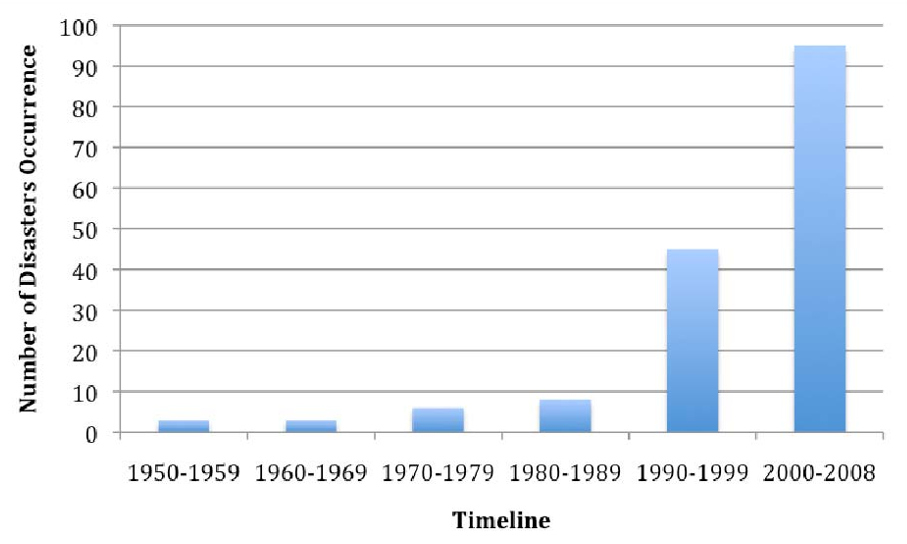 Figure 1: Quantitative evidence showing the exponential rise in reported disasters globally.
Key Findings: The "Big Four" Hazards
The survey reveals that the vast majority of economic damage in the 27 European countries studied is driven by just four types of events:
- Floods (32.47%): The most expensive and frequent threat.
- Droughts (29.00%): Highly concentrated (e.g., Spain).
- Storms (25.16%): Prevalent in Northern and Western Europe (e.g., France, UK).
- Earthquakes (10.48%): Geographically specific but high impact (e.g., Greece, Italy).
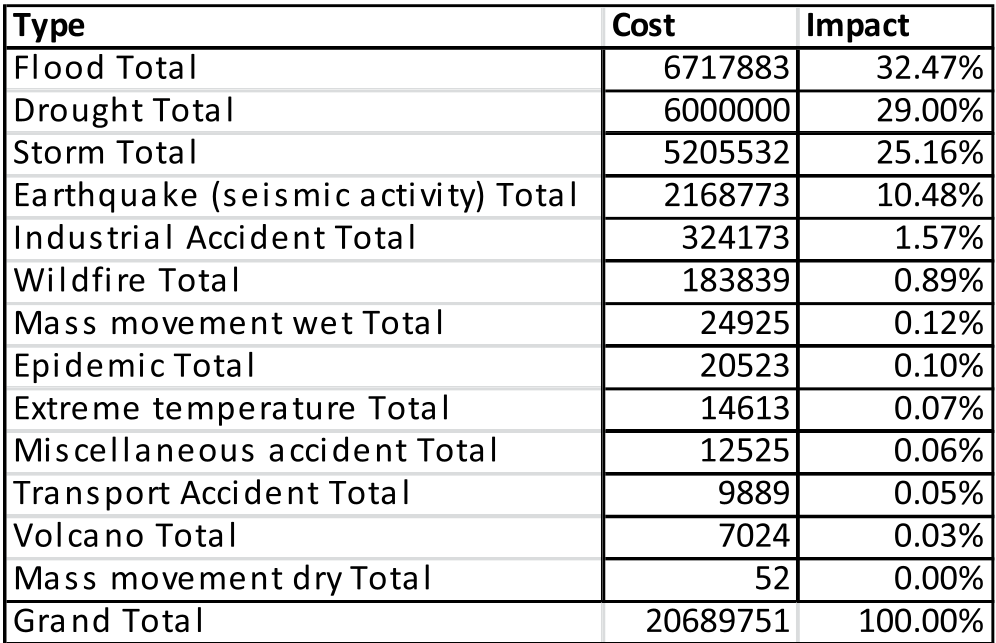 Table 1: Breakdown of disaster types by cost contribution.
The data shows a clear linear upward trend in costs, particularly from the 1990s onward. This reinforces the argument that resource needs will soon outstrip the capacity of individual nation-states.
Collective Intelligence in Practice
How does this look on the ground? The authors provide a roadmap for "Community Alliances."
- The Flood Community: Led by Italy and Romania, incorporating Germany, Poland, Hungary, and Spain. These countries would share compatible business continuity tools and interoperable computational infrastructures.
- The Drought Community: Spain acts as a lead, sharing its long-term mitigation expertise with France and Portugal.
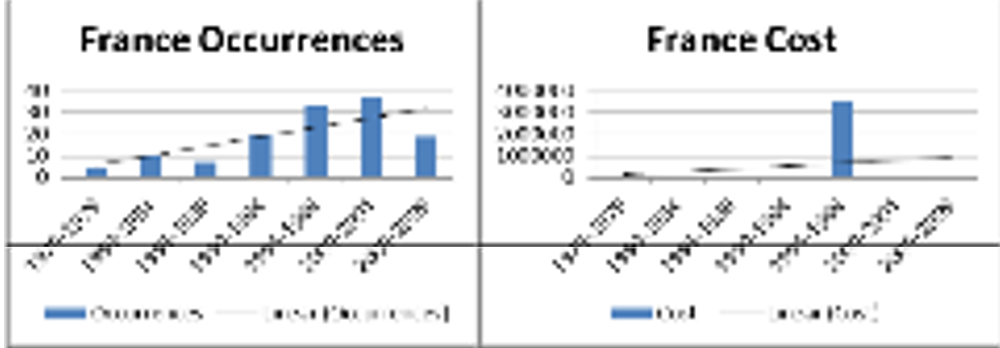 Figure 2: Linear trendline demonstrating the rapid escalation of disaster costs in France, necessitating a collaborative resource model.
Critical Insight & Future Outlook
The value of this paper lies in its systematic approach to cross-border synergy. By using historical density to predict future needs, it moves disaster management into the realm of distributed resource optimization.
Takeaway: The "Collective" in Collective Intelligence refers not just to humans, but to the integration of sensors, grids, clouds, and crowds.
Limitations: The study relies on historical reporting which may be incomplete for earlier decades (1900-1950). Furthermore, while the need for a partnership model is proven, the legal and political Service Level Agreements (SLAs) required to share sensitive national resources remain a future challenge.
Future Work: The authors intend to develop specific policy models and formalize the coordination protocols between these emerging technologies to ensure that "collective computational intelligence" is both reliable and actionable in real-time.