
Collective Intelligence: Transforming Fan Emotions into Service Excellence
8384_Using the collective intelligence of sports fans to improve professional football league customer service.
This research leverages text mining and ontology engineering to analyze Green Bay Packers fans' collective intelligence, specifically focusing on emotions and feelings regarding game-day services. By mapping unstructured critical incident surveys to a structured ontology, the study creates a cluster-based framework for improving customer service in professional sports.
TL;DR
This study bridges the gap between raw fan passion and corporate service strategy. By applying text mining and ontology engineering to Green Bay Packers fan feedback, the researchers have developed a structured way to quantify "feelings" and "emotions," turning unstructured dialogues into actionable clusters for professional football league management.
The "Passion" Problem in Sports Marketing
In professional sports, the "product" is not just a game; it is a complex cocktail of crowd interactions, stadium services, and visceral performances. Traditional surveys often miss the Why behind fan satisfaction. Why does a specific incident lead to long-term loyalty or immediate frustration? The authors argue that the Collective Intelligence of fans—the shared emotional experience—is an untapped goldmine for improving customer service, but it requires sophisticated tools to decode.
Methodology: From Text to Taxonomy
The researchers didn't just count keywords. They built a bridge between human intuition and machine logic through a three-step process:
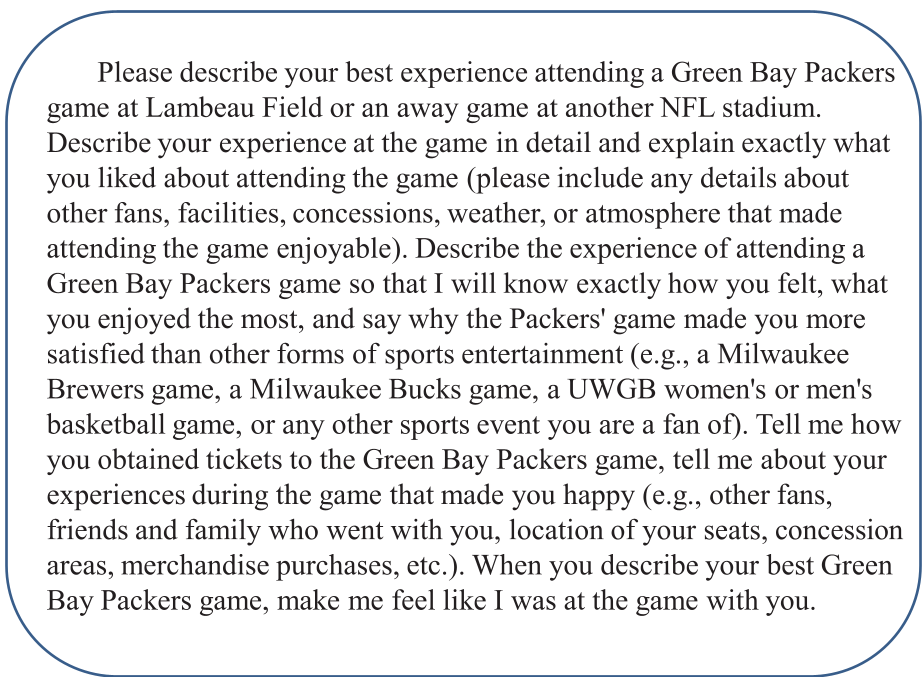
- Critical Incident Surveys: Fans provided open-ended written dialogues about their experiences.
- Ontology Construction: A "theory-based ontology tree" was created to categorize emotions and events.
- Algorithmic Mapping: Text mining algorithms were used to cluster these experiences, using statistical measures like the R-Square (RS) and Root Mean Square Standard Deviation (RMSSTD) to ensure the clusters were mathematically robust.
The core of the approach involves a mathematical breakdown of variance (SS) within the clusters to ensure that the fan "groups" identified are distinct and representative of specific emotional states.
Deciphering the Fan DNA
The study analyzed 37 Green Bay Packers fans, mapping their responses to terms like zest, contentment, stadium, and product. By organizing these into "Negative Survey Groups" (NSG) and "Positive Survey Groups" (PSG), the researchers could see exactly which service elements (e.g., "crowds" or "concessions") were tied to specific emotional outcomes.
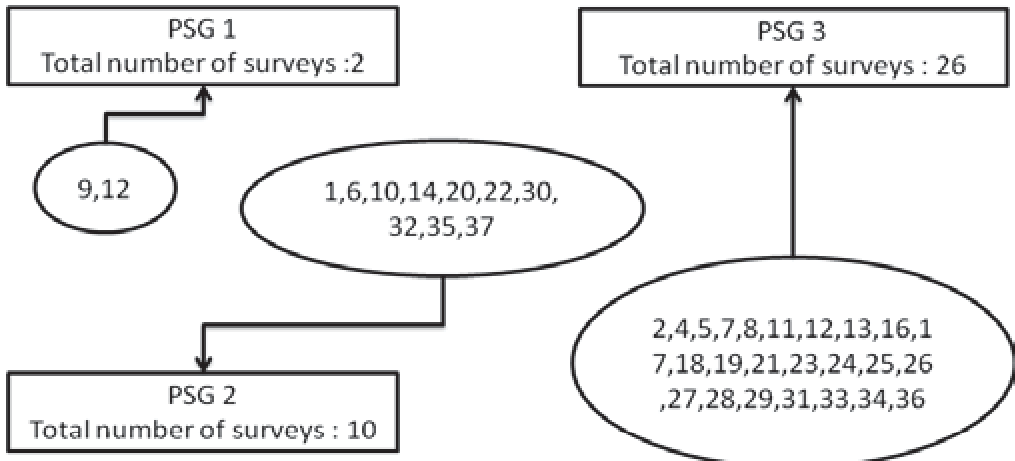
The table above illustrates how different clusters of fans perceive specific game-day elements, allowing management to target the "low-hanging fruit" in service improvement.
Critical Insight: Beyond Keywords
The real breakthrough here isn't just the use of text mining—it's the Ontological Base. By creating a "tree" of relations between an event (tailgating), an object (cold beer), and an emotion (joy), sports leagues can move from reactive "firefighting" to proactive service design.
Limitations & Future Work
While the sample size (37 fans) is small, it serves as a "Proof of Concept." The next step for this research is scaling these text-mining algorithms to handle hundreds of thousands of social media posts and "real-time" fan feedback during games.
Conclusion
The Green Bay Packers fan study proves that "emotions" aren't too fuzzy for data science. By using the collective intelligence of the crowd, professional leagues can build a service model that is as robust as their defensive line. This methodology provides a roadmap for any service-heavy industry looking to translate human sentiment into structural improvement.