
Collective Puzzle: Transforming Behavior Management through Shared Responsibility
Collective use of a situated display to encourage positive behaviors in children with behavioral challenges
This paper introduces a digital "Puzzle Display," a situated classroom tool designed to foster cooperation and positive behavior in children with ADHD and Autism. By visualizing collective performance through a shared mystery image, the system achieved significant behavioral improvements, particularly during non-academic sessions and peer-interaction periods.
TL;DR
Managing classrooms for children with behavioral challenges like ADHD and Autism often relies on rigid, individual point systems. This paper presents a "Puzzle Display"—a situated digital tool that turns classroom behavior into a team game. By making each student responsible for a piece of a collective image, the study found that students not only improved their own behavior but also became more supportive "team players," significantly outperforming baseline behaviors in social and non-academic settings.
Problem & Motivation: Beyond the Individual Silo
Most behavioral intervention programs use "Token Economies"—systems where students earn points for good behavior. While effective, these are often visualized on static paper charts (like the "Patrol Chart") that focus solely on the individual.
The authors identified two major gaps:
- Lack of Social Engagement: Individual charts don't help children with social deficits understand how their actions affect a group.
- Low Engagement: Static paper charts fail to capture the attention of a generation raised on interactive media.
The insight was simple yet profound: what if behavior management wasn't just about "me," but about "us"? By introducing a collective artifact, the researchers aimed to trigger social awareness through shared success and failure.
Methodology: The Mystery Puzzle
The team co-designed a digital puzzle system integrated into the school’s 30-minute "center" structure.
The Mechanics of Ownership
Each student is assigned a specific piece of a puzzle. The clarity of that piece at the end of the day depends on their behavioral "color" (earned via points):
- Red (High Performance): The piece is crystal clear.
- Yellow (Medium): The piece appears pixelated/blurry.
- Blue (Underperforming): The piece remains white/blank.
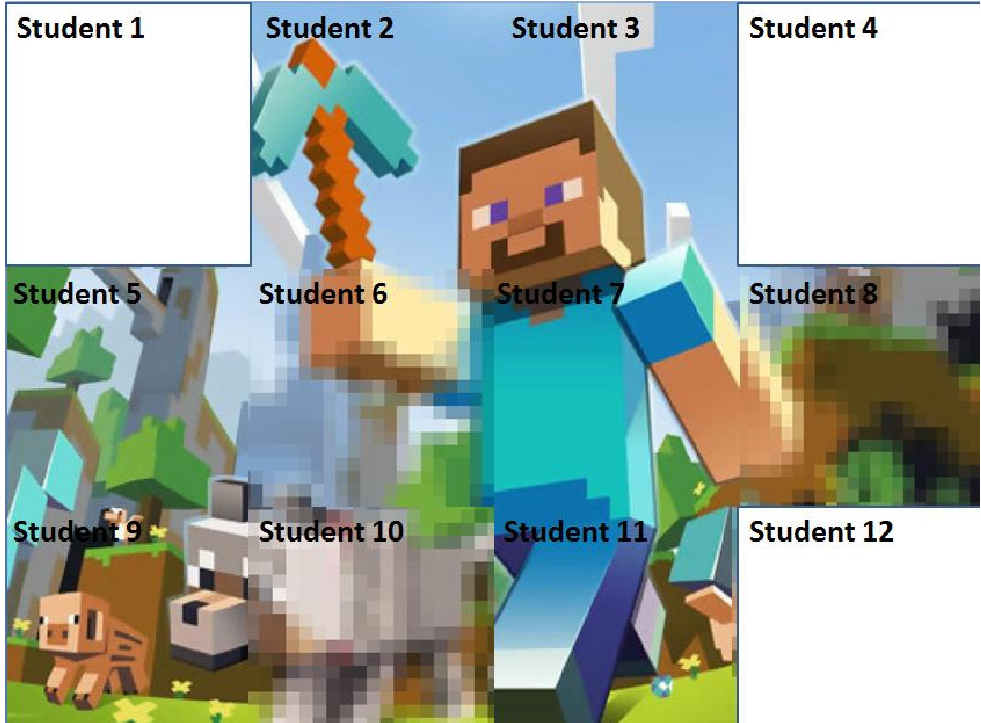 Figure 2: The puzzle reveal at the end of the day, showing the mix of clear, blurry, and blank pieces based on student performance.
To earn the "Grand Prize" (School Bucks), the class had to meet a collective threshold (e.g., 85% of students earning "Red"). This creates an interdependent reward structure where students have a vested interest in their peers' success.
Experiments & Results: Real-World Impact
The system was tested with 28 students over four weeks. The results shattered the "free-rider" myth (the idea that some would slack off while others did the work).
Quantitative Success
The most striking improvements occurred in non-academic settings, where social interactions are most frequent and hardest to manage.
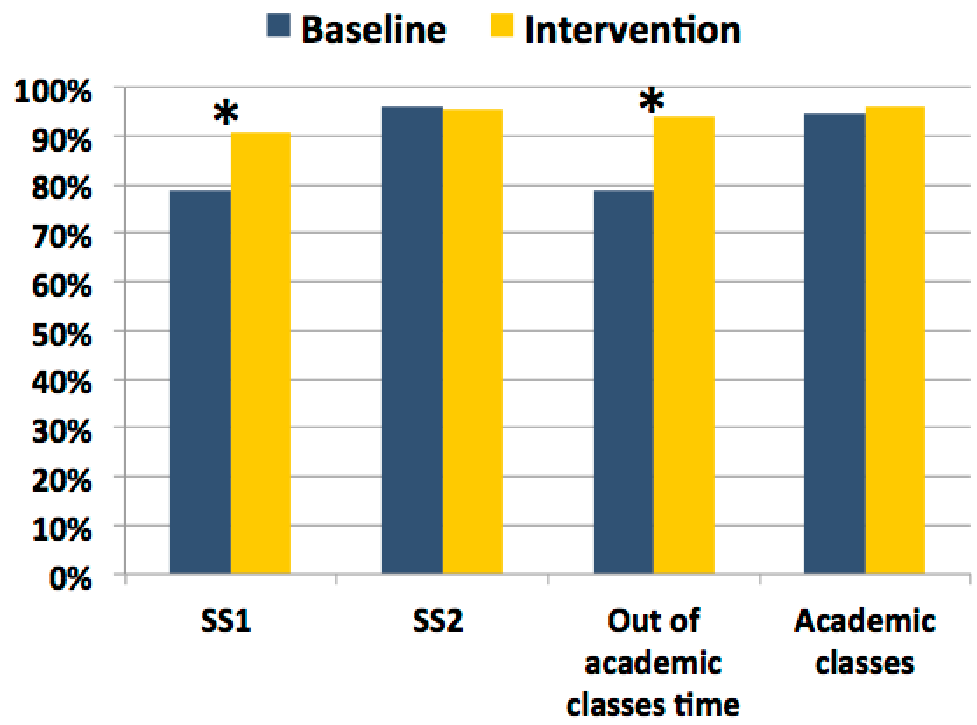 Figure 4: Significant improvements were noted in Social Skills (SS1) and behavior outside of academic classes during the intervention.
- Social Skills Sessions: Jumped from 78.9% to 90.7% efficiency.
- Outside Class Time: Increased from 78.6% to 91.6%.
- Peer Support: Instead of getting angry at underperforming peers, students were observed "pumping each other up" and offering "nice sayings" to help the group win.
Critical Insight: Ambiguity and Failure as Teaching Tools
One of the paper’s most nuanced findings is the role of failure. The authors argue that failing to complete the puzzle occasionally was actually beneficial. It provided "teachable moments" where students learned resilience and how to encourage each other after a setback.
However, the design also highlighted a challenge: Ambiguity. Children, especially those on the spectrum, can struggle with the complex percentages used to calculate the reward. If the logic feels "unfair" or opaque, it can lead to frustration.
Conclusion & Future Outlook
The "Collective Puzzle" proves that technology in the classroom shouldn't just be an individual terminal; it can be a social anchor. By shifting the Inductive Bias of classroom management from "surveillance" to "collaboration," we can help neurodivergent children develop the social-emotional skills they need for the real world.
Future Directions: The authors suggest a follow-up prototype (shown below) that allows teachers to personalize images—targeting specific academic topics or student interests—to maintain the "novelty" factor over long-term deployments.
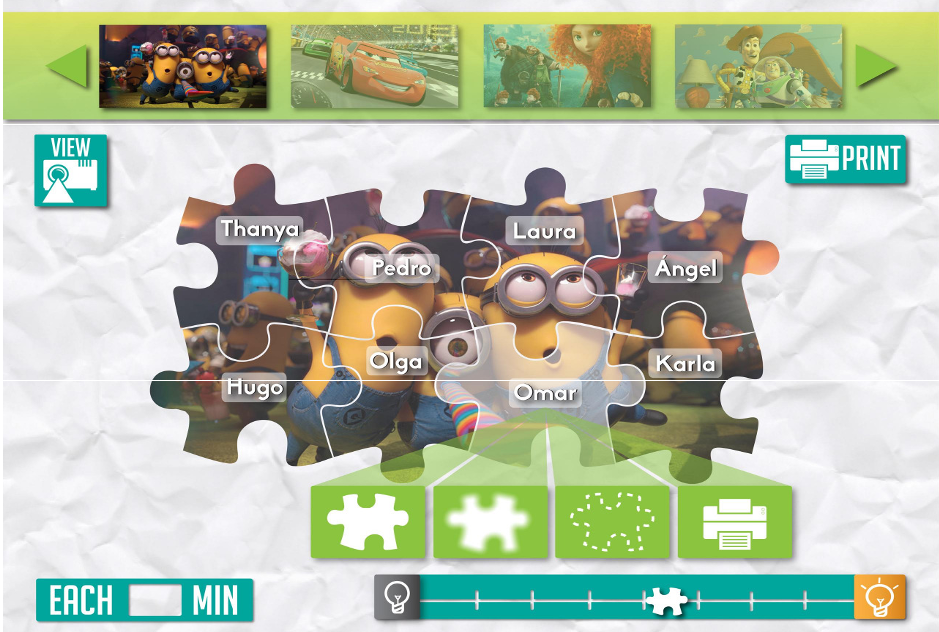 Figure 5: The refined prototype allowing for teacher-uploaded images and behavioral overrides.