
Collective Smile: Quantifying Global Happiness through the Lens of Social Media
Collective Smile : Measuring Societal Happiness from Geolocated Images
This paper introduces the "Smile Index," a formalized measure of societal happiness derived from automated smile detection in over 9 million geolocated images from Twitter. By leveraging computer vision and longitudinal social media data, the authors demonstrate a robust method for tracking collective emotion across different temporal and geographical scales.
TL;DR
Researchers from Cornell University have developed the Smile Index, a computational framework that measures societal happiness by detecting smiles in millions of geolocated Twitter images. Moving beyond the limitations of text-only sentiment analysis, this work proves that our visual "digital footprints" can accurately track public mood, respond to major news events, and even forecast economic indicators like consumer confidence.
Background: Why Words Aren't Enough
For decades, measuring a nation's "Gross National Happiness" (GNH) required tedious surveys and phone polls. While social media offered a shortcut through text-based sentiment analysis, it remained "trapped" by language. If a user posts a photo in a language the algorithm doesn't support, or uses sarcasm and slang, the data is lost.
The authors recognize that smiling is a universal human expression. By analyzing the 1.8 billion images uploaded daily to social platforms, they bypass linguistic barriers to create a "visual barometer" of the human experience.
Methodology: The Anatomy of a Smile
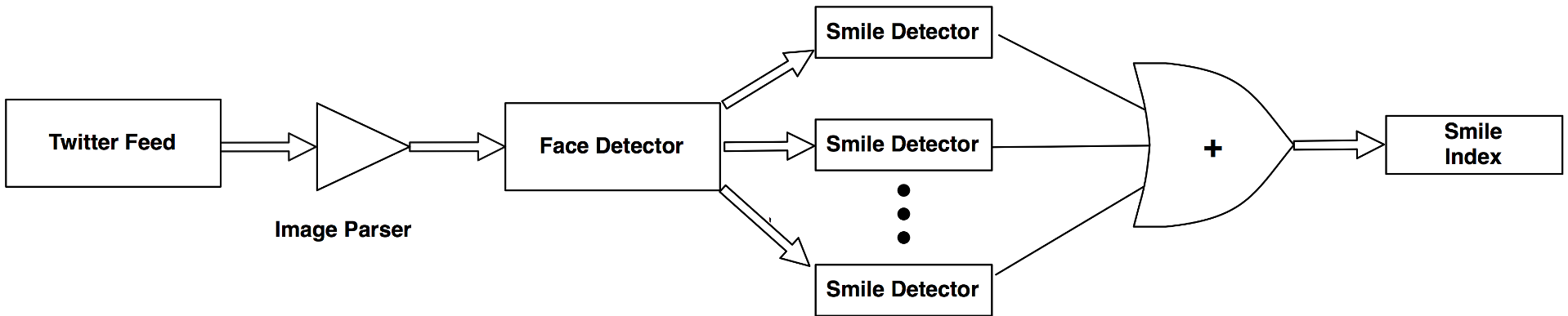
The authors processed 9 million geolocated tweets over a 16-month period (2012–2013). Their pipeline consists of three critical stages:
- Face Localization: Using Haar-like feature cascades to identify human faces within noisy social media photos.
- Smile Detection: A trained classifier determines if a face is smiling (achieving an AUC of 0.9).
- The Smile Index (SI): Instead of just counting smiles, the authors calculated the ratio of smile-containing images to total images. This normalization is crucial—it ensures that an increase in SI reflects a genuine shift in mood rather than just an increase in platform activity during holidays.
Insights: The Diurnal and Weekly Rhythm of Joy
The research revealed fascinating temporal patterns in our collective happiness:
- The Mid-Week Dip: Contrary to the "Blue Monday" myth, the Smile Index reaches its lowest point on Wednesdays.
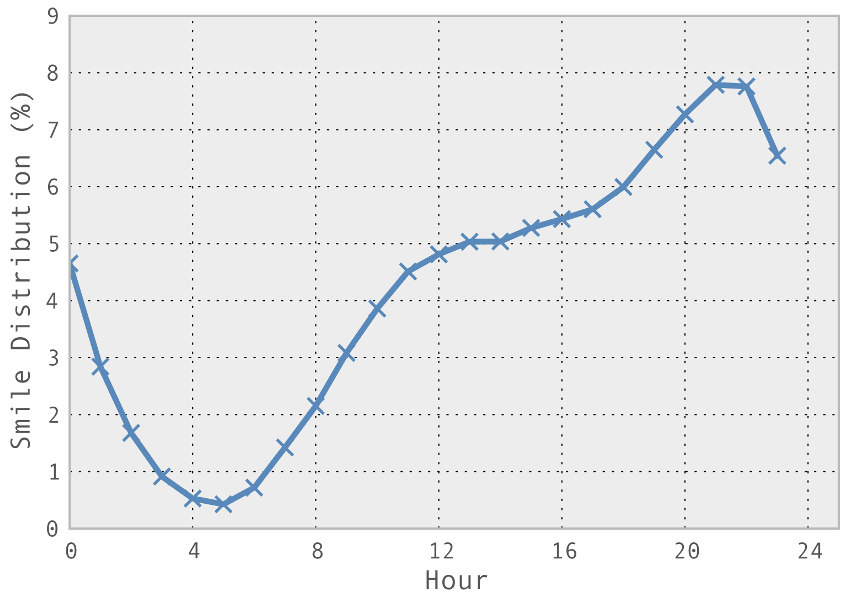
- The Diurnal Rhythm: Happiness peaks in the late evening (9–10 PM) and morning, with a noticeable "mid-afternoon slump."
- Event Sensitivity: The system proved its sensitivity by measuring a 22% drop in smiles during Hurricane Sandy and a 22% increase during the 2013 Presidential Inauguration.
Happiness and the Economy
One of the paper's most provocative findings lies in the intersection of sociology and economics. By mapping the Smile Index against NYC Census data, the authors found:
- In white-majority areas, higher household income strongly correlated with more smiles.
- In black-majority areas, the correlation was negative, aligning with historical sociological findings regarding the "black-white gap" in self-reported well-being.
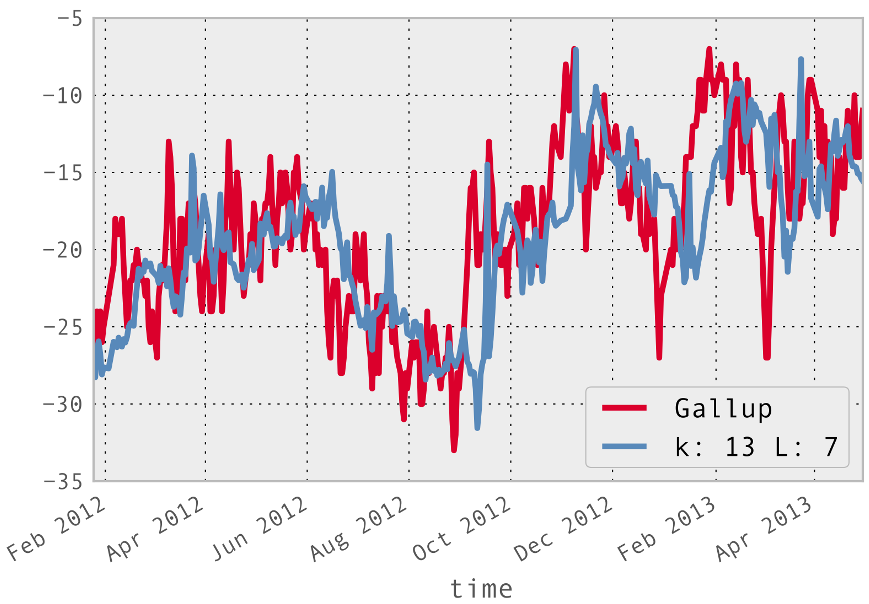
Perhaps more importantly for industry, the Smile Index was found to Granger-cause consumer confidence. Using a simple rolling forecast, the authors could predict Gallup's Economic Confidence Index 7 days in advance, suggesting that our collective facial expressions are a "leading indicator" for spending habits.
Critical Analysis & Conclusion
While the "Collective Smile" methodology is revolutionary, it is not without limitations. The authors acknowledge population bias (Twitter users skew younger) and the posing effect (social conventions might force a smile even when the user is unhappy).
However, the core contribution is undeniable: Visual sentiment analysis is a viable, language-independent, and hyper-local tool for social science. As we move toward a more visual-centric digital culture, the Smile Index provides a blueprint for how AI can help us understand the "pulse" of a city, a nation, or the planet in real-time.
Takeaway: In the future, policymakers might look at "Smile Dashboards" to deploy mental health resources or gauge the success of public interventions, turning every selfie into a data point for a happier society.