
RNN & Transfer Learning: A New Frontier for Automated Linguistic Analysis
College Project: Construction and Application of Public English Flipped Classroom Teaching Mode Based on Cloud Platform (Project NO: Y2018004)
Summary
Problem
Method
Results
Takeaways
This paper introduces a Transfer Learning-based Recurrent Neural Network (RNN) algorithm specifically designed for automated linguistic analysis. By integrating cross-domain transfer learning with the stateful memory of RNNs, the system achieves significant improvements in sentence parsing and sentiment classification across multiple languages including Chinese and Arabic.
## TL;DR
Linguistic analysis has long been caught between rigid rule-based systems and data-hungry statistical models. This paper presents a **Transfer Learning-integrated Recurrent Neural Network (RNN)** that automates the extraction of linguistic granularity. By leveraging stateful memory and cross-domain knowledge transfer, the model achieves SOTA-level accuracy in sentiment analysis and syntactic parsing, particularly outperforming benchmarks in complex datasets like Chinese web forums.
## Problem & Motivation: The Complexity of Human Expression
Linguistics is not just about words; it is a "galaxy of sub-disciplines" including phonology, morphology, syntax, and pragmatics. Traditional Machine Learning (ML) approaches typically face three walls:
1. **Data Scarcity**: Requiring enormous labeled datasets for every new language or context.
2. **Complexity**: Existing models are often application-specific and hard to generalize.
3. **Dynamic Context**: Static models fail to capture the "state" or intent behind a sequence of words.
The authors' insight is to treat language as a dynamic sequence where the "hidden state" of previous inputs dictates the meaning of the next, while Transfer Learning bridges the gap when specific training data is thin.
## Methodology: The Core Architecture
The proposed system moves away from stateless models to a **Stateful RNN** architecture. Unlike a standard neural network that generates the same output for a repeated input, this model stores previous input states to influence future calculations.
### 1. The RNN Pipeline
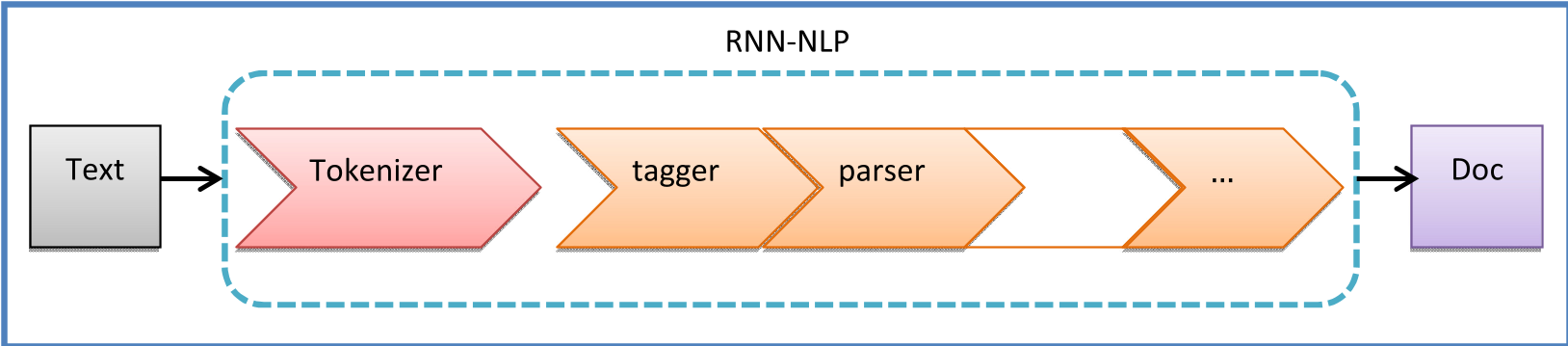
The process follows an automated pipeline:
- **Morphology & Syntax**: The model decomposes sentences into lemmas and POS tags, creating dependency trees to understand structural relationships.
- **Encoding & Decoding**: A sequence-to-sequence model uses an encoder to transform a raw sentence into a list of measurements (encodings) and a decoder to translate or predict the next relevant phrase.
### 2. Transfer Learning Integration
The "Secret Sauce" here is Transfer Learning. By taking knowledge learned from one set of linguistic data and transferring it to another, the model reduces the need for massive domain-specific training. This is implemented via a weight vector adjustment algorithm that optimizes the feature group (F) based on a specific budget (B) and iteration count (N).
## Experiments & Results
The authors rigorously tested the model against the **Sparseptron** model and other traditional classifiers like **SVM (Support Vector Machines)**.
### Multi-Language Accuracy
On high-dimensional data across languages such as Arabic, Turkish, and Spanish, the RNN consistently yielded higher accuracy scores.
### The Chinese Web Forum Challenge
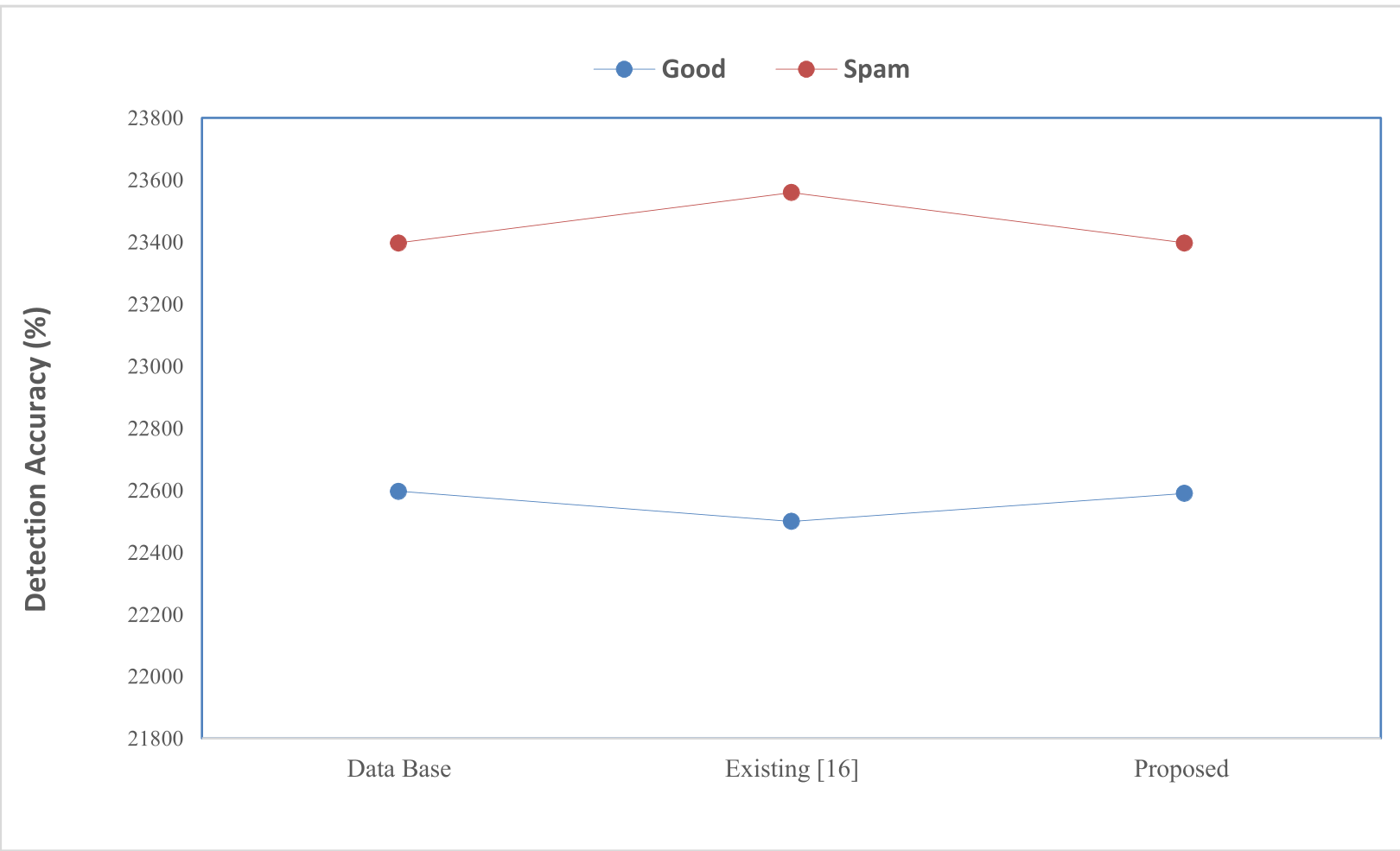
A significant portion of the study focused on a dataset of 20,000 reviews from a Chinese forum. The task was to identify "deceptive opinion spam."
- **Finding**: The RNN-based approach significantly outperformed the Gold-Standard dataset baselines.
- **Why it worked**: Because RNNs learn features "deeper" than linear models, they could identify the subtle linguistic patterns that characterize fraudulent reviews.
## Critical Analysis & Conclusion
### Takeaway
The study proves that the combination of **Stateful RNNs** and **Transfer Learning** effectively breaks the manual bottleneck in NLP. It transitions linguistic analysis from a "hand-crafted rule" task to an "automated feature learning" task.
### Limitations & Future Work
While the model shows excellent results in classification and parsing, the computational overhead of RNNs compared to newer architectures like Transformers (which utilize attention mechanisms) was not deeply explored. The authors suggest that future work will involve experimenting with a wider variety of ML algorithms to establish a definitive hierarchy for linguistic tasks.
For researchers in low-resource language processing, this paper provides a robust framework for achieving high granularity with limited local data.