
Beyond the Digital Divide: The Synthesis of Tech and Innovation in Healthcare Leadership
Combining Communication Technology Utilization and Organizational Innovation: Evidence from Canadian Healthcare Decision Makers
This study investigates the integration of Information and Communication Technology Utilization (ICTU) and Organizational Innovation Development (OID) among 942 Canadian healthcare decision-makers. Developing a four-profile typology through a novel Copula methodology, it identifies the "Contemporary Decision Maker" as the SOTA profile essential for modern healthcare performance.
TL;DR
In the complex ecosystem of modern healthcare, simply "using technology" or "having new ideas" is no longer enough. This study analyzes 942 Canadian healthcare decision-makers to reveal that the most effective leaders—Contemporary Decision Makers—must high-perform in both ICT utilization and organizational innovation simultaneously. Surprisingly, relying too heavily on social networks and traditional research acquisition can actually hinder the shift toward this elite profile.
The "Miracle" vs. The Reality
Information and Communication Technology (ICT) and Organizational Innovation (OI) are often hailed as the "miracles of post-modernity," promised to solve organizational friction instantly. However, the reality in healthcare is a fragmented landscape where managers might be tech-savvy but procedurally stagnant, or innovative but technologically illiterate. The authors argue that the synergy between these two—ICTU and OID—is the true driver of performance.
Methodology: The Power of Copulas
To move beyond simple linear correlations, the researchers employed a Copula approach. This is a sophisticated statistical tool that models the dependency between two variables regardless of their marginal distributions.
By applying this to two indexes (ICTU and OID), they established precise thresholds (3.36 for ICT and 3.45 for Innovation) to map out four distinct leadership profiles:
- Traditional (TDM): Low Tech, Low Innovation (32% of sample).
- Technologic (TecDM): High Tech, Low Innovation (20.3%).
- Innovative (IDM): Low Tech, High Innovation (19.9%).
- Contemporary (CDM): The SOTA Profile - High Tech, High Innovation (27.9%).
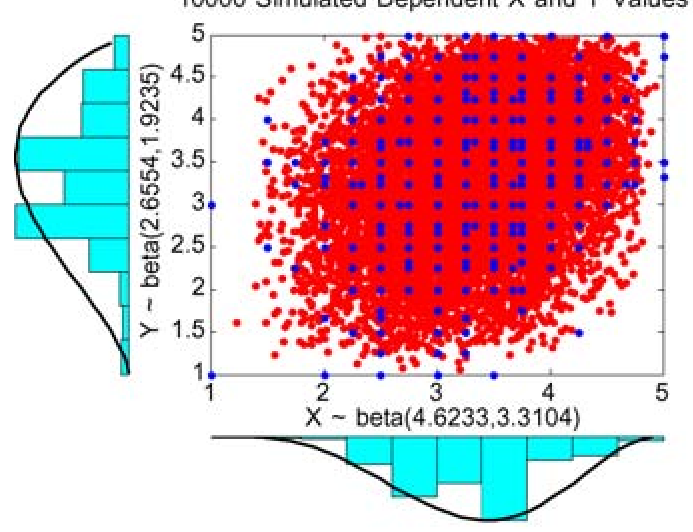 Figure 1: The Four-Quadrant Typology of Healthcare Decision Makers.
Counter-Intuitive Findings: The Barriers to Change
The most striking part of the study is the analysis of why leaders fail to become "Contemporary." Using a Multinomial Logit Model, the authors identified several "transversal barriers."
The Relational Capital Trap
Common wisdom suggests that the more contacts you have, the more innovative you are. The data says the opposite: Relational Capital (social networking) was a negative predictor for shifting to the Contemporary profile.
- Insight: Relying exclusively on one’s social network often leads to "echo chambers" rather than radical organizational change. CDM profiles require intellectual independence and the ability to challenge the consensus.
The Research Acquisition Paradox
Simply acquiring more research results doesn't make a leader innovative. The study found that TDM (Traditional) profiles are often "instrumental users" who collect papers but never synthesize them into new interventions.
 Table 1: Factors impacting the likelihood of becoming a Contemporary Decision Maker.
Demographic Nuances
- Gender: Male professionals were more likely to fall into the "Technologic" profile (the pragmatic use of tools), while females were more often "Innovative" but less "Technologic," potentially due to different risk-aversion profiles related to failure and criticism in a male-dominated hierarchy.
- Role: Administrative managers showed a higher propensity to become Contemporary than front-line professionals, likely due to greater control over organizational resources.
Critical Insight & Strategy for the Future
The study concludes that the "Isolated Administrative Agent" is dead. Productivity in the 21st century requires a shift from Acquisition (collecting data) to Synthesis (transforming data into new procedures via ICT).
Recommendations for Organizations:
- Culture over Capital: Valuing risk-taking and intellectual independence over mere social networking.
- Integrated Training: Moving beyond teaching "how to use a database" to "how to use a database to redesign a workflow."
- Gender Mainstreaming: Addressing the cultural contingencies that prevent female leaders from fully integrating ICT tools into their innovative practices.
Conclusion
This paper serves as a wake-up call for the healthcare sector. Innovation is not an accidental byproduct of technology; it is a specific leadership role that must be cultivated. To achieve SOTA performance, decision-makers must stop viewing ICT as a tool for communication and start viewing it as the engine for organizational evolution.