
Synergizing Trust and Skill: A Multi-Agent Approach to e-Learning Class Formation
Combining trust and skills evaluation to form e-Learning classes in online social networks
The paper introduces a multi-agent model for forming and evolving e-Learning classes within Online Social Networks (OSNs). It presents the "Convenience" measure, which uniquely combines learners' skills (behavioral) and mutual trust (reliability and reputation) to optimize student-class matching.
TL;DR
This research addresses the inefficiency of manual or random class formation in online education. By introducing a multi-agent system that mines Online Social Networks (OSNs) for both skills and trust relationships, the authors propose a "Convenience Measure" that optimizes the match between students and classes. The result is a more resilient learning environment that naturally filters out malicious participants and maximizes collaborative synergy.
Background: The Human Element in e-Learning
E-learning is often viewed through a technical lens—content delivery and archival. However, the authors argue that the "human" interaction (learner-learner and learner-teacher) is the true driver of satisfaction. Prior works often failed because they treated students as static data points. This paper positions itself at the intersection of Social Computing and Educational Technology, leveraging the social "gravity" of trust to hold learning communities together.
The Core Innovation: Defining "Convenience"
The paper's breakthrough is the mathematical formulation of Convenience, a dual-faceted measure that calculates:
- Behavioral Match: Does the learner’s skill set complement the class requirements (Offer vs. Request)?
- Social Trust: Are the learners reliable, and do they have a positive reputation within the network?
Dealing with Malice
A standout feature of this model is its resistance to "shilling" or "whitewashing" (where users shed a bad reputation and start fresh). The model uses a Gaussian-centered filter (Equation 8) to detect users who perform well on low-relevance tasks just to gain trust, only to fail at high-stakes interactions.
 Figure 1: The layered model showing the transition from OSN interactions to Behavioral/Trust measures and finally Class Formation.
Methodology: Multi-Agent Class Formation (CF)
The system operates via two main agents:
- Learner Agents: Act as personal assistants, searching for classes that maximize the user's convenience.
- Class Agents: Act as "gatekeepers," evaluating whether a new student increases the overall class synergy or should be removed to maintain quality.
The CF Procedure is an iterative, distributed algorithm. It doesn't require a central server to know everything about everyone, making it highly scalable and privacy-aware for large-scale social networks.
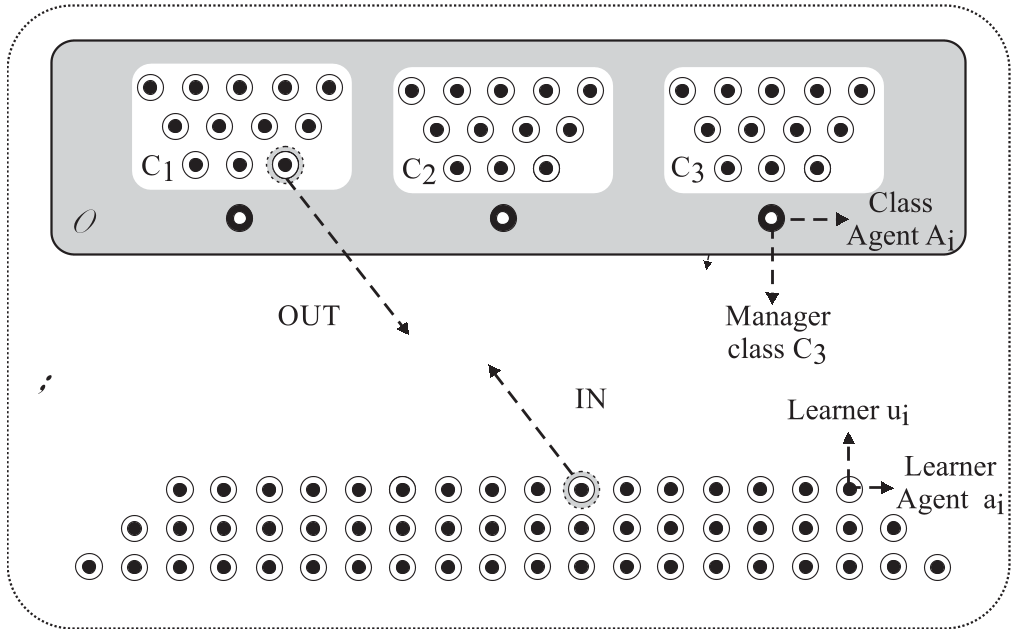 Figure 2: The Logic of the Learner Agent in the Class Formation (CF) process.
Experimental Insights
The authors tested the model against several attack scenarios (Scenario A, B, and C), focusing on malicious users providing false recommendations.
Key Findings:
- Resilience: Even when 100% of recommendations were malicious, the system eventually identified the pattern and reduced error rates significantly by adjusting the weight of direct versus indirect knowledge.
- Performance Boost: The Mean Average Convenience (MAC) showed a sharp increase when the ratio of allowed class capacity was optimized (r ≈ 0.5), suggesting that giving agents "room to move" between classes allows the system to find a global optimum.
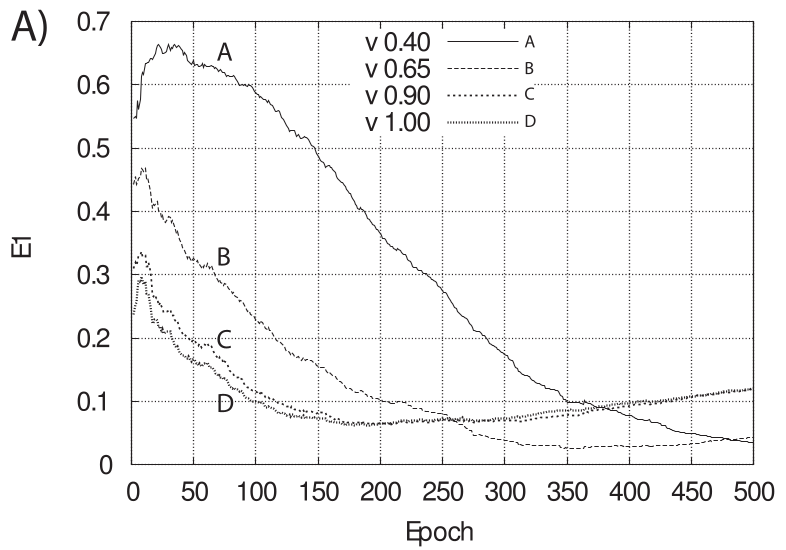 Figure 3: Time evolution of trust calculation errors under malicious attack, demonstrating the system's ability to learn and recover.
Critical Perspective & Conclusion
Takeaway
The integration of trust is no longer "optional" for digital learning. As education moves into open, decentralized spaces (like the Fediverse or LinkedIn), being able to trust a peer's feedback is as vital as the curriculum itself.
Limitations
The primary limitation is the reliance on simulation data. While the model is mathematically sound, real-world human behavior—including the "nuisances" of social bias or shifting interests—might require even more complex "Historical Attitude" modeling.
Future Outlook
The authors aim to apply this to massive, real-world datasets. For developers and researchers, this work provides a blueprint for building self-organizing learning communities that self-correct over time, moving away from "top-down" administration to "bottom-up" social synergy.