
Beyond SOAP: Regulating the Social Web Service Frontier via Commitments
Commitments to Regulate Social Web Services Operation
The paper introduces a commitment-based framework to regulate Social Web Services (SWS), a hybrid paradigm merging social computing with Service-Oriented Architecture (SOA). It defines two primary commitment categories—Social (governing network participation) and Business (governing composition behavior)—to ensure accountability and prevent harmful actions like privacy violations or task abandonment in collaborative environments.
TL;DR
As Web Services evolve into "Social Web Services" (SWS) that form networks and collaborate like humans, the risk of "anti-social" behavior grows. This paper proposes a formal framework of Social and Business Commitments to hold services accountable. By monitoring state-based commitments, the system can detect violations (like data tampering) and impose sanctions (like reputation docking), ensuring that composite services remain reliable even when individual components act maliciously or fail.
Problem & Motivation: The Dark Side of Service Synergy
The traditional Web Service model—"I offer, you consume"—is too rigid for today's interconnected business world. We have moved toward Social Web Services, where services engage in competition, substitution, and collaboration.
However, this new autonomy brings a dangerous "wild west" element:
- Privacy Leaks: A service might reveal private details of its collaborators.
- Task Abandonment: A service might sign off from a network while still holding pending assignments.
- Bad Faith Recommendations: Services might recommend low-quality peers to a composition.
Existing protocols like SOAP or WSDL are purely functional; they cannot capture the normative layer—the "shoulds" and "musts" of business ethics.
Methodology: The Commitment Blueprint
The authors bridge this gap by transposing the concept of Social Commitments from multi-agent systems to the Web Service domain.
1. Two Worlds of Regulation
The architecture is split into two operational zones:
- The Computational World (Social Commitments): Regulates how services act within the network (e.g., Obligation to Post valid details).
- The Operational World (Business Commitments): Regulates how services act during a specific job or composition (e.g., Obligation to Fulfill assignments of a failing peer).
2. The Formal Life Cycle
Commitments aren't just static rules; they are dynamic states. The authors implement a life cycle where a commitment moves from Conditional (if X happens, I will do Y) to Base (I am now obligated) to either Satisfied or Violated.
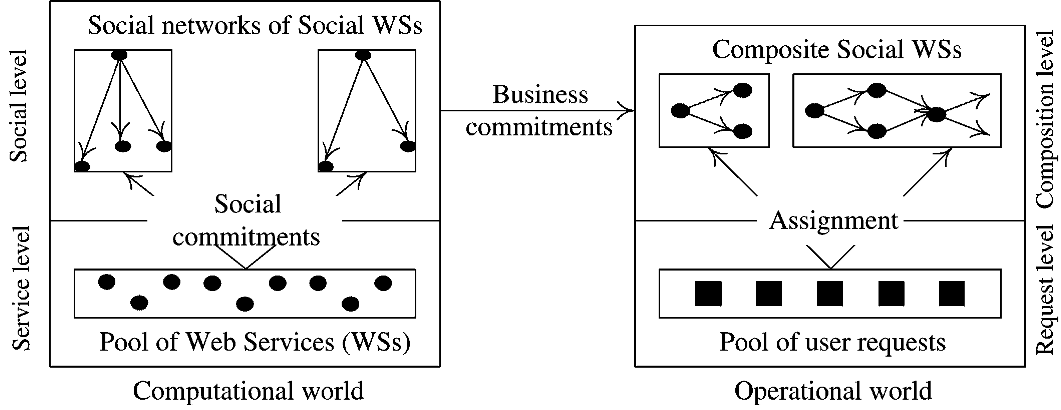 Figure 1: The dual-world architecture connecting computational social networks to operational user requests through commitments.
Implementation: The "Policing" Mechanism
The core of the system is the CMonitorManager, which acts as the "judge" in this digital society. It uses CObservers—software agents that listen to messages between services—to verify if a commitment content was fulfilled or if a condition was detached.
Violation vs. Prohibition
The framework makes a sophisticated distinction:
- Violation: Breaking a binding promise (e.g., posting incorrect response times).
- Prohibition: Performing an action that was never allowed (e.g., collecting data without a valid purpose).
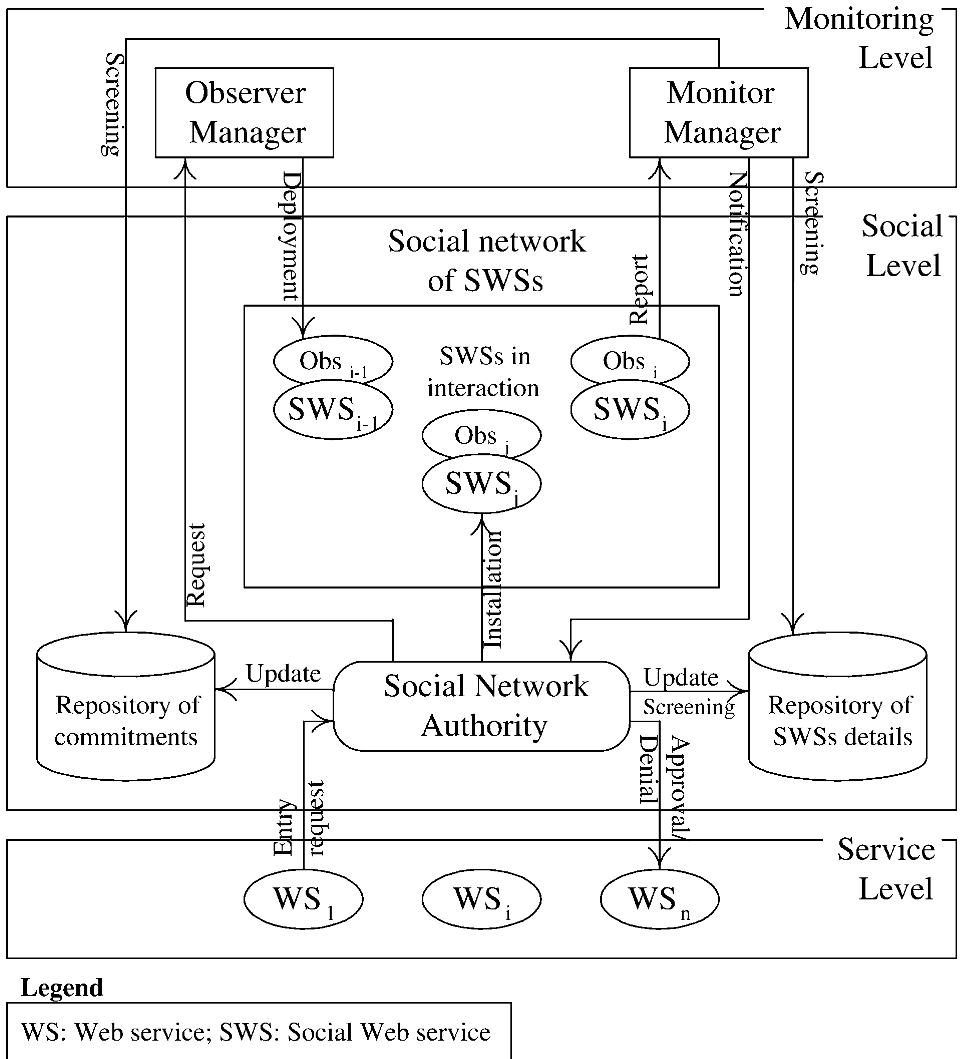 Figure 2: The class diagram showing how CMonitorManager integrates with LifeCycle states and Responsibility (Resp) definitions.
Experiments: Real-World Scenarios
The authors tested the framework using a TravelPlanner scenario involving many moving parts: FlightWS, HotelWS, and WeatherWS.
When HotelWS suffered a server crash, the system identified AccommodationWS as a substitute. Through the monitoring system, the authors demonstrated that if the substitute delayed its participation, the Business Commitment (CResp9) was marked as "Violated," automatically triggering a decrease in its reputation scores. This informs future orchestration components to avoid this "unreliable" service.
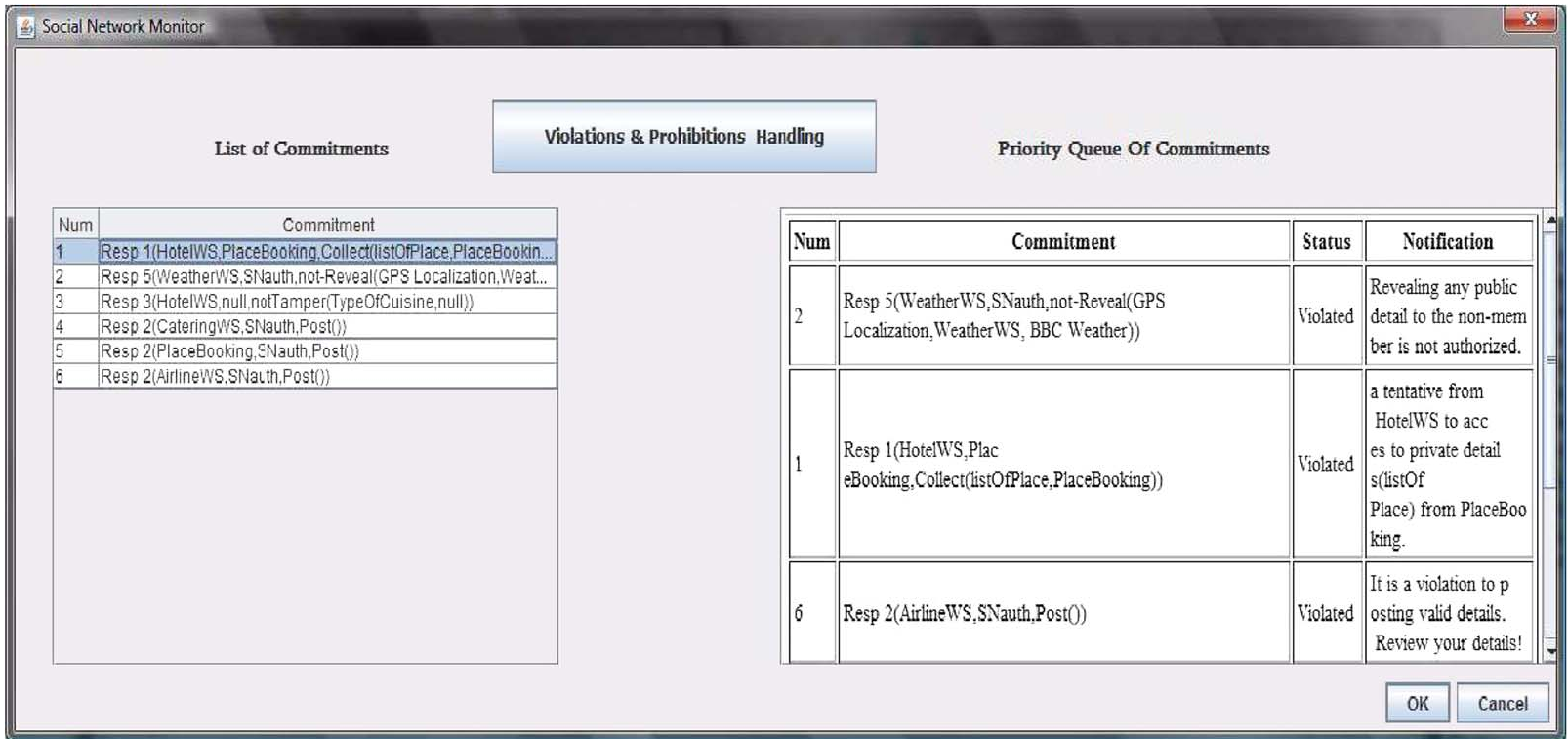 Figure 3: Experimental results showing the status of social commitments. High-priority violations (like revealing details to non-members) are ranked and handled first.
Critical Analysis & Conclusion
Takeaway
The shift towards Social Web Services is inevitable, but it requires a social contract. By framing service interactions as commitments, the authors provide a scalable way to automate trust and accountability without human intervention.
Limitations
- Centralization: The current model relies on an "Authority Component" (), which could become a bottleneck or a single point of failure.
- Complexity: Defining 10+ types of responsibilities for every service might add significant overhead to lightweight IoT services.
Future Outlook
The next logical step is Decentralized Arbitration. Using a ledger (Blockchain) to store these commitment states could remove the need for a central authority, creating a truly global, self-regulating web of services.