
CommonFinder: Decentralized Social Recommendations Without Sacrificing Privacy
CommonFinder: A decentralized and privacy-preserving common-friend measurement method for the distributed online social networks
This paper introduces CommonFinder, a decentralized and privacy-preserving framework for estimating the Number of Common Friends (NCF) in Distributed Online Social Networks (DOSNs). It leverages Bloom filters for initial measurements and a distributed Maximum Margin Matrix Factorization (MMMF) technique to map social proximities into low-dimensional coordinates, achieving SOTA accuracy without disclosing raw contact lists.
TL;DR
CommonFinder solves the "Friend Recommendation" paradox in decentralized social networks: how to find common friends without ever seeing a user's friend list. By combining Bloom Filters for private sampling and Matrix Factorization for coordinate-based prediction, it achieves high-accuracy recommendations with constant bandwidth overhead, outperforming traditional geometric embedding methods.
Background: The Privacy-Scalability Trade-off
In centralized networks like Facebook, servers have a global view of the social graph, making friend suggestions based on the Number of Common Friends (NCF) trivial. In Distributed Online Social Networks (DOSNs), nodes (users) only know their direct neighbors. Current solutions are either:
- Insecure: Swapping friend lists directly (Identity Cloning risk).
- Slow: Using Private Set Intersection (PSI) with homomorphic encryption, which kills performance on mobile devices.
The authors of CommonFinder argue that we don't need exact intersection lists for recommendation; we need a scalable estimate.
Methodology: The CommonFinder Architecture
CommonFinder operates through a elegant hybrid mechanism:
1. The "Privacy Shield": Bloom Filters
Instead of raw lists, users exchange Dynamic Bloom Filters (DBF). The paper provides a rigorous proof that Bloom filters offer Differential Privacy. Because of the inherent "False Positive" rate, a user can plausibly deny a friendship, as a bit set to '1' could be a collision rather than a factual record.
2. The "Intelligence Layer": Decentralized MMMF
To avoid the linear growth of bandwidth, the system maps users into a low-dimensional space (typically ).
- MMMF (Maximum Margin Matrix Factorization): Unlike standard SVD which treats ratings as continuous, MMMF treats NCF as discrete labels (1 friend, 2 friends, etc.) and uses a "hinge loss" similar to SVMs to find optimal boundaries.
- Distributed Optimization: Each node runs a local version of the Polak–Ribière Conjugate Gradient (D-PR-CG) algorithm, adjusting its own "coordinate" based on its neighbors' positions.
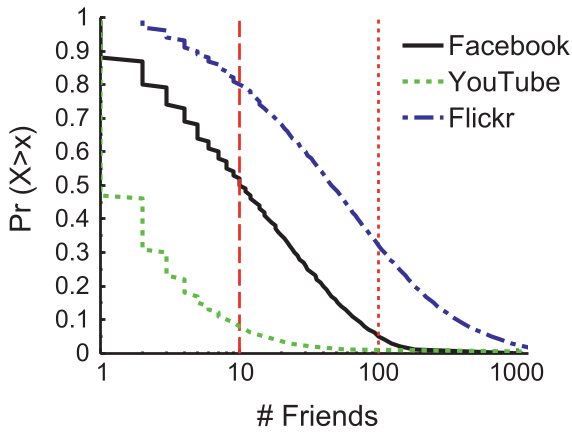 Figure 1: The CommonFinder framework showing the interaction between Bloom Filters and Coordinate Maintenance.
Experimental Validation
The authors tested CommonFinder across three massive datasets: Facebook, YouTube, and Flickr.
Convergence and Accuracy
The system showed remarkable stability, with coordinates converging in about 20 rounds. Even with a dimension as low as 5, it outperformed geometric models like LandmarkMDS because social graphs frequently violate the "Triangle Inequality" (the assumption that if A is close to B and B to C, A must be close to C). Matrix Factorization handles these social distortions far better.
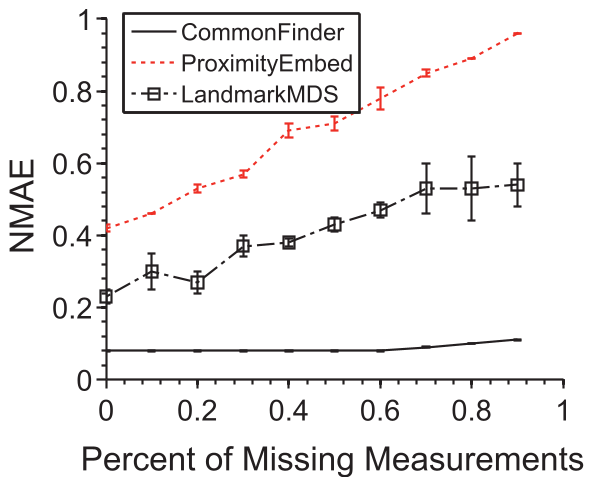 Figure 2: Performance (NMAE) comparison. CommonFinder maintains high accuracy where previous methods like ProximityEmbed degrade.
Resilience to Sybil Attacks
A major concern in decentralized systems is "Sybil" nodes injecting fake data. CommonFinder's objective function includes a regularization term (nuclear norm) which acts as a noise filter. Simulations show that even if 20% of the network provides random "fake" coordinates, the overall system accuracy degrades only gracefully.
Critical Insight & Conclusion
CommonFinder's brilliance lies in its recognition that discrete labels matter. By treating NCF as an ordinal classification problem rather than a simple distance measurement, it creates a much more robust "social map."
Key Takeaways:
- Privacy is Statistical: By tuning Bloom Filter parameters, we can mathematically guarantee a level of differential privacy.
- Coordinates Scale: Moving from raw data to 5D coordinates reduces bandwidth from KBytes to Bytes per exchange.
- Future Impact: This method could be the backbone for future P2P applications beyond social media, such as decentralized content delivery or trust-based routing in Ad-Hoc networks.
Limitations
The current model assumes a semi-honest adversary. While it handles noisy data well, a coordinated "Identity Cloning" attack where Sybil nodes create hyper-connected clusters could still potentially bias recommendations, a challenge the authors suggest for future work.