
Communication Mapping: Decoding the Social DNA in 60 Minutes
Communication mapping: understanding anyone's social network in 60 minutes
The paper introduces "Communication Mapping," a rapid qualitative research method designed to reconstruct a participant's social network and tool usage within 60 minutes. Developed at Google, it utilizes multi-layered spatial mapping to visualize peer groups, communication channels, and real-life interaction contexts to inform product strategy and UX design.
TL;DR
Designers often struggle to understand the "chaos" of how users juggle multiple apps. Paul Adams (Google) presents Communication Mapping, a high-velocity research technique that visualizes a person’s entire social network and tool preferences in just one hour. By layering "who," "how," and "why" onto a physical map, researchers can move beyond UI testing into deep strategic insights.
The "Speed vs. Context" Paradox
In the mid-2000s, Google’s communication suite (Gmail, GTalk, Orkut) faced a challenge: usability tests showed the buttons worked, but they didn't explain why a user might choose SMS for an urgent update but Facebook for "ambient" socializing.
Traditional ethnography—actually living with users—takes months. Usability testing—watching people click—takes hours but misses the big picture. The authors needed a middle ground: a way to bring the user's entire life into the lab fast.
Methodology: The 6-Layer Architecture
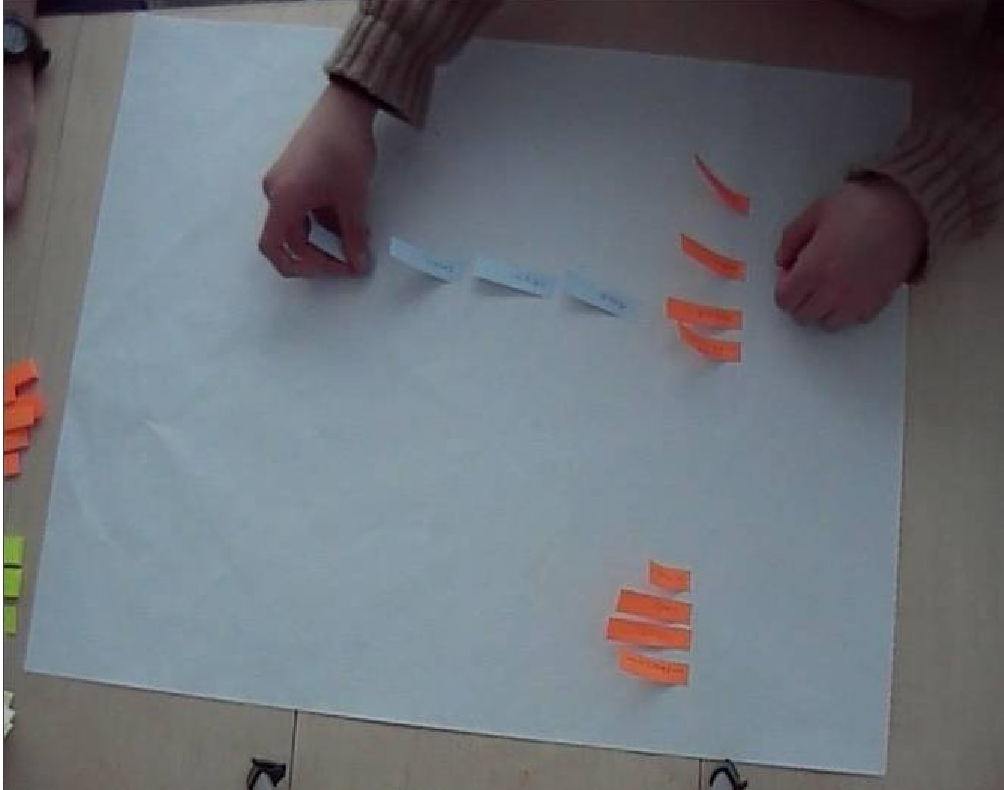
The core "Insight" is that humans recall social relationships spatially. The researcher acts as a facilitator while the participant builds a physical "map" of their life.
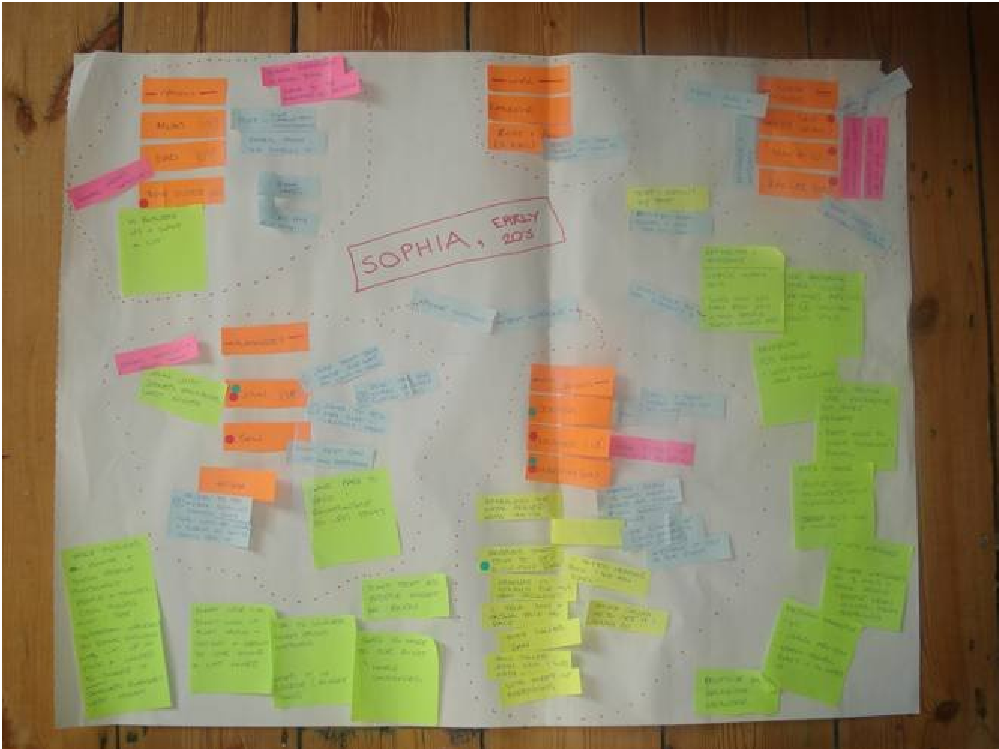
Step-by-Step Reconstruction:
- People & Groups (Layer 1): Participants place Post-its of regular contacts (contacted ≥ weekly) on a blank page. The distance represents emotional or social proximity.
- Tool Attribution (Layer 2): Using colored dots or notes, participants mark which apps (MSN, Email, SMS) they use for which person.
- Critical Incident Mapping (Layers 3 & 4): The researcher probes for real-life events from the last 48 hours. “How did you organize Friday’s dinner?” This anchors the map in reality rather than idealized memory.
- Verification (Layer 6): The "Ground Truth" check. Participants open their phone logs to map the last 5 calls/texts. This often reveals discrepancies between what users think they do and what they actually do.
Strategic Insights: Why We Choose "The Tool"
The research revealed that users don't choose tools based on features alone, but on Social Context:
- Voice Calls: Reserved for "High Emotional Bond" or extreme urgency.
- SMS: The "Guaranteed Delivery" channel, often used to avoid the awkwardness of a live conversation.
- IM/Chat: Seen as "Time Consuming" and dependent on "Presence" (is the other person green/online?).
- Social Networks (Facebook): Used for Ambient Intimacy—low-effort, constant awareness of others' lives.
Critical Analysis: Is Memory Enough?
The paper’s greatest strength is speed-to-buy-in. By showing the project team these complex physical maps, the researchers proved that "one-size-fits-all" communication tools fail because social groups are highly fragmented (3-5 distinct clusters with no overlap).
The Limitation: The method relies on Retrospective Recall. People lie to themselves. While Layer 6 (phone logs) mitigates this, the "Mapping" technique is still a subjective mental model rather than a hard data dump.
Conclusion & Future Outlook
Paul Adams’ technique proves that User Experience isn't just about the interface; it's about the ecosystem. For modern AI agents and social platforms, the takeaway remains: don't just build a better "send" button—understand the social gravity that pulls a user toward one channel over another.
The next evolution of this method involves Digital Trace Data, where AI can pre-populate these maps from metadata, leaving the 60-minute session for deeper "Why" questions rather than "Who" questions.