
Scalable Community Detection: Bridging the GSB Model and MapReduce for Mobile Big Data
Communities Detection Algorithm Based on General Stochastic Block Model in Mobile Social Networks
This paper introduces MRGSB and IMRGSB, parallel community detection algorithms designed for large-scale mobile social networks. By leveraging the General Stochastic Block (GSB) model and the MapReduce framework, the authors enable efficient overlapping and non-overlapping community discovery in weighted, bidirectional graphs.
TL;DR
Analyzing communities in mobile social networks is notoriously difficult due to the sheer volume of SMS/MMS data. This paper presents IMRGSB, an improved parallel algorithm that implements the General Stochastic Block (GSB) model on MapReduce. It bypasses the computational bottlenecks of traditional EM algorithms, allowing for accurate community detection in networks with hundreds of thousands of users while achieving a 1.5x speedup over baseline parallel implementations.
The Challenge: Why Simple Models Fail Mobile Networks
Mobile social networks are not just collections of nodes; they are weighted, bidirectional systems where the frequency of interaction (SMS counts) defines the strength of a bond. Standard algorithms like the Stochastic Block Model (SBM) assume all nodes in a community are equal, ignoring the "celebrity" or "hub" effect where certain users are much more influential.
While the General Stochastic Block (GSB) model accounts for this by considering node importance ( and ), its standard Expectation-Maximization (EM) solution is a computational nightmare for big data. The iterative nature of EM requires constant updates that, if not parallelized correctly, would take weeks to run on real-world telecommunications datasets.
Methodology: From Serial EM to Distributed MapReduce
The authors' core contribution lies in the mathematical "shredding" of the GSB EM process into stages compatible with a distributed cluster.
1. The GSB Logic
The model generates edges based on:
- : Probability of an edge existing between community and .
- : Probability of node being the "tail" in community .
- : Probability of node being the "head" in community .
2. High-Performance Parallelization (IMRGSB)
The baseline MRGSB approach maps each step of the EM algorithm (E-step and M-step) to a separate MapReduce job. However, this creates a massive I/O bottleneck as intermediate results (like parameters ) are written to and read from the Hadoop Distributed File System (HDFS) repeatedly.
IMRGSB improves this by:
- Job Merging: Combining the E-step and intermediate calculations into a single pass.
- Sub-matrix Division: Dividing the large matrices into smaller blocks. This prevents "Out of Memory" (OOM) errors in the Reduce phase, allowing the workload to be tuned via parameters through .
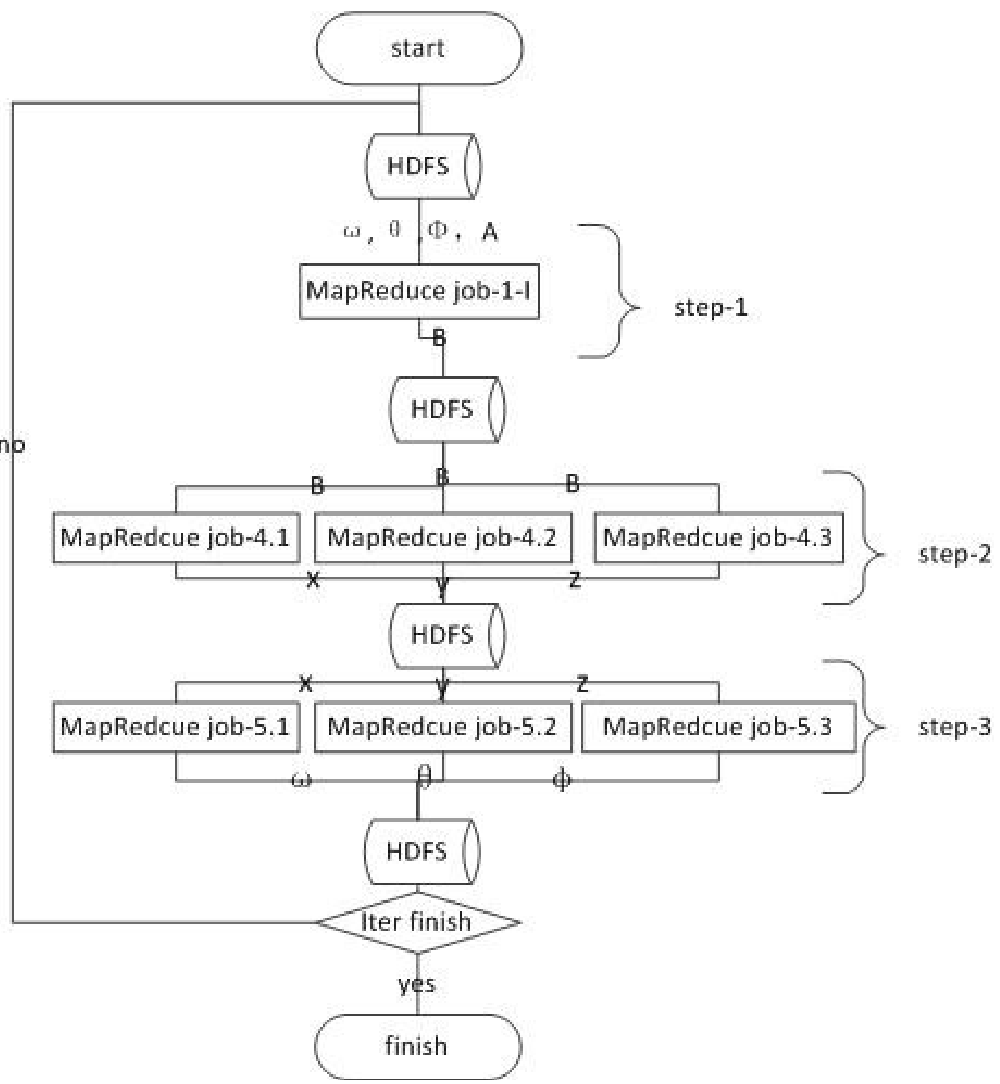 Figure 1: The streamlined IMRGSB workflow, showing the reduction in MapReduce job waves compared to the standard approach.
Experimental Insights
The authors validated their work using both classic benchmarks (Karate Club, Bottlenose Dolphins) and a real-world SMS dataset containing over 119,000 users.
- Accuracy Consistency: All versions (EMGSB, MRGSB, IMRGSB) achieved the same Normalized Mutual Information (NMI), proving that parallelization did not sacrifice the quality of community detection.
- Efficiency: IMRGSB consistently outperformed MRGSB. As the number of communities () increased, IMRGSB maintained a substantial lead in execution time due to its superior handling of intermediate data.
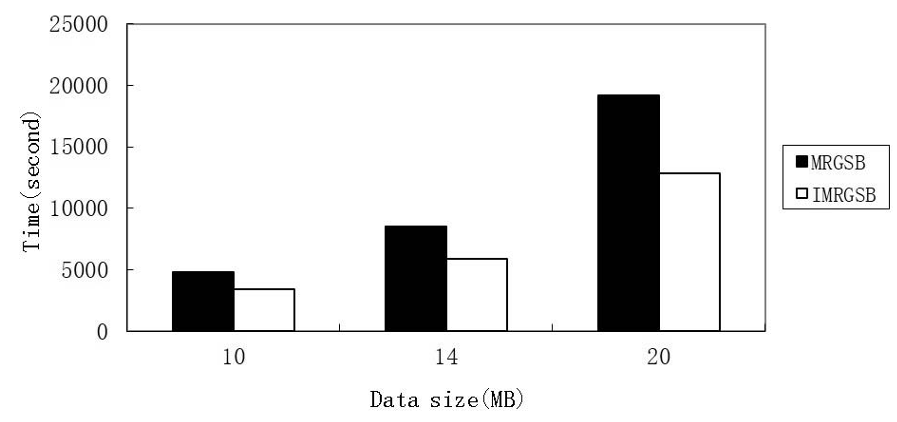 Figure 2: Execution time relative to the number of communities. Note the exponential growth as the community landscape becomes more complex.
Critical Analysis & Future Outlook
The primary value of this work is its practicality. While many papers focus on pure graph theory, this research tackles the engineering reality of data transmission overhead in distributed systems.
Limitations: The current approach still relies on MapReduce, which is inherently slower than memory-resident frameworks like Apache Spark. The "Future Work" mentioned by the authors—saving data locally—suggests a move toward more modern "In-Memory" computing paradigms. Furthermore, the model currently assumes a static snapshot of the network; extending this to dynamic graphs (where communities evolve daily) remains an open challenge.
Conclusion
By reimagining the GSB model through the lens of sub-matrix operations and job optimization, this paper provides a robust blueprint for service providers to analyze social structures and worm propagation within massive mobile networks.