
Beyond Node Degrees: Leveraging Community Structures to Unmask OSN Spammers
Community-based features for identifying spammers in online social networks
Identifying Spammers in Online Social Networks (OSNs) using community-based topological features. The authors propose a classification framework leveraging the "OCTracker" algorithm to identify overlapping community structures and extract unique community-centric features. The method achieves high detection performance on real-world Facebook and Enron datasets, proving that community membership is a strong indicator of legitimacy.
TL;DR
This research shifts the paradigm of spam detection from "what you say" (content) and "how many you know" (simple topology) to "where you belong." By analyzing overlapping community structures using the OCTracker algorithm, the authors demonstrate that spammers exhibit distinct "foreign" interaction patterns that are mathematically distinguishable from the "small-world" behavior of legitimate users.
Backgound: The Arms Race in Social Topology
In the early days of Online Social Networks (OSNs), detecting a spammer was easy: look for a high out-degree and low reciprocity. However, modern malicious bots have evolved. They now engage in Random Link Attacks (RLA) and mimic legitimate clustering coefficients to blend into the background.
The core insight of this paper is that while a bot can fake a "friendship," it is extremely difficult for a bot to fake Community Integration. Legitimate social behavior naturally self-organizes into tightly-knit, overlapping groups. Spammers, by definition, must reach outside these clusters to achieve their viral marketing or phishing goals.
Methodology: Mapping the "Foreign" Territory
The framework operates in four stages:
- Node-Level Detection: Using the OCTracker algorithm to identify overlapping communities. Nodes are labeled as Cores, Non-Cores, or Outliers.
- Defining "Foreign" Interactions: A "Foreign Node" is defined as any node that does not share a common community membership with the source node.
- Feature Engineering: The authors introduce several novel metrics:
- Foreign Out-link Probability (FOP): The ratio of links sent to external communities vs. internal ones.
- Foreign Out-link Grouping (FOG): Measures if a node's external targets belong to the same external community (targeted spam) or are scattered (broadcast spam).
- Hierarchical Filtering: Constructing a "Super-Graph" of communities to define legitimate boundaries for future interactions.
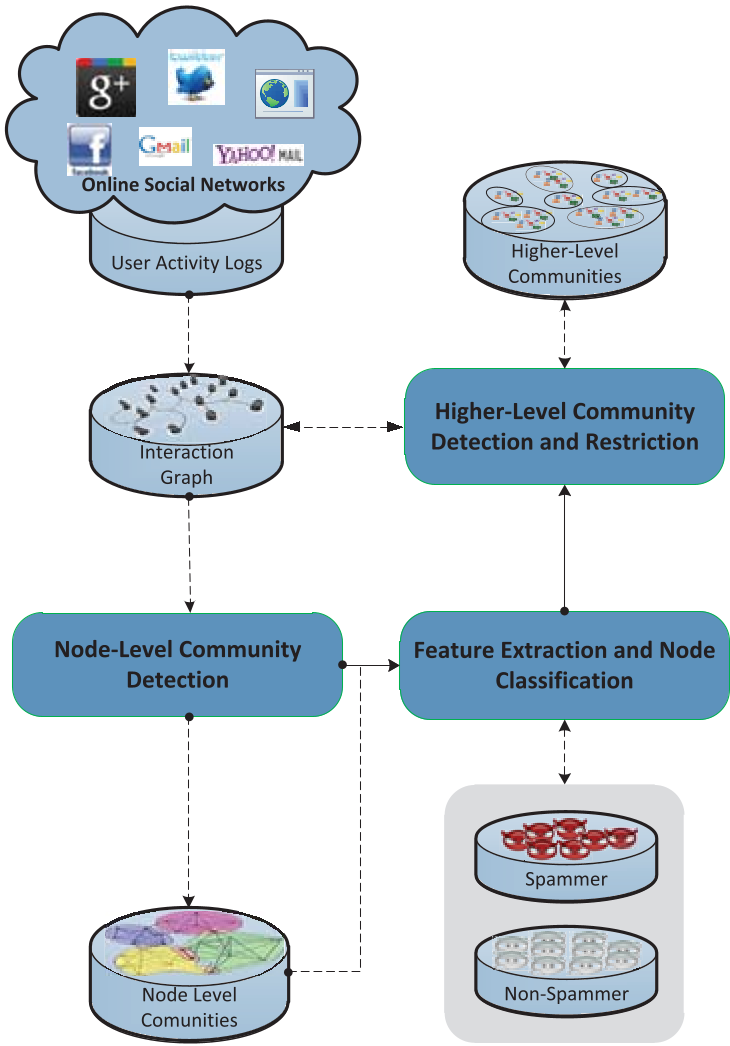 Fig 1. The structural flow from raw interaction logs to classification models.
Experimental Results: The Proof in the Data
The authors validated their approach using the Facebook (wall-posts) and Enron (email) datasets. To make the test rigorous, they didn't just add random noise; they added Simulated Spammers that specifically mimicked legitimate clustering properties.
Performance Highlights:
- Classifier Choice: Decision trees (J48 and ADTree) outperformed NaiveBayes and k-NN.
- Community Value-Add: When compared against a baseline using only non-community features (degree, reciprocity), the community-aware model showed a marked improvement in the F-Measure and ROC Area.
- Generalization: A model trained on Facebook data was able to identify Enron spammers with 92% accuracy, suggesting these community features represent universal social behaviors.
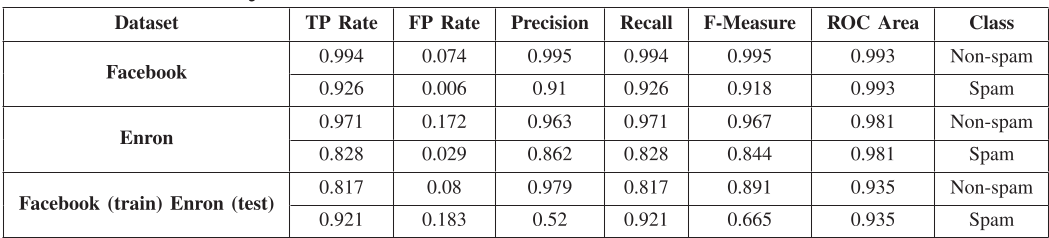 Table 1. Performance of the J48 classifier across different dataset configurations.
Critical Insight: The "Foreign" Probability
Why does this work? In a natural social graph, your interactions with "strangers" (foreign nodes) usually follow a specific pedigree (e.g., they belong to a community you are about to join). Spammers exhibit a high Foreign Out-link Probability (FOP) combined with low Foreign Reciprocity. They shout into the void of other communities, and the void rarely answers back.
Conclusion & Future Outlook
This work provides a robust, privacy-preserving alternative to content-based filtering. By focusing on the Super-Graph of communities (Fig 3 in the paper), the authors propose a proactive defense: flagging any interaction that crosses "high-level community boundaries" as suspicious before it even reaches the victim's inbox.
Future Work: As social networks move towards encrypted protocols, topological community analysis like this will likely become the primary line of defense against automated malicious actors.
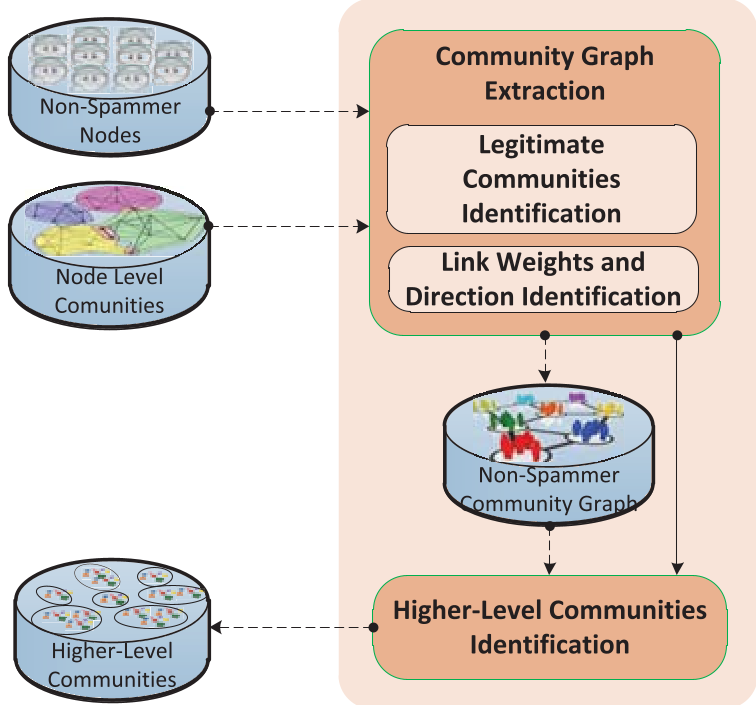 Fig 2. The process of abstracting node-level interactions into super-graphs to define "Small World" boundaries.