
Hybridizing Metaheuristics: A New Frontier for Biological and Social Community Detection
Community detection from biological and social networks: A comparative analysis of metaheuristic algorithms
This paper presents a comparative study of six metaheuristic algorithms adapted for community detection (CD) in complex biological and social networks. The core approach utilizes modularity optimization, featuring the proposal of the Hyperheuristic Differential Search Algorithm (HDSA), which achieves state-of-the-art (SOTA) results across nine real-world datasets.
Executive Summary
TL;DR: Finding "communities" within complex networks—be they protein interactions or social ties—is a computational nightmare (NP-hard). This paper evaluates six advanced metaheuristic algorithms, introducing the Hyperheuristic Differential Search Algorithm (HDSA) as a powerhouse that combines the best of Genetic Algorithms and Differential Search. HDSA consistently hits the theoretical maximum modularity across nine benchmark datasets, outstripping both classical algorithms and standard evolutionary strategies.
Positioning: This work serves as a comprehensive benchmark and architectural improvement in the lineage of modularity-based optimization, moving from simple heuristics to complex, multi-stage hybrid metaheuristics.
Problem & Motivation: The Modularity Trap
In graph theory, a community is a subset of nodes with dense internal edges and sparse external connections. The gold standard for measuring this is Modularity (Q). The higher the Q, the better the partition.
The catch? Maximizing Q is an NP-hard problem.
- Classical Heuristics (like Girvan-Newman) are too slow for modern big data.
- Standard Metaheuristics (like basic PSO or GA) often fall into "local optima" traps—they find a good solution but miss the best one because they lack the diversity to explore the entire graph landscape.
- Parameter Sensitivity: Many algorithms require you to guess the number of communities beforehand, which is impossible in discovery-based research.
Methodology: The Architecture of HDSA
The paper's breakthrough lies in the HDSA (Hyperheuristic Differential Search Algorithm). Instead of starting with a random, chaotic "soup" of potential solutions, HDSA uses a two-pronged attack.
1. Representation: Locus-based Adjacency (LAR)
Each candidate solution (a "superorganism") is encoded such that each gene identifies a neighbor. This ensures that the algorithm always operates on valid network connections, drastically reducing the search space compared to traditional bit-string encodings.
2. The Hybrid Pipeline
- Initialization: Uses a one-time pass of Genetic Algorithm (GA) and Scatter Search (SS) to find "promising areas" in the network.
- Exploration: Employs the Differential Search Algorithm (DSA), which mimics Brownian-like random walks of migrating organisms to refine the community boundaries.
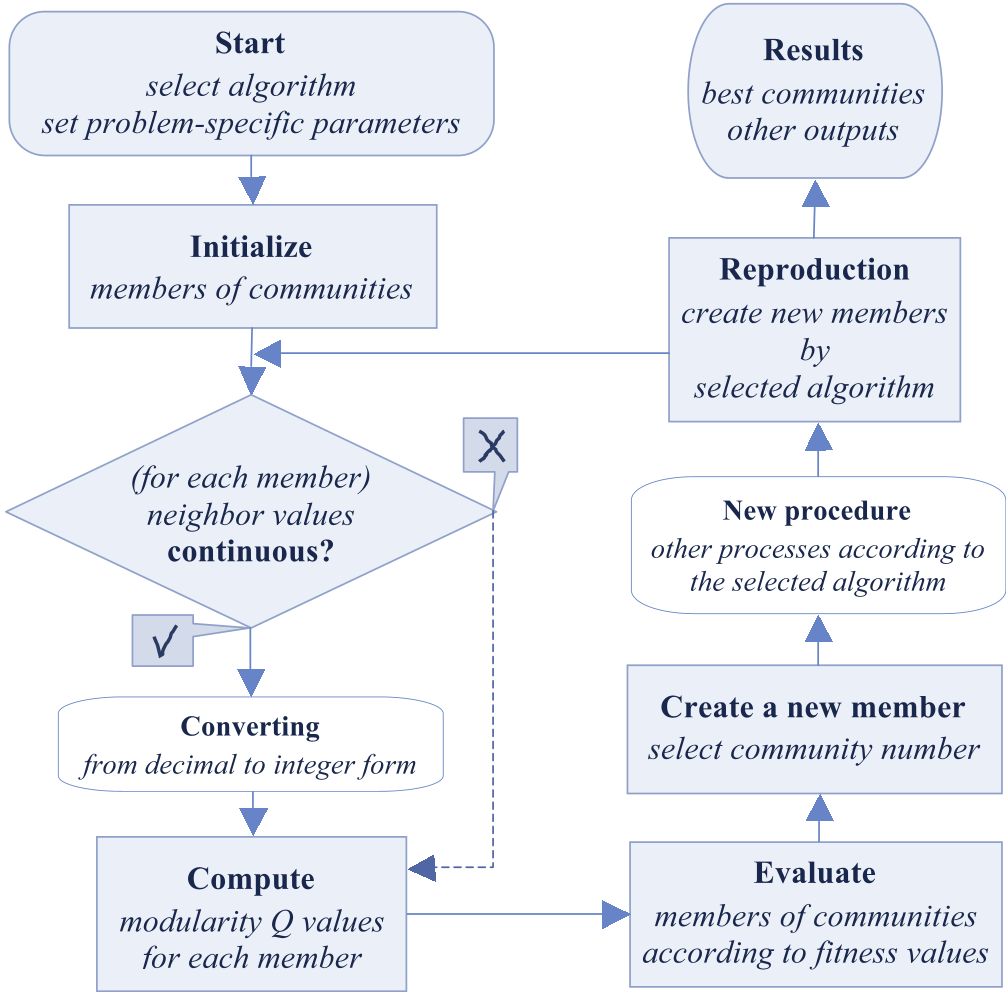 Figure 1: The standardized workflow for adapting metaheuristics to discrete community detection.
Experiments: Biological vs. Social Networks
The authors tested the algorithms on diverse datasets, ranging from the Zachary’s Karate Club (small social) to the Helicobacter Pylori PPI (complex biological).
Key Findings:
- Stability: HDSA exhibited near-zero standard deviation (std) in modularity values across 30 runs, proving it is far more robust than the original Bat Algorithm (BA) or Gravitational Search (GSA).
- Efficiency: While GSA is the fastest due to its mathematical simplicity, it consistently yielded the lowest Q values. SSGA (Scatter Search GA) provided high quality but at a massive temporal cost (149.5 hours for the largest network). HDSA hit the "sweet spot"—SOTA accuracy with manageable execution time.
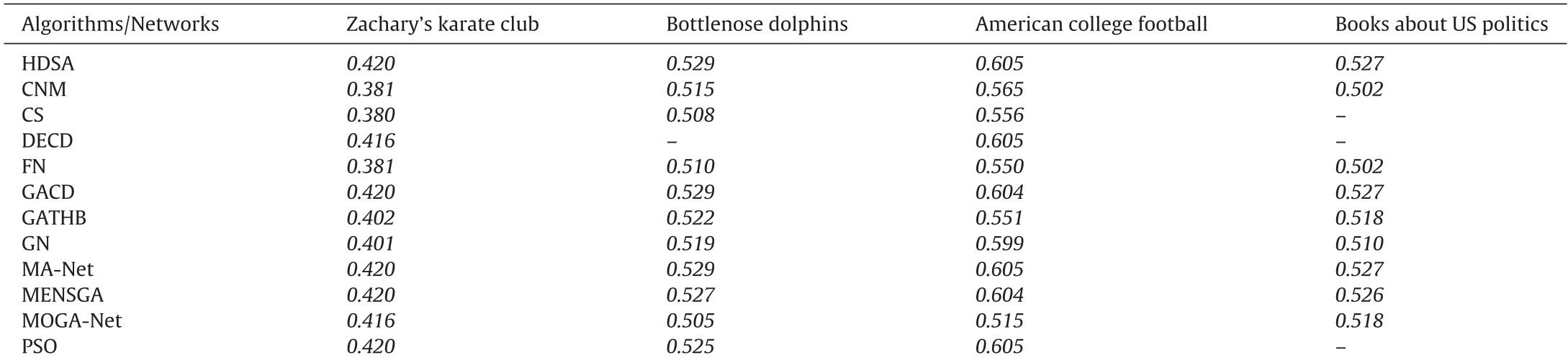 Table 1: HDSA vs. Literature. Note how HDSA (bold) matches or exceeds established SOTA across every single benchmark.
Critical Insight & Conclusion
The success of HDSA proves a vital point in AI research: Initialization Matters. By using GA/SS to "warm up" the population, the authors prevented the Differential Search from wandering aimlessly in the initial generations.
Future Outlook: While HDSA dominates on modularity, the next frontier is Multi-objective Optimization. Real-world biological networks aren't just about edge density; they involve functional biological constraints. Integrating these constraints into the HDSA fitness function could revolutionize how we predict protein functions in unknown organisms.
Takeaway: If you are dealing with rigid, combinatorial graph problems, stop using vanilla GA. Hybridize with migration-based heuristics (like DSA) to escape local optima.