
Cultural Algorithms: A Knowledge-Driven Leap in Social Network Community Detection
7256_Community detection in social networks by cultural algorithm.
This paper introduces a Cultural Algorithm (CA) tailored for community structure identification in social networks by optimizing the search space through a specialized Belief Space. The proposed method utilizes knowledge repositories to guide evolution, achieving state-of-the-art accuracy and significantly faster convergence compared to traditional evolutionary techniques.
TL;DR
This research presents a framework using Cultural Algorithms (CA) to identify community structures within social networks. By introducing a Belief Space—a shared repository of high-quality solutions—the algorithm "learns" from previous generations, allowing it to navigate complex graph topologies much faster than standard genetic algorithms.
Background & Motivation: Moving Beyond Random Evolution
Community detection is the backbone of social network analysis, but it is NP-hard. Most evolutionary algorithms (like Genetic Algorithms) rely solely on individual survival of the fittest. The problem? They often ignore the "collective wisdom" of the population, leading to redundant searches and slow convergence.
The authors argue that human society evolves not just through genetics, but through culture. They translate this intuition into a computational model where the "culture" (Belief Space) constrains and guides the "individuals" (Population Space).
Methodology: The Architecture of Culture
The core innovation lies in the interaction between two spaces:
- Population Space: Where individuals (possible community partitions) undergo crossover and mutation.
- Belief Space: A knowledge base that records the best schemas found so far.
The Two Scenarios
The paper explores two ways to manage this "cultural memory":
- Fixed-size Belief Space: Maintains a static number of top-tier individuals to influence the next generation.
- Variable-size Belief Space: Dynamically grows the knowledge base by accumulating success over time, potentially offering a richer historical context for the search.
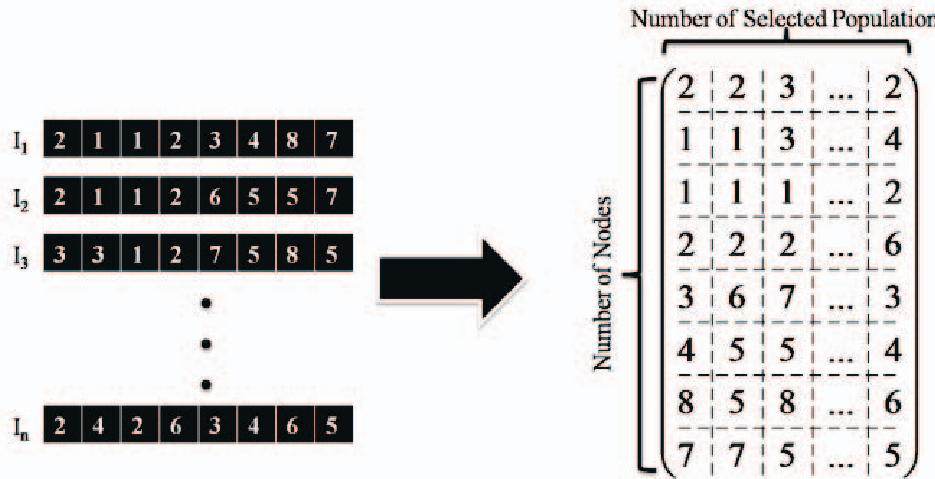 The flowchart above illustrates the feedback loop between the Population Space and the Belief Space.
Fitness Function
The algorithm optimizes the modularity or community strength (), defined mathematically to measure the density of edges within communities versus between them:
Experiments and Results
Testing on the classic Zachary’s Karate Club network and more complex datasets, the Cultural Algorithm outperformed traditional benchmarks.
Performance Highlights:
- Efficiency: The CA reached the global optimum in significantly fewer iterations (generations) than the comparison algorithms.
- Accuracy: It consistently identified the structural ground truth of the communities, even as the network scale increased.
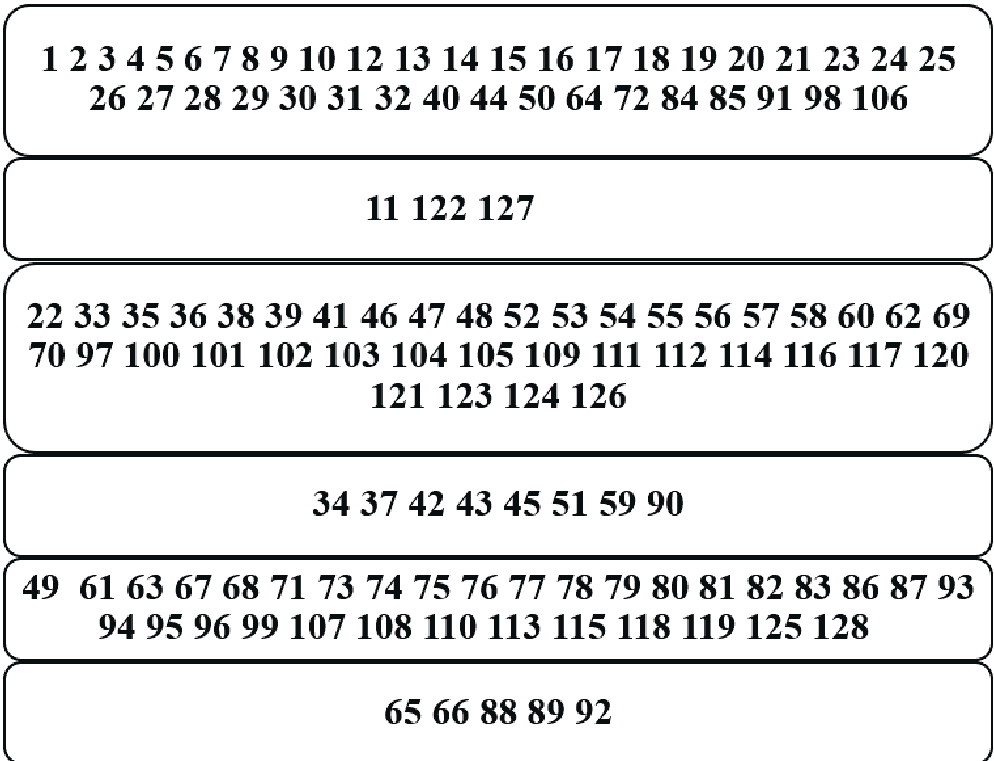 Convergence speed comparison showing the CA's rapid approach to the fitness peak.
Critical Analysis & Conclusion
Takeaway
The integration of a Belief Space effectively "prunes" the search space. Instead of a blind search, the algorithm focuses on structural patterns known to yield higher modularity.
Limitations & Future Work
While the algorithm is highly effective on small to medium networks, the paper does not extensively discuss its scalability to billion-node graphs. Future research could explore:
- Parallelizing the Belief Space update to handle massive streaming social data.
- Hybridization with Graph Neural Networks (GNNs) to combine heuristic search with learned embeddings.
Ultimately, this work proves that for social networks, a "cultured" algorithm is far more effective than a "primitive" one.