
Predicting the Fate of Social Circles: A Role-Based Approach to Community Evolution
Community evolution prediction in dynamic social networks
This paper presents a comprehensive framework for predicting community evolution in dynamic social networks using a multi-stage machine learning approach. By defining key events (survive, merge, split) and transitions (size, cohesion), the authors achieve high prediction accuracy (up to 92%) on real-world datasets like Enron and DBLP.
TL;DR
Communities in social networks are dynamic organisms—they merge, split, grow, and die. This paper introduces a robust framework that treats community evolution as a multi-stage machine learning problem. By focusing on Meta Communities (entities existing across non-consecutive time) and the behavior of Community Leaders, the authors achieved prediction accuracies exceeding 90% for survival and cohesion transitions.
Background & Positioning
In the landscape of Network Science, we often look at either the "Forest" (macroscopic properties like diameter) or the "Trees" (individual nodes). This work operates in the mesoscopic realm—the "Groves." Unlike previous works that assume groups only grow (monotonic growth), this study acknowledges the messy reality of social life: members leave, interests shift, and communities can vanish for months before returning. It shifts the focus from "Who will join?" to "What will happen to the group as a whole?"
The Core Challenge: Why is Prediction Hard?
Predicting community change is difficult because:
- Implicit Structures: Unlike a formal company department, most social communities have no fixed rules; they exist only as long as members interact.
- Temporal Gaps: Communities might not appear in every data snapshot (e.g., a project group meeting sporadically).
- Influential Minority: The fate of a 100-person group is often decided by 5 "leaders." Ignoring these roles leads to noisy predictions.
Methodology: The Two-Stage Cascade
The authors propose a Cascading Predictive Model. Instead of predicting everything at once, the system first determines if a community will Survive. Only then does it dive into the "How"—will it expand or shrink (Size), and will it become more tightly knit or loose (Cohesion)?
Feature Engineering & Role Mining
The "Secret Sauce" of this methodology is the feature set, categorized into:
- Influential Member Properties: Using a role-mining framework to identify leaders (using Closeness Centrality thresholds).
- Structural Properties: Density, Cohesion, and Clustering Coefficients.
- Temporal Deltas: How have these properties changed since the last seen state?
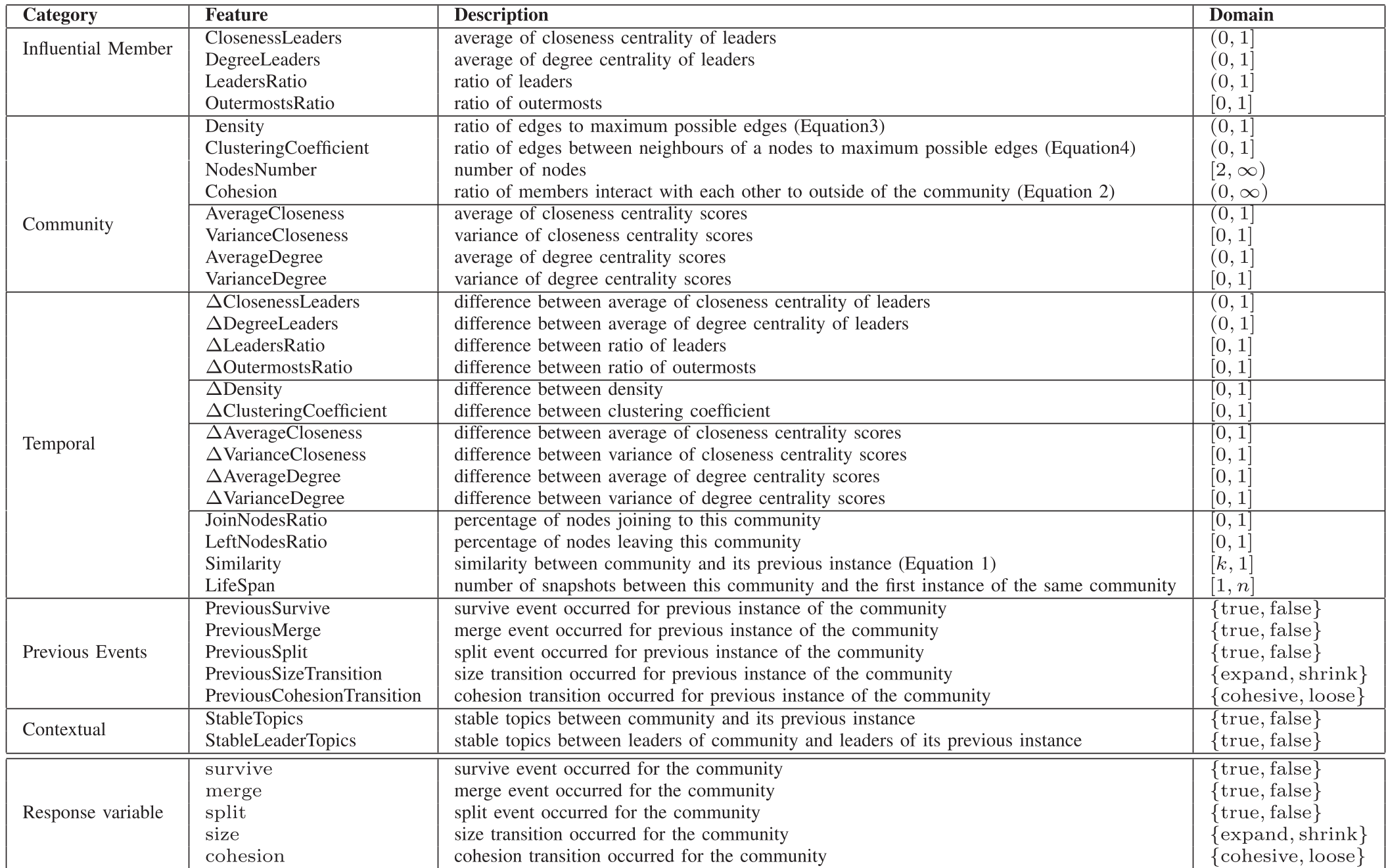 Table 1: The extensive feature set used, including structural, role-based, and temporal attributes.
Experimental Insights: Enron & DBLP
The framework was tested on the Enron Email Dataset (2001) and the DBLP Co-authorship Network (2001-2010).
Key Findings:
- The Power of Filtering: Raw survival prediction was initially ~78%. However, by removing "noise" (groups smaller than 3 members that exist for only one snapshot), accuracy jumped to 92%. This suggests that "micro-groups" follow different, more stochastic laws than established communities.
- Merge vs. Split: Splitting is highly predictable (~91%), often triggered by a high "Leader Ratio." In contrast, Merging is harder to predict (~62-72%), likely because it depends on external factors (like two groups attending the same conference) not captured in the graph structure alone.
- Leader Influence: In the Enron dataset,
StableLeaderTopics(whether leaders keep talking about the same things) was a critical negative factor for survival—if leaders change the subject too much, the community often dissolves.
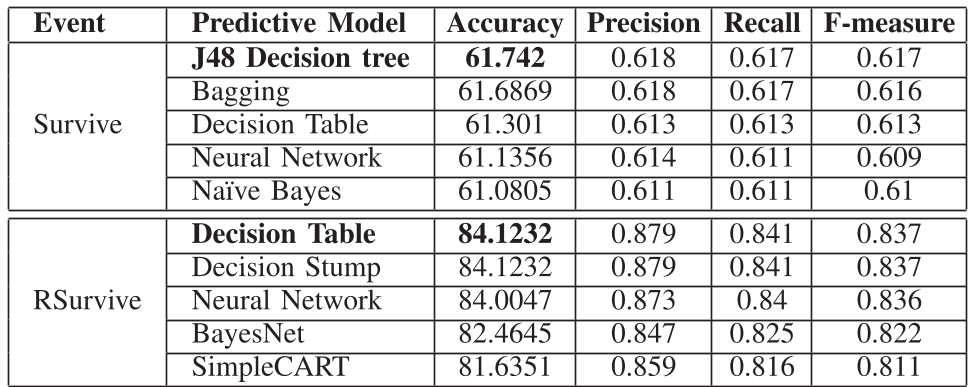 Table 5: Performance on DBLP dataset showing the significant boost in RSurvive (Reduced/Filtered Survival).
Deep Insight: Success Depends on Who Leads
The most profound takeaway is the correlation between leader stability and community longevity. The Heat-map analysis reveals that community survival is not just about the number of edges, but the consistency of the core members. For instance, high "LeftNodesRatio" (members leaving) is an intuitive death knell, but "Clustering Coefficient" acts as a protective shield, making communities "immune" to splitting.
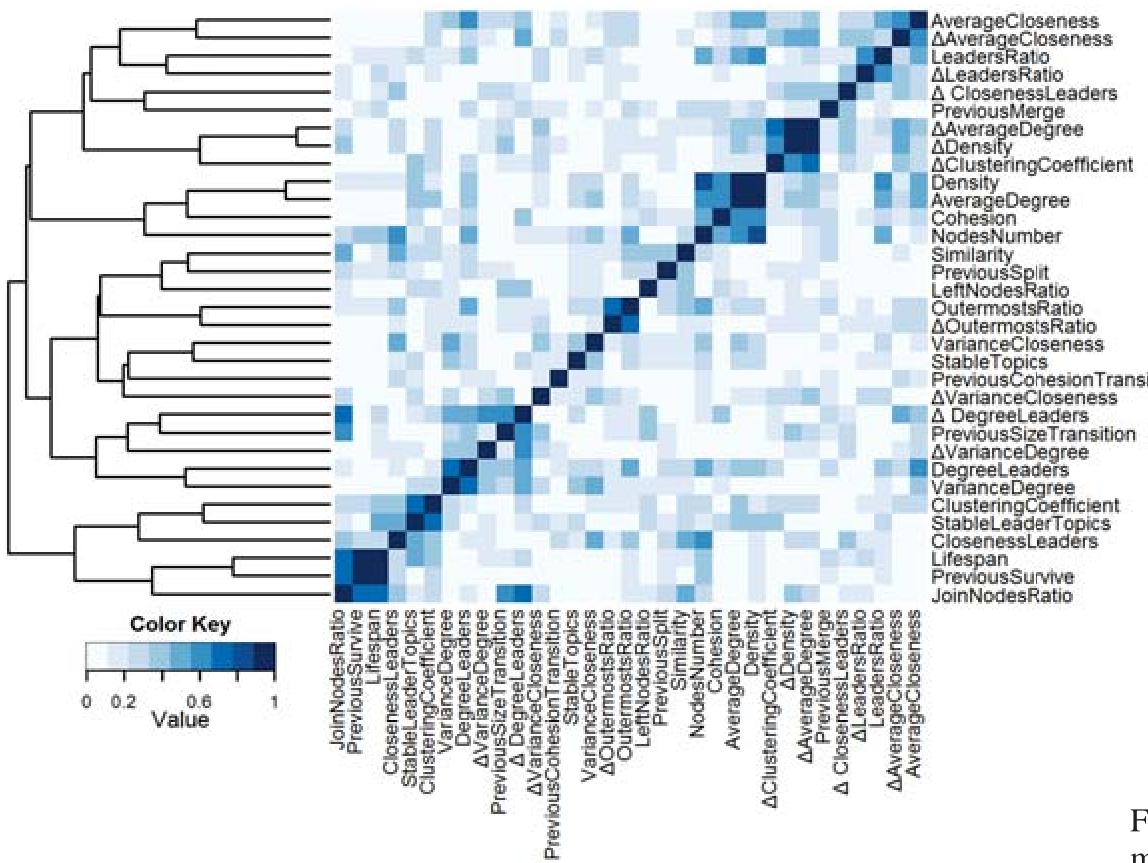 Figure 2: Ensemble analysis showing which features (like Cohesion and Density) most frequently trigger specific evolutionary events.
Conclusion & Future Outlook
This work provides a blueprint for "Social Weather Forecasting." By moving from simple growth models to complex transition models (Survive -> Size/Cohesion), we can better anticipate organizational collapse or the birth of new research sub-fields.
Limitations: The current model assumes "Hard Partitioning" (one person, one community). In reality, we are all part of multiple overlapping circles. The authors’ next frontier is extending this logic to overlapping community structures and using Bayesian networks to uncover the causal relationships behind why these transitions happen.