
POLYPHONET: Bridging the Digital and Physical Divide in Social Network Extraction
Community Focused Social Network Extraction
The paper introduces POLYPHONET, an integrated social network extraction framework designed specifically for event-based communities (e.g., academic conferences). It combines automated Web mining, physical event interaction tracking, and manual user registration to create a comprehensive multi-layered social graph.
TL;DR
Social networks are the invisible scaffolding of professional communities, yet capturing them accurately is notoriously difficult. This paper presents POLYPHONET, a system that extracts social ties through a "triple-threat" approach: mining the Web, tracking real-world "Encounters" at physical kiosks, and traditional user self-reporting. By using Web-mined data to solve the "cold-start" problem, the authors demonstrate how automated systems can catalyze human networking.
Problem & Motivation: The Sparsity Trap
Standard Social Networking Services (SNS) suffer from a fundamental paradox: a social network is only useful when it is dense, but users are reluctant to put in the effort to populate it from scratch. This leads to two specific failure modes:
- Selection Bias: Users only register high-profile connections, ignoring the "weak ties" that are often more valuable for discovery.
- The Novice Problem: While "celebrity" researchers have a rich digital footprint, students and newcomers are often invisible to automated crawlers, creating an exclusionary digital representation of the community.
The authors' insight is to create an Information Infrastructure that mirrors actual social relations by combining the reach of the Web with the precision of physical interactions.
Methodology: The Three Pillars of Connectivity
The core of POLYPHONET lies in its heterogeneous link definition. Instead of a single "friend" connection, it manages a tripartite graph:
1. Web-links (The Backbone)
Using name co-occurrence techniques, the system queries search engines for pairs of participants. High co-occurrence scores suggest a professional relationship (e.g., co-authorship). This provides a "ready-made" network the moment a user signs up.
2. Touch-links (The Real-World Pulse)
Physical information kiosks were deployed at conferences. When two or more participants placed their ID cards on a kiosk simultaneously to compare schedules, the system logged a "Touch-link." This captures serendipitous meetings that no digital crawler could ever find.
3. Know-links (The Human Verification)
Traditional SNS functionality allowing users to explicitly mark someone as an acquaintance.
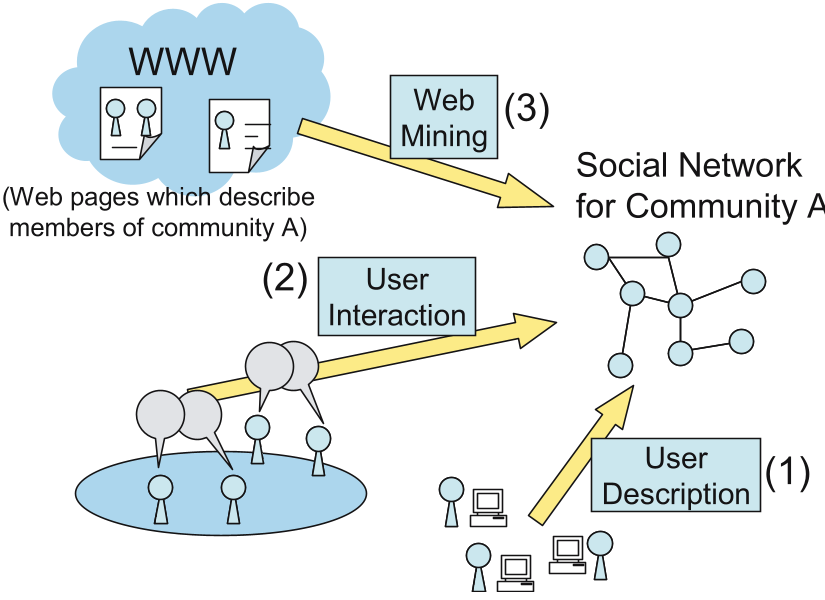 Figure 1: Comparison of extraction methods—User-registered, Web-mined, and Interaction-based.
Experiments & Results: Who Links with Whom?
The field tests at the Japanese Society of Artificial Intelligence (JSAI) provided fascinating insights into human behavior:
- Authoritative vs. Active Users: Automated Web-mining is excellent at identifying "Power Users" (authoritative researchers with high hit counts). However, these people are rarely the ones manually adding friends.
- The Middle-Class of Networking: It is the "middle-authoritative" users who are most active in registering Know-links, while "novices" or less-known participants are the primary users of Touch-links.
- The Bootstrap Effect: Perhaps most importantly, the Web-mined data acted as a prompt. Users were far more likely to register a connection if the system suggested it first based on Web data, effectively bridging the gap between automated mining and human validation.
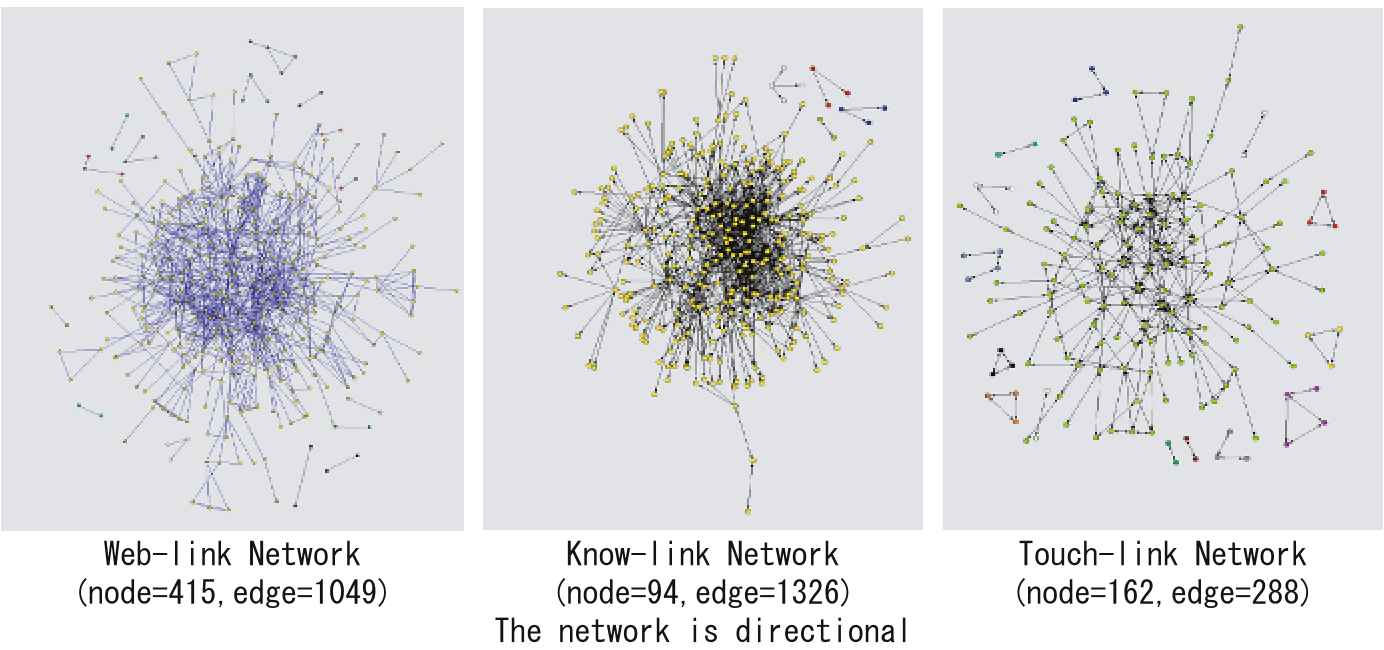 Figure 2: Distribution of link types across different user authority levels.
Critical Analysis & Conclusion
POLYPHONET succeeds because it recognizes that a social network is not a monolithic entity. The Web-link is a proxy for fame/collaboration, the Touch-link for presence, and the Know-link for actual awareness.
Limitations
The reliance on search engine co-occurrence is a "noisy" metric, often confusing people with similar names or temporary joint mentions for deep relationships. Furthermore, the "Touch-link" via kiosks requires specific hardware—a hurdle in an era where mobile apps dominate.
Future Outlook
As we move toward "Ubiquitous Computing," the lessons of POLYPHONET remain relevant. The transition from manual entry to implicit signal capture (using AI to infer relationships from diverse data streams) is the path forward for truly useful community-focused social networks. This work reminds us that the best "Social AI" is one that facilitates human interaction rather than just documenting it.