
Streamlining Primary Care: A Compact EMR Solution for Regional Clinics
A compact electronic medical record system for regional clinics and health centers in China: Design and its application
The paper introduces a compact, light-weighted Electronic Medical Record (EMR) system tailored for primary care centers and regional clinics in China. The system simplifies database structures, adopts a bilingual interface, and integrates data mining capabilities using the Apriori algorithm to facilitate clinical research and inventory management in resource-limited settings.
TL;DR
Researchers have developed a "compact" Electronic Medical Record (EMR) system specifically designed for the 93% of Chinese medical institutions—small clinics and community centers—that are often ignored by high-end hospital software. By simplifying the data structure and integrating automated data mining, this system turns messy clinic records into actionable medical insights.
Problem & Motivation: The "Big Hospital" Bias
While urban mega-hospitals in China utilize sophisticated EMRs, primary care centers (community health centers, village clinics) are left behind. Existing solutions like Haitaii are too expensive and operationally complex for small clinics that don't have inpatient wards or complex diagnostic machinery.
The result? Manual, hand-written records that are noisy, inconsistent, and virtually useless for clinical research. The authors identified a critical need for a "light-weighted" system that balances functionality with extreme ease of use.
Methodology: Engineering for Simplicity
The proposed system moves away from the "everything-included" approach. Its core philosophy is based on three pillars:
- Simplified Taxonomy: Instead of the full ICD-10 spectrum, the system uses a two-tier hierarchy of diseases common to clinics (e.g., respiratory, dermatology), pre-filtered by practicing physicians.
- Standardized Input: To solve the "garbage in, garbage out" problem of manual data, the system uses template-driven forms for patient info, diagnosis, and leave applications.
- Bilingual Support: Specifically designed for internationalized environments like university clinics (e.g., Wenzhou-Kean University), supporting both English and Chinese.
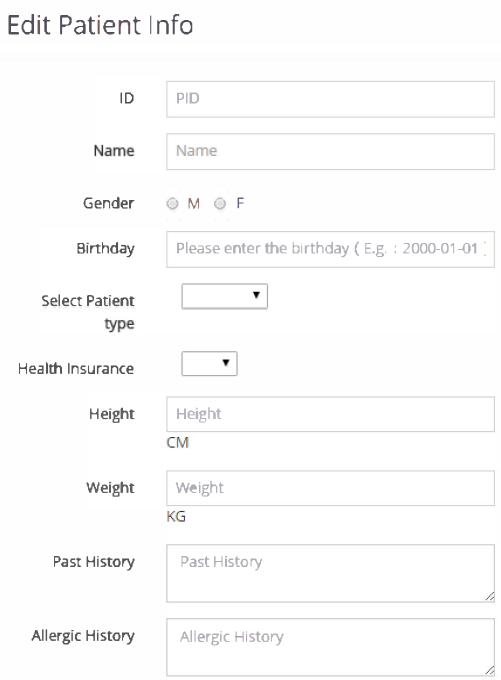 Fig 1: The system uses rigid templates to ensure data consistency, which is the foundation for later data mining.
Experiments & Results: Turning Data into Intelligence
By applying the Apriori Algorithm to the structured data, the system was able to surface hidden patterns that would be invisible in paper records:
- Seasonal Trends: The mining revealed a high correlation between April and Pneumonia, and May and skin contusions (likely due to increased outdoor activity), allowing clinics to prepare for seasonal spikes.
- Prescribing Patterns: The system identified that for Influenza, Shuanghuanglian oral solution and 999 Ganmaoling were the highest-support medications, providing a data-driven basis for inventory management.
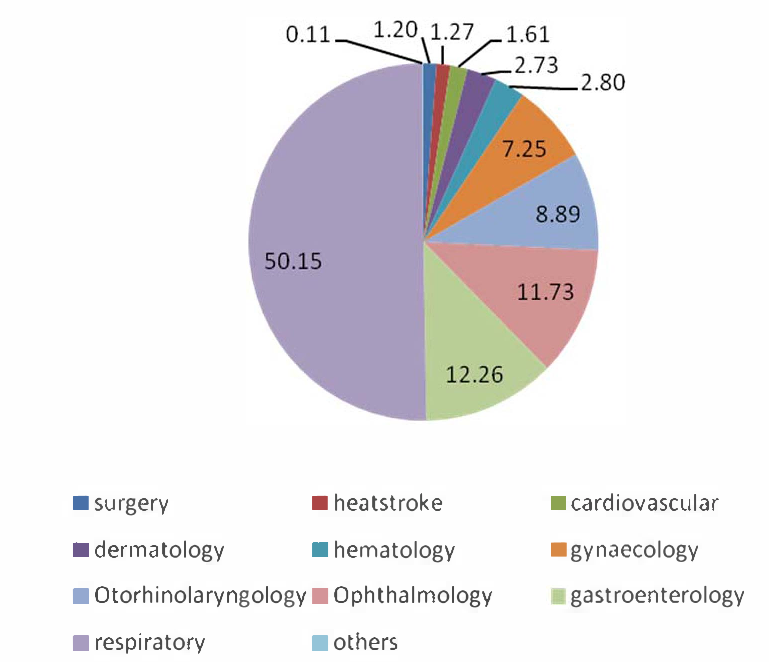 Fig 2: Association mining results showing medication confidence levels for common clinic diagnoses.
Critical Analysis & Conclusion
The true value of this work lies in its pragmatism. By acknowledging that small clinics do not have the resources of Tier-3 hospitals, the authors successfully created a tool that:
- Reduces the administrative burden on doctors.
- Makes clinical data "research-ready" from the moment of entry.
- Improves inventory efficiency through consumption rate tracking (e.g., tracking ID b019 for oral solutions).
Limitations: The current sample size is relatively small and biased towards a university population. Future iterations will need to explore how this scales across broader demographic groups (elderly vs. children) and integrate real-time epidemic alerts.
Future Outlook: This modular, light-weighted approach could serve as a blueprint for e-health deployment in other developing regions where the digital divide remains a barrier to quality healthcare.